LIBER IX · CAPUT 33
VARIOUS KINDS OF SHELL-FISH
Latine · Mayhoff 1906
pectines in mari ex eodem genere habentur, reconditi et ipsi magnis frigoribus ac magnis aestibus, unguesque velut igne lucentes in tenebris, etiam in ore mandentium.
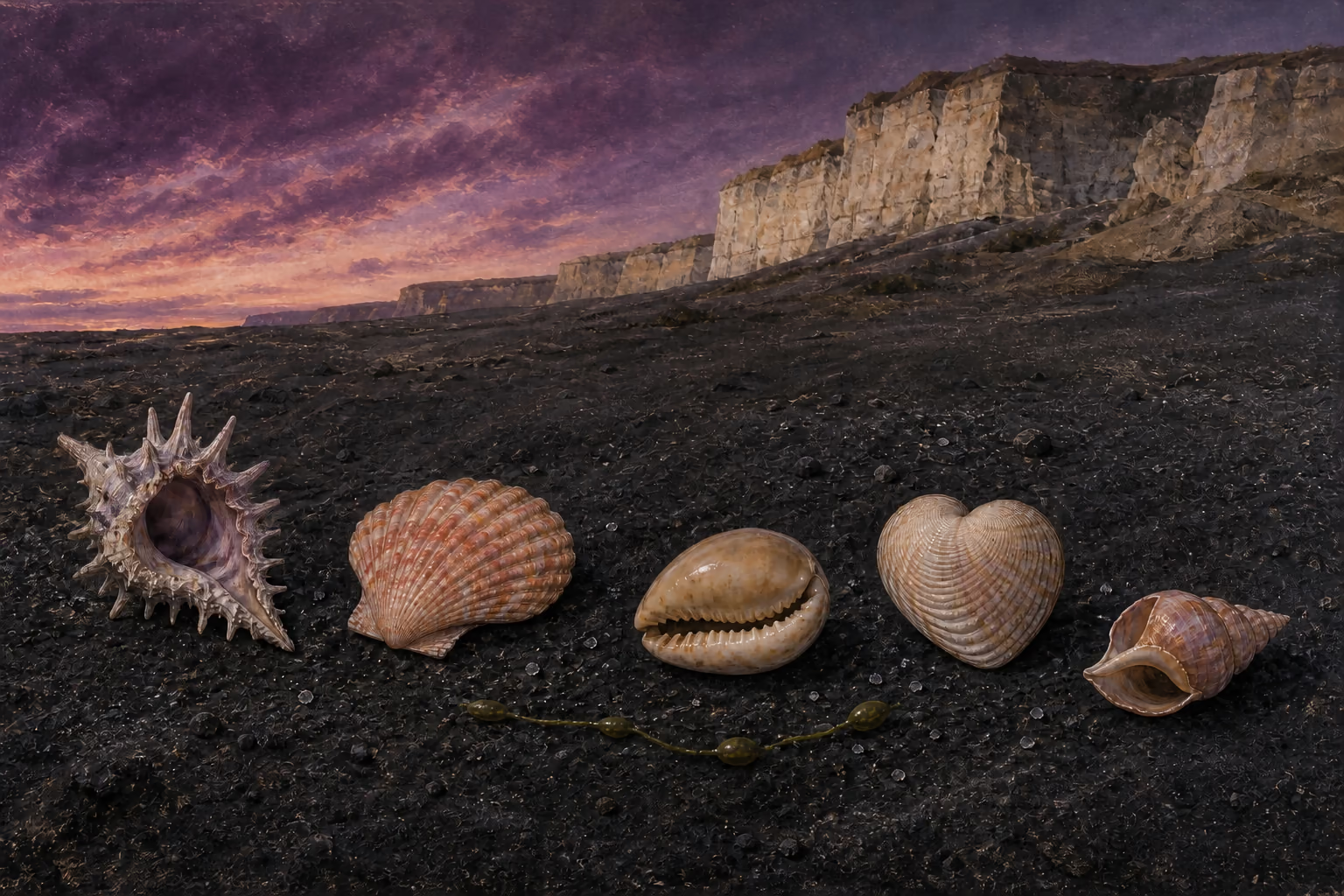
Firmioris iam testae murices et concharum genera, in quibus magna ludentis naturae varietas. tot colorum differentiae, tot figurae plans, concavis, longis, lunatis, in orbem circumactis, dimidio orbe caesis, in dorsum elatis, levibus, rugatis, denticulatis, striatis, vertice muricatim intorto, margine in mucronem emisso, foris effuso, intus replicato, iam distinctione virgulata, crinita, crispa, canaliculatim, pectinatim divisa, imbricatim undata, cancellatim reticulata, in obliquum, in rectum expansa, densata, porrecta, sinuata, brevi nodo ligatis, toto latere conexis, ad plausum apertis, ad bucinum recurvis. navigant ex iis Veneriae praebentesque concavam sui partem et aurae opponentes per summa aequorum velificant. saliunt pectines et extra volitant seque et ipsi carinant.
English · Bostock & Riley 1855–57
Sea-scallops are considered to belong to the same class, which also conceal themselves during severe frosts and great heats; the onyches, too, which shine in the dark like fire, and in the mouth even while being eaten.
Let us now pass on to the murex and various kinds of shell-fish, which have a stronger shell, and in which Nature, in her sportive mood, has displayed a great variety—so many are the various hues of their tints, so numerous are their shapes, flat, concave, long, crescent-shaped, rounded into a globe, cut through into a semi-globe, arched in the back, smooth, rough, indented, streaked, the upper part spirally wreathed, the edge projecting in a sharp point, the edge wreathed outwards, or else folding inwards. And then, too, there are the various distinctions of rayed shells, long-haired shells, wavy-haired shells, channelled shells, pectinated shells, imbricated shells, reticulated shells, shells with lines oblique or rectilinear, thick-set shells, expanded shells, tortuous shells, shells the valves of which are united by one small knot, shells which are held together all along one side, shells which are open as if in the very act of applauding, and shells which wind, resembling a conch. The fish of this class, known as the shells of Venus, are able to navigate the surface of the deep, and, presenting to the wind their concave side, catch the breeze, and sail along on the surface of the sea. Scallops are also able to leap and fly above the surface of the water, and they sometimes employ their shell by way of a bark.