LIBER IX · CAPUT 45
BODIES WHICH HAVE A THIRD NATURE, THAT OF THE ANIMAL AND VEGETABLE COMBINED—THE SEA-NETTLE
Latine · Mayhoff 1906
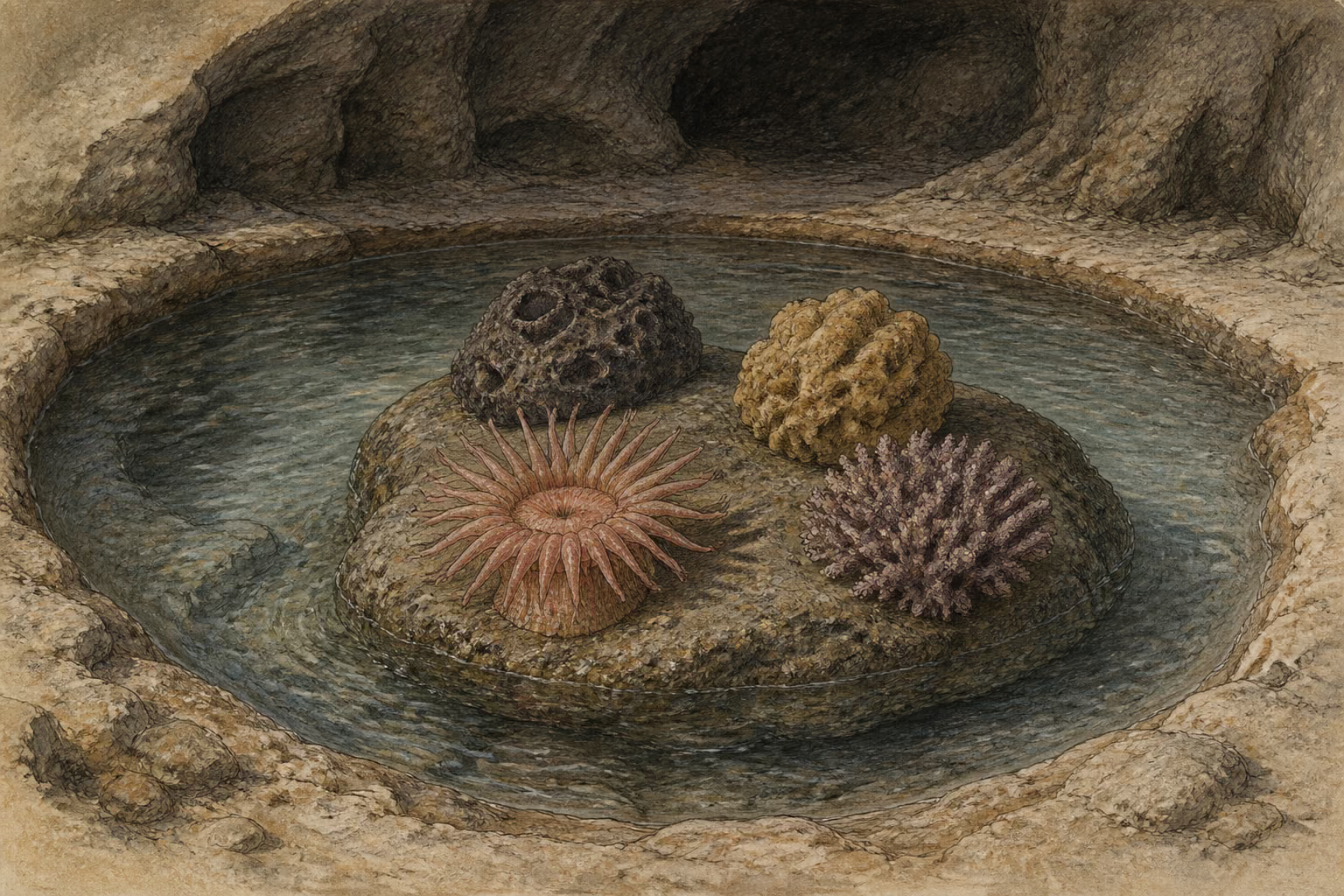
Equidem et iis inesse sensum arbitror, quae neque animalium neque fruticum, sed tertiam quandam ex utroque naturam habent, urticis dico et spongeis.
Vrticae noctu vaganturlocumque mutant. carnosae frondis iis natura, et came vescuntur. vis pruritu mordax est eademque, quae terrestris urticae. contrahit ergo se quam maxime rigens ac praenatante pisciculo frondem suam spargit conplectensque devorat. alias marcenti similis et iactari se passa fluctu algae vice, contactos piscium attrituque petrae scalpentes pruritum invadit. eadem noctu pectines et echinos per... quaerit. cum admoveri sibi manum sentit, colorem mutat et contrahitur. tacta uredinem mittit, paulumque si fuit intervalli, absconditur. ora ei in radice esse traduntur, excrementa per summa tenui fistula reddi.
Spongearum tria genera accepimus: spissum ac praedurum et asperum tragos [id] vocatur, spissum et mollius manos, tenue densumque, ex quo penicilli, Achillium. nascuntur omnes in petris, aluatur conchis, pisce, limo. intellectum inesse iis apparent, quia, ubi avulsorem sensere, contractae multo difficilius abstrahuntur; hoc idem fluctu pulsante faciunt. vivere esca manifesto conchae minutae in iis repertae ostendunt. circa Toronen vesci illis avulsas etiam aiunt et ex relictis radicibus recrescere in petris; cruoris quoque inhaeret colos, Africis praecipue, quae generantur in Syrtibus. maximae fiunt manoe, sed mollissimae circa Lyciam, in profundo autem nec v.entoso molliores; in Hellesponto asperae, et densae circa Maleam. putrescunt in apricis locis, ideo optimae in gurgitibus. viventibus idem qui madentibus nigricans colos. adhaerent nec parte nec totae; intersunt enim fistulae quaedam inanes quaternae fere aut quinae, per quas pasci existimantur. sunt et aliae, sed superne concretae. et subesse membrana quaedam radicibus earum intellegitur. vivere constat longo tempore. pessimum omnium genus est earum quae aplysiae vocantur, quia elui non possunt; in quibus magnae sunt fistulae et reliqua densitas spissa.
English · Bostock & Riley 1855–57
Indeed, for my own part, I am strongly of opinion that there is sense existing in those bodies which have the nature of neither animals nor vegetables, but a third which partakes of them both:—sea-nettles and sponges, I mean. The sea-nettle wanders to and fro by night, and at night changes its locality. These creatures are by nature a sort of fleshy branch, and are nurtured upon flesh. They have the power of producing an itching, smarting pain, just like that caused by the nettle found on land. For the purpose of seeking its prey, it contracts and stiffens itself to the utmost possible extent, and then, as a small fish swims past, it will suddenly spread out its branches, and so seize and devour it. At another time it will assume the appearance of being quite withered away, and let itself be tossed to and fro by the waves like a piece of sea-weed, until it happens to touch a fish. The moment it does so, the fish goes to rub itself against a rock, to get rid of the itching; immediately upon which, the nettle pounces upon it. By night also it is on the look-out for scallops and sea-urchins. When it perceives a hand approaching it, it instantly changes its colour, and contracts itself; when touched it produces a burning sensation, and if ever so short a time is afforded, makes its escape. Its mouth is situate, it is said, at the root or lower part, and the excrements are discharged by a small canal situated above.
We find three kinds of sponges mentioned; the first are thick, very hard, and rough, and are called “tragi:” the second, are thick, and much softer, and are called “mani;” of the third, being fine and of a closer texture, tents for sores are made; this last is known as “Achillium.” All of these sponges grow on rocks, and feed upon shell- and other fish, and slime. It would appear that these creatures, too, have some intelligence; for as soon as ever they feel the hand about to tear them off, they contract themselves, and are separated with much greater difficulty: they do the same also when the waves buffet them to and fro. The small shells that are found in them, clearly show that they live upon food: about Torone it is even said that they will survive after they have been detached, and that they grow again from the roots which have been left adhering to the rock. They leave a colour similar to that of blood upon the rock from which they have been detached, and those more especially which are produced in the Syrtes of Africa.
The manos is the one that grows to the largest size, but the softest of all are those found in the vicinity of Lycia. Where the sea is deep and calm, they are more particularly soft, while those which are found in the Hellespont are rough, and those in the vicinity of Malea coarse. When lying in places exposed to the sun, they become putrid: hence it is that those which are found in deep water are the best. While they are alive, they are of the same blackish colour that they are when saturated with water. They adhere to the rock not by one part only, nor yet by the whole body: and within them there are a number of empty tubes, generally four or five in number, by means of which, it is thought, they take their food. There are other tubes also, but these are closed at the upper extremity; and a sort of membrane is supposed to be spread beneath the roots by which they adhere. It is well known that sponges are very long-lived. The most inferior kind of all are those which are called “aplysiæ,” because it is impossible to clean them: these have large tubes, while the other parts of them are thick and coarse.