LIBER IX · CAPUT 51
FISHES WHICH ARE BOTH OVIPAROUS AND VIVIPAROUS
Latine · Mayhoff 1906
Piscium ova in mari crescunt, quaedam summa celeritate, ut murenarum, quaedam paulo tardius. plani piscium, quibus cauda non est... aculeatique, et testudines in coitu superveniunt, polypi crine uno feminae naribus adnexo, saepiae et lolligines linguis, conponentes inter se bracchia et in contrarium nantes; ore et pariunt. sed polypi in terram verso capite coeunt, reliqua mollium tergis ut canes, item locustae et squillae, cancri ore. ranae superveniunt, prioribus pedibus alas feminae mare adprehendente, posterioribus clunes. pariunt minimas carnes nigras, quas gyrinos vocant, oculis tantum et cauda insignes, mox pedes figurantur cauda findente se in posteriores. mirumque, semestri vita resolvuntur in limum nullo cernente, et rursus vernis aquis renascuntur quae fuere natae, perinde occulta ratione, cum omnibus annis id eveniat. et mituli, pectines sponte naturae in harenosis proveniunt; quae durioris testae sunt, ut murices, purpurae, salivario lentore, sicut acescente umore culices; apua spuma maris incalescente, cum admissus est imber; quae vero siliceo tegmine operiuntur, ut ostrea, putrescente limo aut spuma circa navigia diutius stantia defixosque palos et lignum maxime. nuper conpertum in ostreariis umorem iis fetificum lactis modo effluere. angu- illae atterunt se scopulis; ea strigmenta vivescunt, nec alia est earum procreatio. piscium diversa genera non coeunt praeter squatinam et raiam, ex quibus nascitur priore parte raiae similis, et nomen ex utroque conpositum apud Graecos trahit. quaedam tempore anni gignuntur et in umore ut in terra, vere pectines, limaces, hirudines; eadem tempore evanescunt. piscium lupus et trichias bis anno parit, et saxatiles omnes; mulli ter et chalcis, cyprini sexiens, scorp aenae bis ac sargi, vere et autumno, ex planis squatina bis sola, autumno, occasu vergiliarum, plurimi piscium tribus mensibus Aprili, Maio, Iunio, salpae autumno, sargi, torpedo, squali circa aequinoctium, molles vere, saepia omnibus mensibus. ova eius glutino atramenti ad speciem uvae cohaerentia masculus prosequitur adflatu; alias sterilescunt. polypi hieme coeunt, pariunt vere ova tortili vibrata pampino, tanta fecunditate, ut multitudinem ovorum occisi non recipiant cavo capitis quo praegnantes tulere; excludunt L die, e quibus multa propter numerum intercidunt. locustae et reliqua tenuioris crustae ponunt ova supter ipsa atque ita incubant. polypus femina modo in ovis sedet, modo cavernam cancellato bracchiorum inplexu claudit. saepia in terreno parit inter harundines aut sicubi enata alga, excludit quinto decimo die. lolligines in alto conserta ova edunt ut saepiae. purpurae, murices eiusdemque generis vere pariunt. echini ova pleniluniis habent hieme; et cocleae hiberno tempore nascuntur.
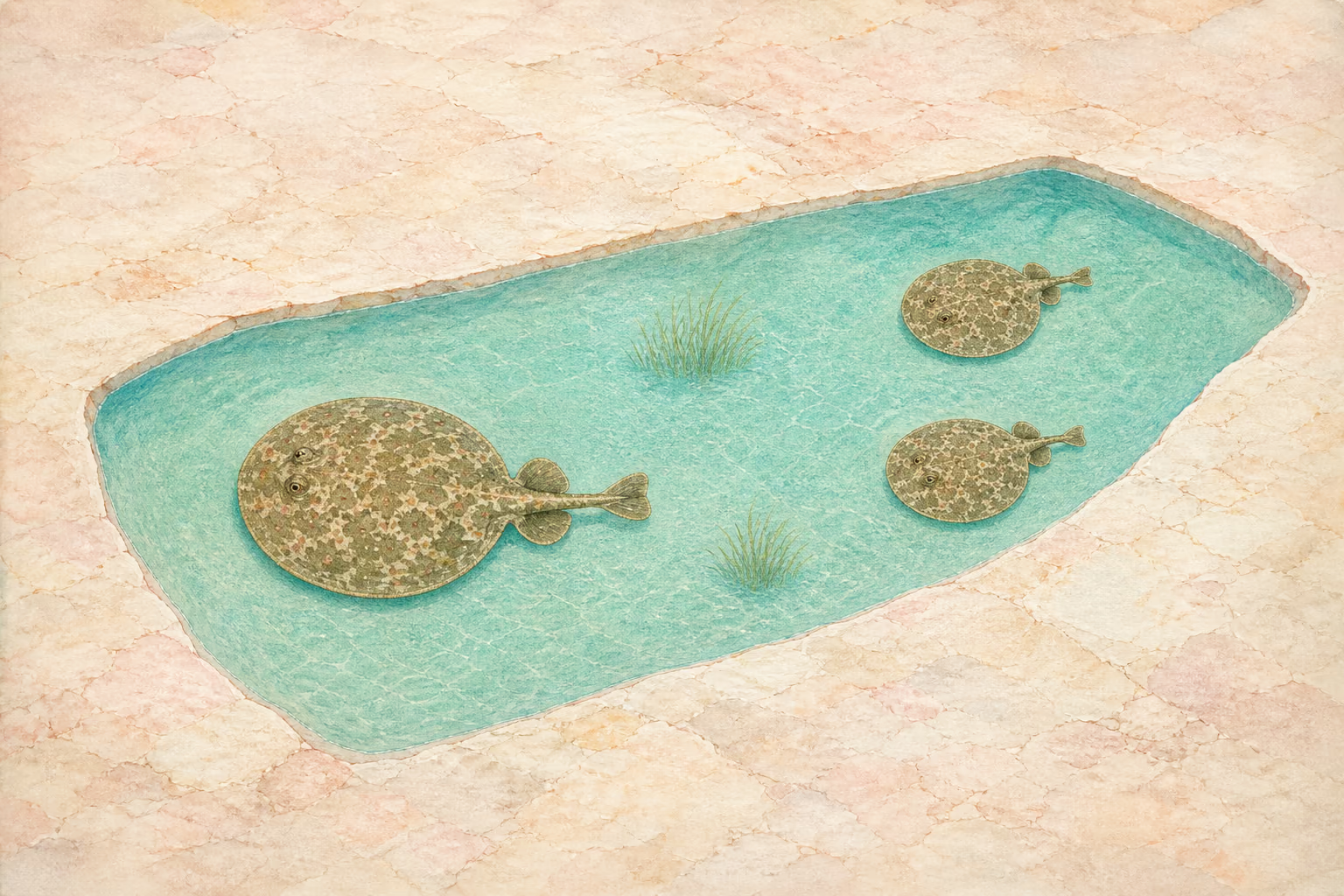
Torpedo octogenos fetus habens invenitur eaque intra se parit, ova praemollia in alium locum uteri transferens atque ibi excludens. simili modo omnia quae cartilagin ea appellavimus. ita fit ut sola piscium et animal pariant et ova concipiant. silurus mas solus omnium edita custodit ova, saepe et quinquagenis diebus, ne absumantur ab aliis. ceterae feminae in triduo excludunt, si mas attigit.
Acus sive belone unus piscium dehiscente propter multitudinem utero parit. a partu coalescit vulnus, quod et in caecis serpentibus tradunt. mus marinus in terra scrobe effosso parit ova et rursus obruit terra, tricensimo die refossa aperit fetumque in aquam ducit.
English · Bostock & Riley 1855–57
The eggs of fishes grow in the sea; some of them with the greatest rapidity, those of the muræna, for instance; others, again, somewhat more slowly. Those among the flat fishes, whose tails or stings are not in the way, as well as those of the turtle kind, couple the one upon the other: the polypus by attaching one of its feelers to the nostrils of the female, the sæpia and loligo, by means of the tongue; uniting the arms, they then swim contrary ways; these last also bring forth at the mouth. The polypi, however, couple with the head downwards towards the ground, while the rest of the soft fish couple backwards in the same manner as the dog; cray-fish and shrimps do the same, and crabs employ the mouth.
Frogs leap the one upon the other, the male with its fore-feet clasping the armpits of the female, and with its hinder ones the haunches. The female produces tiny pieces of black flesh, which are known by the name of gyrini, and are only to be distinguished by the eyes and tail; very soon, however, the feet are developed, and the tail, becoming bifurcate, forms the hind legs. It is a most singular thing, but, after a life of six months’ duration, frogs melt away into slime, though no one ever sees how it is done; after which they come to life again in the water during the spring, just as they were before. This is effected by some occult operation of Nature, and happens regularly every year.
Mussels, also, and scallops are produced in the sand by the spontaneous operations of nature. Those which have a harder shell, such as the murex and the purple, are formed from a viscous fluid like saliva, just as gnats are produced from liquids turned sour, and the fish called the apua, from the foam of the sea when warm, after the fall of a shower.
Those fish, again, which are covered with a stony coat, such as the oyster, are produced from mud in a putrid state, or else from the foam that has collected around ships which have been lying for a long time in the same position, about posts driven into the earth, and more especially around logs of wood. It has been discovered, of late years, in the oyster-beds, that the animal discharges an impregnating liquid, which has the appearance of milk. Eels, again, rub themselves against rocks, upon which, the particles which they thus scrape from off their bodies come to life, such being their only means of reproduction. The various kinds of fishes do not couple out of their own kind, with the exception of the squatina and the ray. The fish that is produced from the union of these two, resembles a ray in the fore part, and bears a name among the Greeks compounded of the two.
Certain animals are produced only at certain seasons of the year, both in water and on the land, such, for instance, as scallops, snails, and leeches, in the spring, which also disappear at stated periods. Among fishes, the wolf-fish and the trichias bring forth twice in the year, as also do all kinds of rock-fish; the mullet and the chalcis thrice in the year, the cyprinus six times, the scorpæna twice, and the sargus in spring and autumn. Among the flat-fish, the squatina brings forth twice a year, being the only one that does so at the setting of the Vergiliæ in autumn. Most fish spawn in the three months of April, May, and June. The salpa brings forth in the autumn, the sargus, the torpedo, and the squalus about the time of the autumnal equinox. The soft fishes bring forth in spring, the sæpia every month in the year; its eggs adhere together with a kind of black glutinous substance, in appearance like a bunch of grapes, and the male is very careful to go among them and breathe upon them, as otherwise they would be barren. The polypi couple in winter, and produce eggs in the spring twisted in spiral clusters, in a similar manner to the tendrils of the vine; and so remarkably prolific are they, that when the animal is killed in a state of pregnancy, the cavities of the head are quite unable to contain the multitude of eggs enclosed therein. They bring forth these eggs at the fiftieth day, but in consequence of the vast number of them, great multitudes perish. Cray-fish, and other sea-animals with a thinner crust, lay their eggs one upon the other, and then sit upon them. The female polypus sometimes sits upon its eggs, and at other times closes the entrance of its retreat by spreading out its feelers, interlaced like a net. The sæpia brings forth on dry land, among reeds or such sea-weed as it may find growing there, and hatches its eggs on the fifteenth day. The loligo produces its eggs out at sea, clustered together like those of the sæpia. The purple, the murex, and other fishes of the same kind, bring forth in the spring. Sea-urchins have their eggs at full moon during the winter; sea-snails also are produced during the winter season.
The torpedo is known to have as many as eighty young ones. It produces within itself very soft eggs, which it then transfers to another place in the uterus, and from that part ejects them. The same is the case with all those fish to which we have given the name of cartilaginous; hence it is, that these alone of all the fishes are at once viviparous and oviparous. The male silurus is the only fish among them all that watches the eggs after they are brought forth, often for as long a period as fifty days, that they may not be devoured by other fish. The females of other kinds bring forth their eggs in the course of three days, if the male has only touched them.
The sea-needle, or the belone, is the only fish in which the multitude of its eggs, in spawning, causes the belly to open asunder; but immediately after it has brought forth, the wound heals again: a thing which, it is said, is the case with the blind-worm as well. The sea-mouse digs a hole in the earth, deposits its eggs there, and then covers them up. On the thirtieth day it opens the hole, and leads its young to the water.