LIBER IX · CAPUT 54
THE FIRST PERSON THAT FORMED ARTIFICIAL OYSTER-BEDS
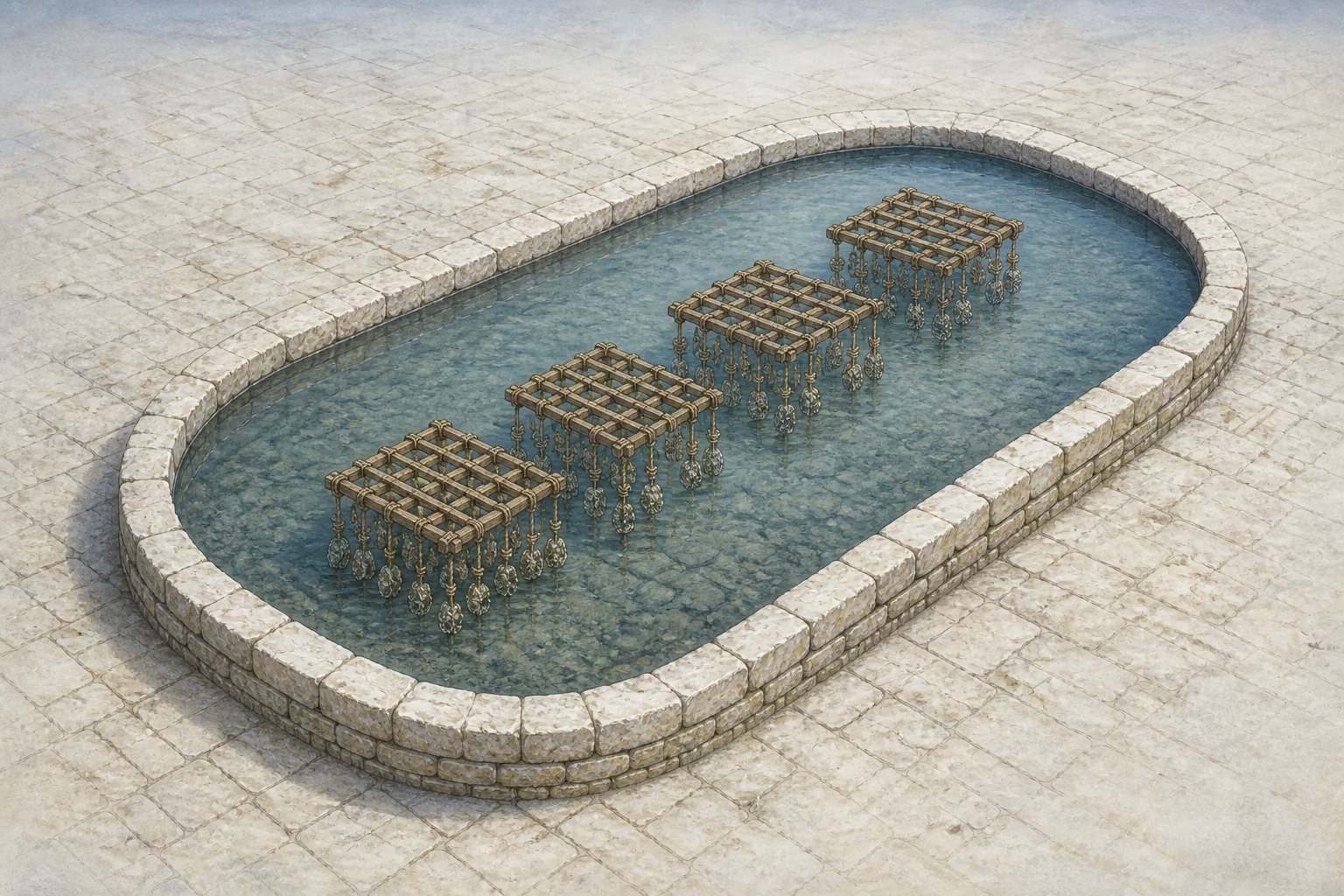
Latine · Mayhoff 1906
Ostrearum vivaria primus omnium Sergius Orata invenit in Baiano aetate L. Crassi oratoris ante Marsicum bellum, nec gulae causa, sed avaritiae, magna vectigalia tali ex ingenio suo percipiens, ut qui primus pensiles invenerit balineas, ita mangonicatas villas subinde vendendo. is primus optimum saporem ostreis Lucrinis adiudicavit, quando eadem aquatilium genera aliubi atque aliubi meliora, sicut lupi pisces in Tiberi amne inter duos pontes, rhombus Ravennae, murena in Sicilia, elops Rhodi, et alia genera similiter, ne culinarum censura peragatur. nondum Britannica serviebant litora, cum Orata Lucrina nobilitabat. postea visum tanti in extremam Italiam petere Brundisium ostreas, ac, ne lisesset inter duos sapores, nuper excogitatum famem longae advectionis a Brundisio conpascere in Lucrino.
Eadem aetate prior Licinius Murena reliquorum piscium vivaria invenit, cuius deinde exemplum nobilitas secuta est Philippi, Hortensi. Lucullus exciso etiam monte iuxta Neapolim maiore inpendio quam villam exaedificaverat euripum et maria admisit, qua de causa Magnus 'Pompeius Xerxen togatum eum appellabat. |XL| HS e piscina ea defuncto illo veniere pisces.
English · Bostock & Riley 1855–57
The first person who formed artificial oyster-beds was Sergius Orata, who established them at Baiæ, in the time of L. Crassus, the orator, just before the Marsic War. This was done by him, not for the gratification of gluttony, but of avarice, as he contrived to make a large income by this exercise of his ingenuity. He was the first, too, to invent hanging baths, and after buying villas and trimming them up, he would every now and then sell them again. He, too, was the first to adjudge the pre-eminence for delicacy of flavour to the oysters of Lake Lucrinus; for every kind of aquatic animal is superior in one place to what it is in another. Thus, for instance, the wolf-fish of the river Tiber is the best that is caught between the two bridges, and the turbot of Ravenna is the most esteemed, the murena of Sicily, the elops of Rhodes; the same, too, as to the other kinds, not to go through all the items of the culinary catalogue. The British shores had not as yet sent their supplies, at the time when Orata thus ennobled the Lucrine oysters: at a later period, however, it was thought worth while to fetch oysters all the way from Brundisium, at the very extremity of Italy; and in order that there might exist no rivalry between the two flavours, a plan has been more recently hit upon, of feeding the oysters of Brundisium in Lake Lucrinus, famished as they must naturally be after so long a journey.
In the same age, also, Licinius Murena was the first to form preserves for other fish; and his example was soon followed by the noble families of the Philippi and the Hortensii. Lucullus had a mountain pierced near Naples, at a greater outlay even, than that which had been expended on his villa; and here he formed a channel, and admitted the sea to his preserves; it was for this reason that Pompeius Magnus gave him the name of “Xerxes in a toga.” After his death, the fish in his preserves was sold for the sum of four million sesterces.