LIBER IX · CAPUT 57
LAND FISHES
Latine · Mayhoff 1906
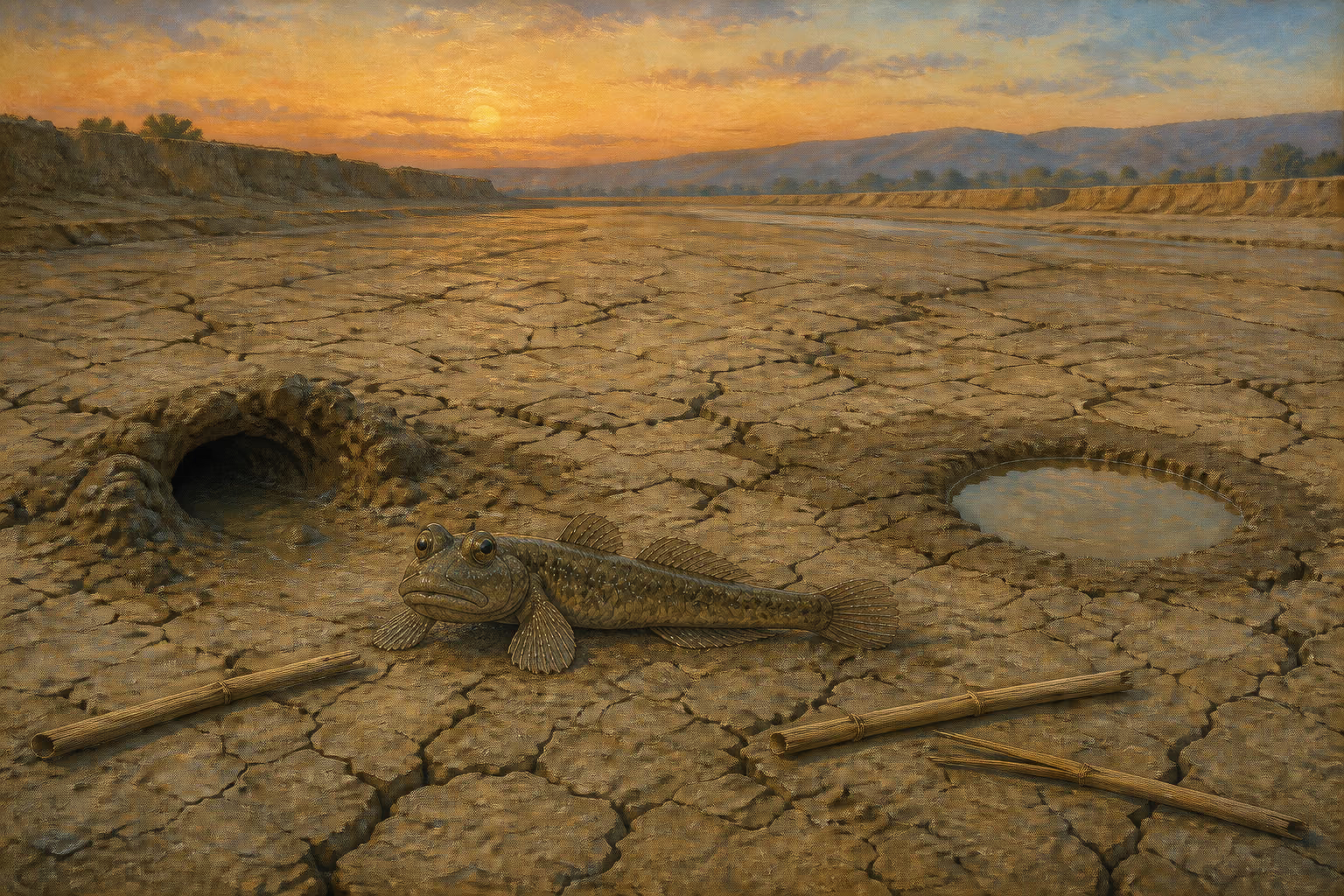
Piscium genera etiamnum a Theophrasto mira produntur. circa Babylonis rigua decedentibus fluviis in cavernis aquas habentibus remanere quosdam, inde exire ad pabula pinnulis gradientes crebro caudae motu, contraque venantes refugere in suas cavernas et in his obversos stare; capita eorum esse ranae marinae similia, reliquas partes gobionum, branchias ut ceteris piscibus. circa Heracleam et Cromnam et multifariam in Ponto unum genus esse quod extremas fluminum aquas sectetur cavernasque sibi faciat in terra atque in his vivat, etiam reciprocis amnibus siccato litore; effodi ergo, motu demum corporum vivere eos adprobante. circa eandem Heracleam [eodemque] Lyco amne decedente ovis relictis in limo generari pisces, qui ad pabula petenda palpitent exiguis branchiis, quo fieri non indigos umoris, propter quod et anguillas diutius vivere exemptas aquis, ova autem in sicco maturari ut testudinum. eadem in Ponti regione adprehendi glacie piscium maxime gobiones non nisi patinarum calore vitalem motum fatentes. et in his quidem, tametsi mirabilis, est tamen aliqua ratio. idem tradit in Paphlagonia effodi pisces gratissimos cibis terrenos altis scrobibus in iis locis, in quibus nullae restagnent aquae, miraturque et ipse gigni sine coitu: umoris quidem vim aliquam inesse quam puteis arbitratur, ceu vero in ullis reperiantur pisces. quicquid est hoc, certe minus admirabilemtalparum facit vitam, subterranei animalis, nisi forte vermium terrenorum et his piscibus natura inest.
English · Bostock & Riley 1855–57
Besides these, there are still some wonderful kinds of fishes which we find mentioned by Theophrastus: he says, that when the waters subside, which have been admitted for the purposes of irrigation in the vicinity of Babylon, there are certain fish which remain in such holes as may contain water; from these they come forth for the purpose of feeding, moving along with their fins by the aid of a rapid movement of the tail. If pursued, he says, they retreat to their holes, and, when they have reached them, will turn round and make a stand. The head is like that of the sea-frog, while the other parts are similar to those of the gobio, and they have gills like other fish. He says also, that in the vicinity of Heraclea and Cromna, and about the river Lycus, as well as in many parts of the Euxine, there is one kind of fish which frequents the waters near the banks of the rivers, and makes holes for itself, in which it lives, even when the water retires and the bed of the river is dry; for which reason these fishes have to be dug out of the ground, and only show by the movement of the body that they are still alive. He says also, that in the vicinity of the same Heraclea, when the river Lycus ebbs, the eggs are left in the mud, and that the fish, on being produced from these, go forth to seek their food by means of a sort of fluttering motion,—their gills being but very small, in consequence of which they are not in need of water; for this reason it is that eels also can live so long out of water; and that their eggs come to maturity on dry land, like those of the sea-tortoise. In the same regions also of the Euxine, he says, various kinds of fishes are overtaken by the ice, the gobio more particularly, and they only betray signs of life, by moving when they have warmth applied by the saucepan. All these things, however, though very remarkable, still admit of some explanation. He tells us also, that in Paphlagonia, land fishes are dug up that are most excellent eating; these, he says, are found in deep holes or spots where there is no standing water whatever, and he expresses his surprise at their being thus produced without any contact with moisture, stating it as his opinion, that there is some innate virtue in these holes, similar to that of wells; as if, indeed, fishes really were to be found in wells. However this may be, these facts, at all events, render the life of the mole under ground less a matter for surprise; unless, perhaps, these fishes mentioned by Theophrastus are similar in nature to the earth-worm.