LIBER X · CAPUT 24
SWALLOWS
Latine · Mayhoff 1906
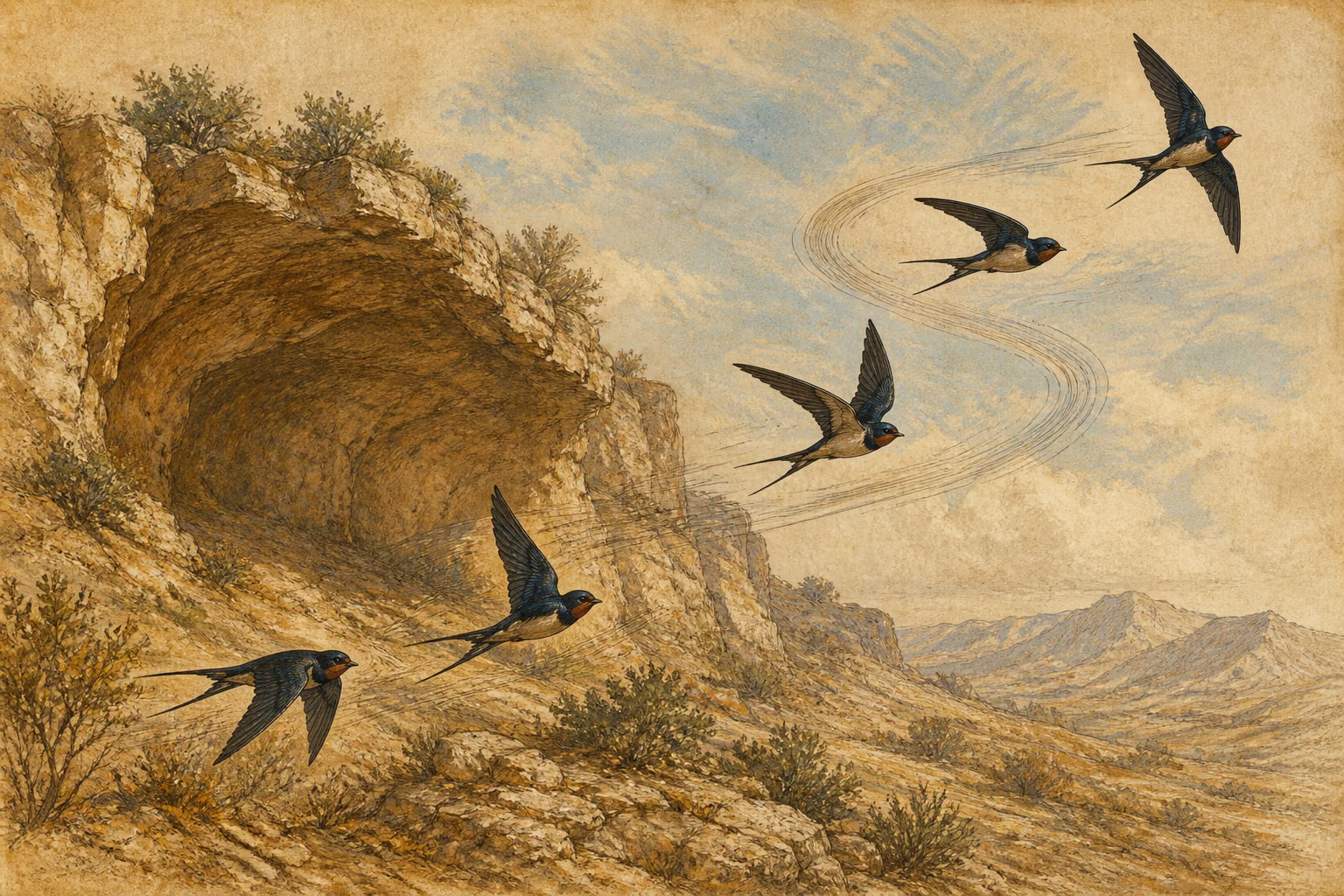
Abeunt et hirundines hibernis mensibus, sola came vescens avis ex iis quae aduncos ungues non habent. sed in vicina abeunt apricos secutae montium recessus, inventaeque iam sunt ibi nudae atque deplumes. Thebarum tecta subire negantur, quoniam urbs illa saepius capta sit, nec Bizyes in Threcia propter scelera Terei. Caecina Volaterranus equestris ordinis, quadrigarum dominus, conprehensas in urbem secum auferens victoriae nuntias amicis mittebat in eundem nidum remeantes inlito victoriae colore. tradit et Fabius Pictor in annalibus suis, cum obsideretur praesidium Romanum a Ligustinis, hirundinem a pullis ad se adlatam, ut lino ad pedem eius adligato nodis significare t, quoto die adveniente auxilio eruptio fieri deberet.
Abeunt et merulae turdique et sturni simili modo in vicina. sed hi plumam non amittunt nec occultantur, visi saepe ibi quo hibernum pabulum petunt; itaque in Germania hieme maxime turdi cernuntur. verius turtur occultatur pinnasque amittit. abeunt et palumbes; quonam et in his incertum. sturnorum generi proprium catervatim volare et quodam pilae orbe circumagi, omnibus in medium agmen tendentibus. volucrum soli hirundini flexuosi volatus velox celeritas, quibus ex causis neque rapinae ceterarum alitum obnoxia est. eadem sola avium non nisi in volatu pascitur.
English · Bostock & Riley 1855–57
The swallow, the only bird that is carnivorous among those which have not hooked talons, takes its departure also during the winter months; but it only goes to neighbouring countries, seeking sunny retreats there on the mountain sides; sometimes they have been found in such spots bare and quite unfledged. This bird, it is said, will not enter a house in Thebes, because that city has been captured so frequently; nor will it approach the country of the Bizyæ, on account of the crimes committed there by Tereus. Cæcina of Volaterræ, a member of the equestrian order, and the owner of several chariots, used to have swallows caught, and then carried them with him to Rome. Upon gaining a victory, he would send the news by them to his friends; for after staining them the colour of the party that had gained the day, he would let them go, immediately upon which they would make their way to the nests they had previously occupied. Fabius Pictor also relates, in his Annals, that when a Roman garrison was being besieged by the Ligurians, a swallow which had been taken from its young ones was brought to him, in order that he might give them notice, by the number of knots on a string tied to its leg, on what day succour would arrive, and a sortie might be made with advantage.
In a similar manner also, the blackbird, the thrush, and the starling take their departure to neighbouring countries; but they do not lose their feathers, nor yet conceal themselves, as they are often to be seen in places where they seek their food during the winter: hence it is that in winter, more especially, the thrush is so often to be seen in Germany. It is, however, a well-ascertained fact, that the turtle-dove conceals itself, and loses its feathers. The ring-dove, also, takes its departure: and with these too, it is a matter of doubt whither they go. It is a peculiarity of the starling to fly in troops, as it were, and then to wheel round in a globular mass like a ball, the central troop acting as a pivot for the rest. Swallows are the only birds that have a sinuous flight of remarkable velocity; for which reason it is that they are not exposed to the attacks of other birds of prey: these too, in fine, are the only birds that take their food solely on the wing.