LIBER X · CAPUT 23
CRANES
Latine · Mayhoff 1906
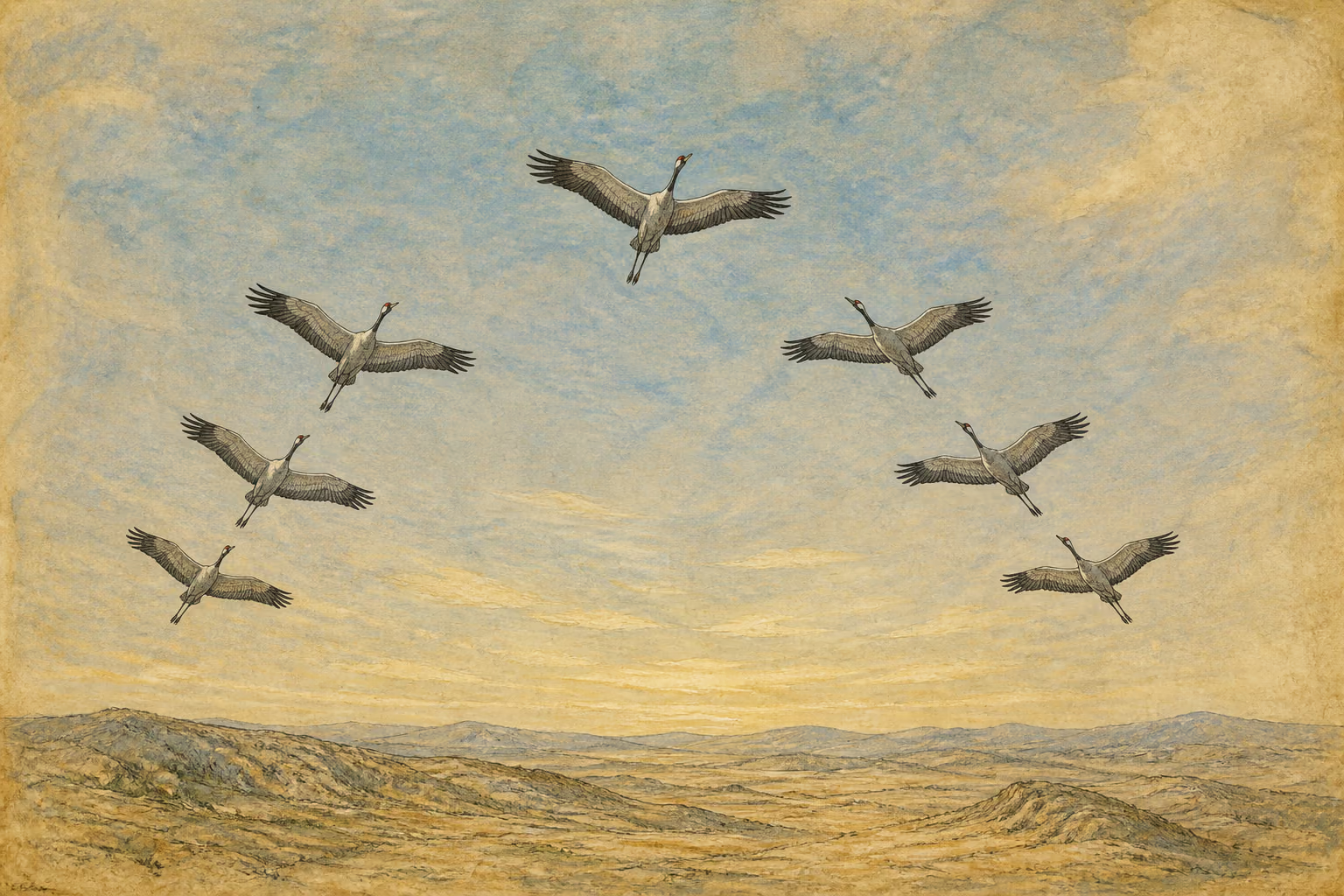
Indutias habet gens Pygmaea abscessu gruum, ut diximus, cum iis dimicantium. inmensus est tractus, quo veniunt, si quis reputet, a mari Eoo. quando proficiscantur consentiunt; volant ad prospiciendum alte, ducem quem sequantur eligunt, in extremo agmine per vices qui adclament dispositos habent et qui gregem voce contineant. excubias habent nocturnis temporibus lapillum pede sustinentes, qui laxatus somno et decidens indiligentiam coarguat; ceterae dormiunt, capite subter alam condito alternis pedibus insistentes. dux erecto providet collo ac praedicit. eaedem mansuefactae lasciviunt gyrosque quosdam indecoro cursu vel singulae peragunt. certum est, Pontum transvolaturas primum omnium angustias petere inter duo promunturia Criu Metopon et Carambim, mox saburra stabiliri; cum medium transierint, abici lapillos e pedibus, cum attigerint continentem, et e gutture harenam. Cornelius Nepos, qui Divi Augusti principatu obiit, cum scriberet turdos paulo ante coeptos saginari, addidit ciconias magis placere quam grues, cum haec nunc ales inter primas expetatur, illam nemo velit attigisse.
Ciconiae quonam e loco veniant aut quo se referant, inconpertum adhuc est. e longinquo venire non dubium eodem quo grues modo, illas hiemis, has aestatis advenas. abiturae congregantur in loca certa comitataeque sic, ut nulla generis sui relinquatur nisi captiva et serva, ceu lege praedicta die recedunt. nemo vidit agmen discedentium, cum discessurum appareat, nec venire, sed venisse cernimus. utrumque nocturnis fit temporibus, et quamvis ultra citrave pervolent, numquam tamen advenisse usquam nisi noctu existimantur. Pythonos comen vocant in Asia patentibus campis, ubi congregatae inter se commurmurant eamque, quae novissima advenit, lacerant atque ita abeunt. notatum post idus Augustas non temere visas ibi. sunt qui ciconiis non inesse linguam confirment. honos iis serpentium exitio tantus, ut in Thessalia capital fuerit occidisse eademque legibus poena, quae in homicidam.
Simili anseres quoque et olores ratione commeant, sed horum volatus cernitur. Liburnicarum more rostrato impetu feruntur, facilius ita findentes aëra quam si recta fronte inpellerent; a tergo sensim dilatante se cuneo porrigitur agmen largeque inpellenti praebetur aurae. colla inponunt praecedentibus, fessos duces ad terga recipiunt.— (Ciconiae nidos eosdem repetunt, genetricum senectam invicem educant) — olorum morte narratur flebilis cantus, falso, ut arbitror, aliquot experimentis. iidem mutua came vescuntur inter se.
Verum haec commeantium per maria terrasque peregrinatio non patitur differri minores quoque, quibus est natura similis. utcumque enim supra dictas magnitudo et vires corporum invitare videri possint, coturnices ante etiam semper adveniunt quam grues, parva avis et, cum ad nos venit, terrestris potius quam sublimis. advolant et hae simili modo, non sine periculo navigantium, cum adpropinquavere terris. quippe velis saepe incidunt, et hoc semper noctu, merguntque navigia. iter est iis per hospitia certa. austro non volant, umido scilicet et graviore vento; aura tamen vehi volunt propter pondus corporum viresque parvas — hinc volantium illa conquestio labore expressa —, aquilone ergo maxime volant, ortygometra duce. primam earum terrae adpropinquantem accipiter rapit. semper hic remeantes comitatum sollicitant, abeuntque una persuasa glottis et otus et cychramus. glottis praelongam exerit linguam, unde ei nomen. hanc initio blandita peregrinatione avide profectam paenitentia in volatu cum labore scilicet subit: reverti incomitatam piget et sequi nec umquam plus uno die pergit, in proximo hospitio deserit. verum invenitur alia antecedente anno relicta simili modo in singulos dies. cychramus perseverantior festinat etiam pervenire ad expetitas sibi terras. itaque noctu [is] eas excitat admonetque itineris. otus bubone minor est, noctuis maior, auribus plumeis eminentibus, unde et nomen illi — quidam Latine axionem vocant —, imitatrix alias avis ac parasita et quodam genere saltatrix. capitur haut difficulter ut noctuae, intentam in aliquem circumeunte alio. quod si ventus agmen adverso flatu coepit inhibere, pondusculis lapidum adprehensis aut gutture harena repleto stabilitae volant. coturnicibus veneni semen gratissimus cibus, quam ob causam eas damnavere mensae, simulque comitialem propter morbum despui suetum, quem solae animalium sentiunt praeter hominem.
English · Bostock & Riley 1855–57
By the departure of the cranes, which, as we have already stated, were in the habit of waging war with them, the nation of the Pygmies now enjoys a respite. The tracts over which they travel must be immense, if we only consider that they come all the way from the Eastern Sea. These birds agree by common consent at what moment they shall set out, fly aloft to look out afar, select a leader for them to follow, and have sentinels duly posted in the rear, which relieve each other by turns, utter loud cries, and with their voice keep the whole flight in proper array. During the night, also, they place sentinels on guard, each of which holds a little stone in its claw: if the bird should happen to fall asleep, the claw becomes relaxed, and the stone falls to the ground, and so convicts it of neglect. The rest sleep in the meanwhile, with the head beneath the wing, standing first on one leg and then on the other: the leader looks out, with neck erect, and gives warning when required. These birds, when tamed, are very frolicsome, and even when alone will describe a sort of circle, as they move along, with their clumsy gait.
It is a well-known fact, that these birds, when about to fly over the Euxine, first of all repair to the narrowest part of it, that lies between the two Promontories of Criumetopon and Carambis, and then ballast themselves with coarse sand. When they have arrived midway in the passage, they throw away the stones from out of their claws, and, as soon as they reach the mainland, discharge the sand by the throat.
Cornelius Nepos, who died in the reign of the late Emperor Augustus, after stating that thrushes had been fattened for the first time shortly before that period, has added that storks were more esteemed as food than cranes: whereas at the present day, this last bird is one of those that are held in the very highest esteem, while no one will so much as touch the other.
Up to the present time it has not been ascertained from what place the storks come, or whither they go when they leave us. There can be no doubt but that, like the cranes, they come from a very great distance, the cranes being our winter, the storks our summer, guests. When about to take their departure, the storks assemble at a stated place, and are particularly careful that all shall attend, so that not one of their kind may be left behind, with the exception of such as may be in captivity or tamed; and then on a certain day they set out, as though by some law they were directed to do so. No one has ever yet seen a flight of cranes taking their departure, although they have been often observed preparing to depart; and in the same way, too, we never see them arrive, but only when they have arrived; both their departure as well as their arrival take place in the night. Although, too, we see them flying about in all directions, it is still supposed that they never arrive at any other time but in the night. Pythonoscome is the name given to some vast plains of Asia, where, as they assemble together, they keep up a gabbling noise, and tear to pieces the one that happens to arrive the last; after which they take their departure. It has been remarked that after the ides of August, they are never by any accident to be seen there.
There are some writers who assure us that the stork has no tongue. So highly are they esteemed for their utility in destroying serpents, that in Thessaly, it was a capital crime for any one to kill a stork, and by the laws the same penalty was inflicted for it as for homicide.
Geese, and swans also, travel in a similar manner, but then they are seen to take their flight. The flocks, forming a point, move along with great impetus, much, indeed, after the manner of our Liburnian beaked galleys; and it is by doing so that they are enabled to cleave the air more easily than if they presented to it a broad front. The flight gradually enlarges in the rear, much in the form of a wedge, presenting a vast surface to the breeze, as it impels them onward; those that follow place their necks on those that go before, while the leading birds, as they become weary, fall to the rear. Storks return to their former nests, and the young, in their turn, support their parents when old. It is stated that at the moment of the swan’s death, it gives utterance to a mournful song; but this is an error, in my opinion, at least I have tested the truth of the story on several occasions. These birds will eat the flesh of one another.
Having spoken of the emigration of these birds over sea and land, I cannot allow myself to defer mentioning some other birds of smaller size, which have the same natural instinct: although in the case of those which I have already mentioned, their very size and strength would almost seem to invite them to such habits. The quail, which always arrives among us even before the crane, is a small bird, and when it has once arrived, more generally keeps to the ground than flies aloft. These birds fly also in a similar manner to those I have already spoken of, and not without considerable danger to mariners, when they come near the surface of the earth: for it often happens that they settle on the sails of a ship, and that too always in the night: the consequence of which is, that the vessel often sinks. These birds pursue their course along a tract of country with certain resting-places. When the south wind is blowing, they will not fly, as that wind is always humid, and apt to weigh them down. Still, however, it is an object with them to get a breeze to assist them in their flight, the body being so light, and their strength so very limited: hence it is that we hear them make that murmuring noise as they fly, it being extorted from them by fatigue. It is for this reason also, that they take to flight more especially when the north wind is blowing, having the ortygometra for their leader. The first of them that approaches the earth is generally snapped up by the hawk. When they are about to return from these parts, they always invite other birds to join their company, and the glottis, otus, and cychramus, yielding to their persuasions, take their departure along with them.
The glottis protrudes a tongue of remarkable length, from which circumstance it derives its name: at first it is quite pleased with the journey, and sets out with the greatest ardour; very soon, however, when it begins to feel the fatigues of the flight, it is overtaken by regret, while at the same time it is equally as loth to return alone, as to accompany the others. Its travels, however, never last more than a single day, for at the very first resting-place they come to, it deserts: here too it finds other birds, which have been left behind in a similar manner in the preceding year. The same takes place with other birds day after day. The cychramus, however, is much more persevering, and is quite in a hurry to arrive at the land which is its destination: hence it is that it arouses the quails in the night, and reminds them that they ought to be on the road.
The otus is a smaller bird than the horned owl, though larger than the owlet; it has feathers projecting like ears, whence its name. Some persons call it in the Latin language the “asio;” in general it is a bird fond of mimicking, a great parasite, and, in some measure, a dancer as well. Like the owlet, it is taken without any difficulty; for while one person occupies its attention, another goes behind, and catches it.
If the wind, by its contrary blasts, should begin to prevent the onward progress of the flight, the birds immediately take up small stones, or else fill their throats with sand, and so contrive to ballast themselves as they fly. The seeds of a certain venomous plant are most highly esteemed by the quails as food; for which reason it is that they have been banished from our tables; in addition to which, a great repugnance is manifested to eating their flesh, on account of the epilepsy, to which alone of all animals, with the exception of man, the quail is subject.