LIBER X · CAPUT 35
PIGEONS
Latine · Mayhoff 1906
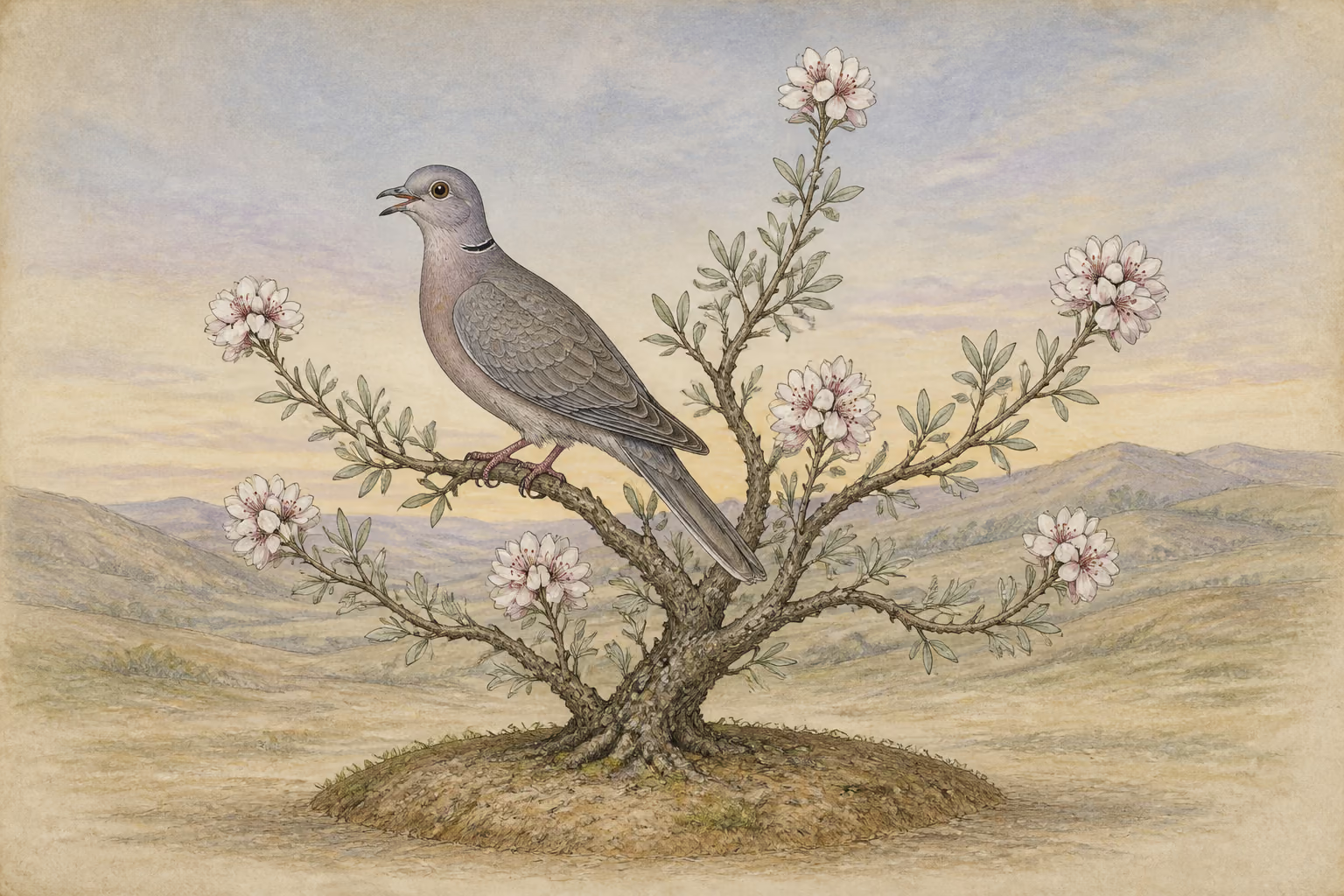
Vivere palumbes ad tricensimum annum, aliquas et ad quadragensimum, habemus auctores, uno tantum incommodo unguium — eodem et argumento senectae —, qui citra perniciem reciduntur. cantus omnibus similis atque idem trino conficitur versu praeterque in clausula gemitu, hieme mutis, a vere vocalibus. Nigidius putat, cum ova incubet sub tecto, nominatam palumbem relinquere nidos. pariunt autem post solstitium. columbae et turtures octonis annis vivunt.
English · Bostock & Riley 1855–57
We read in some authors that the ring-dove lives so long as thirty years, and sometimes as much as forty, without any other inconvenience than the extreme length of the claws, which with them, in fact, is the chief mark of old age; they can be cut, however, without any danger. The voice of all these birds is similar, being composed of three notes, and then a mournful noise at the end. In winter they are silent, and they only recover their voice in the spring. Nigidius expresses it as his opinion that the ring-dove will abandon the place, if she hears her name mentioned under the roof where she is sitting on her eggs: they hatch their young just after the summer solstice. Pigeons and turtle-doves live eight years.