LIBER X · CAPUT 38
DIFFERENT MODES OF FLIGHT AND PROGRESSION IN BIRDS
Latine · Mayhoff 1906
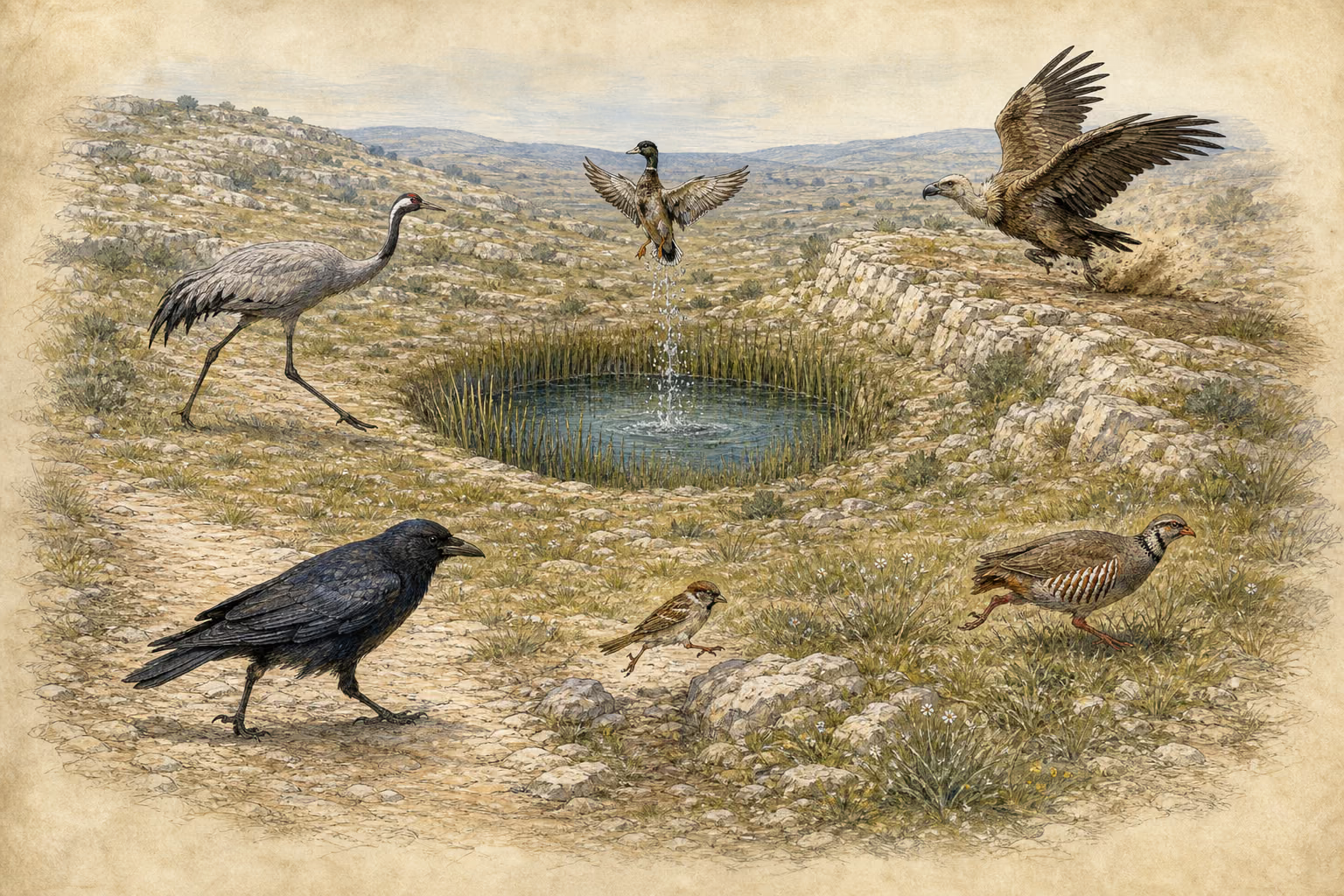
Harum volatus in reputationem ceterarum quoque volucrum inpellit. omnibus animalibus reliquis certus et unius modi et in suo cuique genere incessus est; aves solae vario meatu feruntur et in terra et in aëre. ambulant aliquae, ut cornices; saliunt aliae, ut passeres, merulae; currunt, ut perdices, rusticulae; ante se pedes iaciunt, ut ciconiae, grues. expandunt alas pendentesque raro intervallo quatiunt, aliae crebrius, sed et primas dumtaxat pinnas, aliae tota latera plaudunt; quaedam vero maiore ex parte conpressis volant percussoque semel, aliquae et gemino ictu, aëre feruntur: velut inclusum eum prementes eiaculantur sese in sublime, in rectum, in pronum. impingi putes aliquas aut rursus ab alto cadere has, illas salire. anates solae quaeque sunt eiusdem generis in sublime protinus sese tollunt atque e vestigio caelum petunt, et hoc etiam ex aqua. itaque in foveas, quibus feras venamur, delapsae solae evadunt. vultur et fere graviores nisi ex procursu aut altiore cumulo inmissae non evolant; cauda reguntur. aliae circumspectant, aliae flectunt colla, nec ullae vescuntur ea quae rapuere pedibus. sine voce non volant multae, aut e contrario semper in volatu silent. subrectae, pronae, obliquae in latera, in ora, quaedam et resupinae feruntur, ut, si pariter cernantur plura genera, non in eadem natura meare videantur.
English · Bostock & Riley 1855–57
The flight of the pigeon also leads me to consider that of other birds as well. All other animals have one determinate mode of progression, which in every kind is always the same; it is birds alone that have two modes of moving—the one on the ground, the other in the air. Some of them walk, such as the crow, for instance; some hop, as the sparrow and the blackbird; some, again, run, as the partridge and the woodhen; while others throw one foot before the other, the stork and the crane, for instance. Then again, in their flight, some birds expand their wings, and, poising themselves in the air, only move them from time to time; others move them more frequently, but then only at the extremities; while others expand them so as to expose the whole of the side. On the other hand, some fly with the greater part of the wings kept close to the side; and some, after striking the air once, others twice, make their way through it, as though pressing upon it enclosed beneath their wings; other birds dart aloft in a vertical direction, others horizontally, and others come falling straight downwards. You would almost think that some had been hurled upwards with a violent effort, and that others, again, had fallen straight down from aloft; while others are seen to spring forward in their flight. Ducks alone, and the other birds of that kind, in an instant raise themselves aloft, taking a spring from the spot where they stand straight upwards towards the heavens; and this they can do from out of the water even; hence it is that they are the only birds that can make their escape from the pitfalls which we employ for the capture of wild beasts.
The vulture and the heavier wild birds can only fly after taking a run, or else by commencing their flight from an elevated spot. They use the tail by way of rudder. There are some birds that are able to see all around them; others, again, have to turn the neck to do so. Some of them eat what they have seized, holding it in their feet. Many, as they fly, utter some cry; while on the other hand, many, in their flight, are silent. Some fly with the breast half upright, others with it held downwards, others fly obliquely, or else side-ways, and others following the direction of the bill. Some, again, are borne along with the head upwards; indeed the fact is, that if we were to see several kinds at the same moment, we should not suppose that they have to make their way in the same element.