LIBER X · CAPUT 47
THE HÆMATOPOUS
Latine · Mayhoff 1906
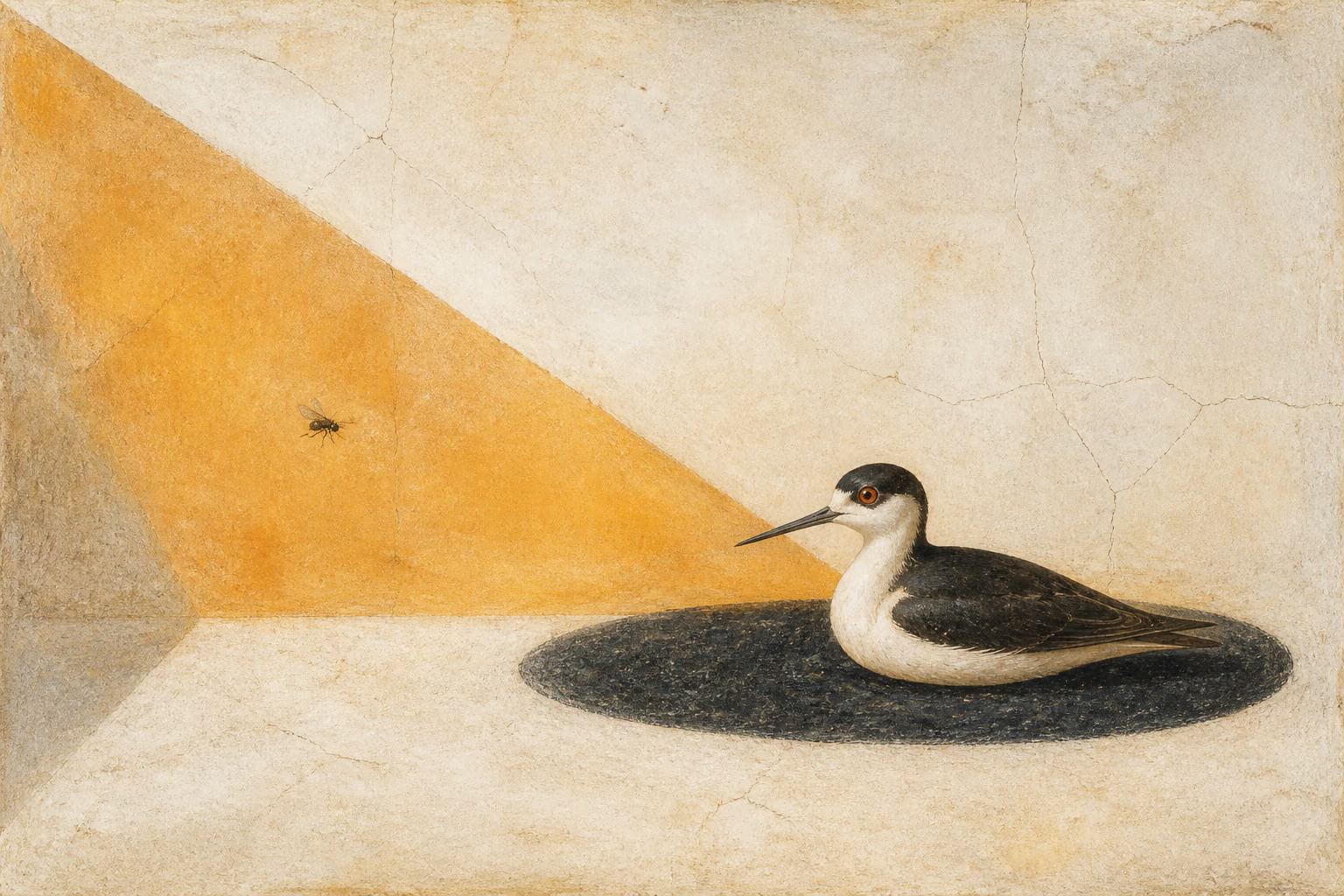
Haec quidem et himantopodi multo minori, quamquam eadem crurum altitudine. nascitur in Aegypto. insistit ternis digitis. praecipue ei pabulum muscae. vita in Italia paucis diebus.
Graviores omnes fruge vescuntur, altivolae carne o tantum, inter aquaticas mergi, soliti avide vorare et quae ceterae reddunt.
Olorum similitudinem onocrotali habent nec distare existimarentur omnino, nisi faucibus ipsis inesset alterius uteri genus. huc omnia inexplebile animal congerit, mira ut sit capacitas. mox perfecta rapina sensim inde in os reddita in veram alvum ruminantis modo refert. Gallia hos septentrionalis proxima oceano mittit.
In Hercynio Germaniae saltu invisitata genera alitum accepimus, quarum plumae ignium modo conluceant 20 noctibus. in ceteris nihil praeter nobilitatem longinquitate factam memorandum occurrit:
English · Bostock & Riley 1855–57
There are the same characteristics in the hæmatopous also, a bird of much smaller size, although standing as high on the legs. It is a native of Egypt, and has three toes on each foot; flies forming its principal food. If brought to Italy, it survives for a few days only.
All the heavy birds are frugivorous; while those with a higher flight feed upon flesh only. Among the aquatic birds, the divers are in the habit of devouring what the other birds have disgorged.
The pelican is similar in appearance to the swan, and it would be thought that there was no difference between them whatever, were it not for the fact that under the throat there is a sort of second crop, as it were. It is in this that the ever-insatiate animal stows everything away, so much so, that the capacity of this pouch is quite astonishing. After having finished its search for prey, it discharges bit by bit what it has thus stowed away, and reconveys it by a sort of ruminating process into its real stomach. The part of Gallia that lies nearest to the Northern Ocean produces this bird.
In the Hercynian Forest, in Germany, we hear of a singular kind of bird, the feathers of which shine at night like fire; the other birds there have nothing remarkable beyond the celebrity which generally attaches to objects situate at a distance.