LIBER X · CAPUT 48
THE PHŒNICOPTERUS, THE ATTAGEN, THE PHALACROCORAX, THE PYRRHOCORAX, AND THE LAGOPUS
Latine · Mayhoff 1906
phalerides in Seleucia Parthorum et in Asia, aquaticarum laudatissimae, rursus phasianae in Colchis — geminas ex pluma aures submittunt subriguntque —, Numidicae in parte Africae Numidia; omnesque iam in Italia.
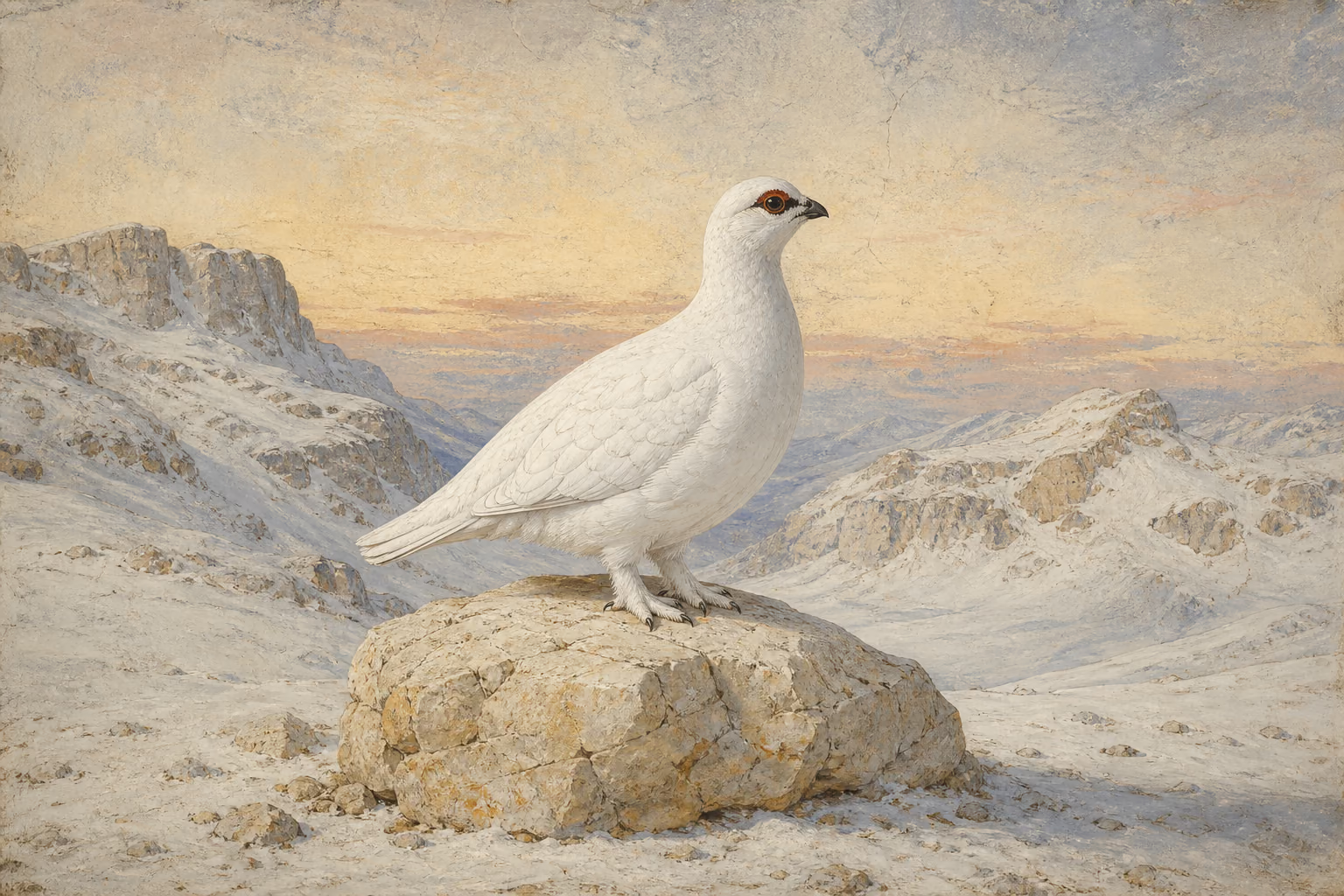
Phoenicopteri linguam praecipui saporis esse Apicius docuit, nepotum omnium altissimus gurges. attagen maxime Ionius celeber et vocalis alias, captus vero obmutescens, quondam existimatus inter raras aves, iam et in Gallia Hispaniaque. capitur circa Alpes etiam, ubi et phalacrocoraces, avis Baliarium insularum peculiaris, sicut Alpium pyrrhocorax, luteo rostro niger, et praecipua sapore lagopus. pedes leporino villo nomen hoc dedere cetero candidae, columbarum magnitudine. non extra terram eam vesci facile, quando nec vita mansuescit et corpus ocissime marcescit. est et alia nomine eodem, a coturnicibus magnitudine tantum differens, croceo unctu cibis gratissima. visam in Alpibus ab se peculiarem Aegypti et ibim Egnatius Calvinus praefectus earum prodidit.
English · Bostock & Riley 1855–57
The phalerides, the most esteemed of all the aquatic birds, are found at Seleucia, the city of the Parthians of that name, and in Asia as well; and again, in Colchis, there is the pheasant, a bird with two tufts of feathers like ears, which it drops and raises every now and then. The numidicæ come from Numidia, a part of Africa: all these varieties are now to be found in Italy.
Apicius, that very deepest whirlpool of all our epicures, has informed us that the tongue of the phœnicopterus is of the most exquisite flavour. The attagen, also, of Ionia is a famous bird; but although it has a voice at other times, it is mute in captivity. It was formerly reckoned among the rare birds, but at the present day it is found in Gallia, Spain, and in the Alps even; which is also the case with the phalacrocorax, a bird peculiar to the Balearic Isles, as the pyrrhocorax, a black bird with a yellow bill, is to the Alps, and the lagopus, which is esteemed for its excellent flavour. This last bird derives its name from its feet, which are covered, as it were, with the fur of a hare, the rest of the body being white, and the size of a pigeon. It is not an easy matter to taste it out of its native country, as it never becomes domesticated, and when dead it quickly spoils.
There is another bird also, which has the same name, and only differs from the quail in size; it is of a saffron colour, and is most delicate eating. Egnatius Calvinus, who was prefect there, pretends that he has seen in the Alps the ibis also, a bird that is peculiar to Egypt.