LIBER X · CAPUT 49
THE NEW BIRDS. THE VIPIO
Latine · Mayhoff 1906
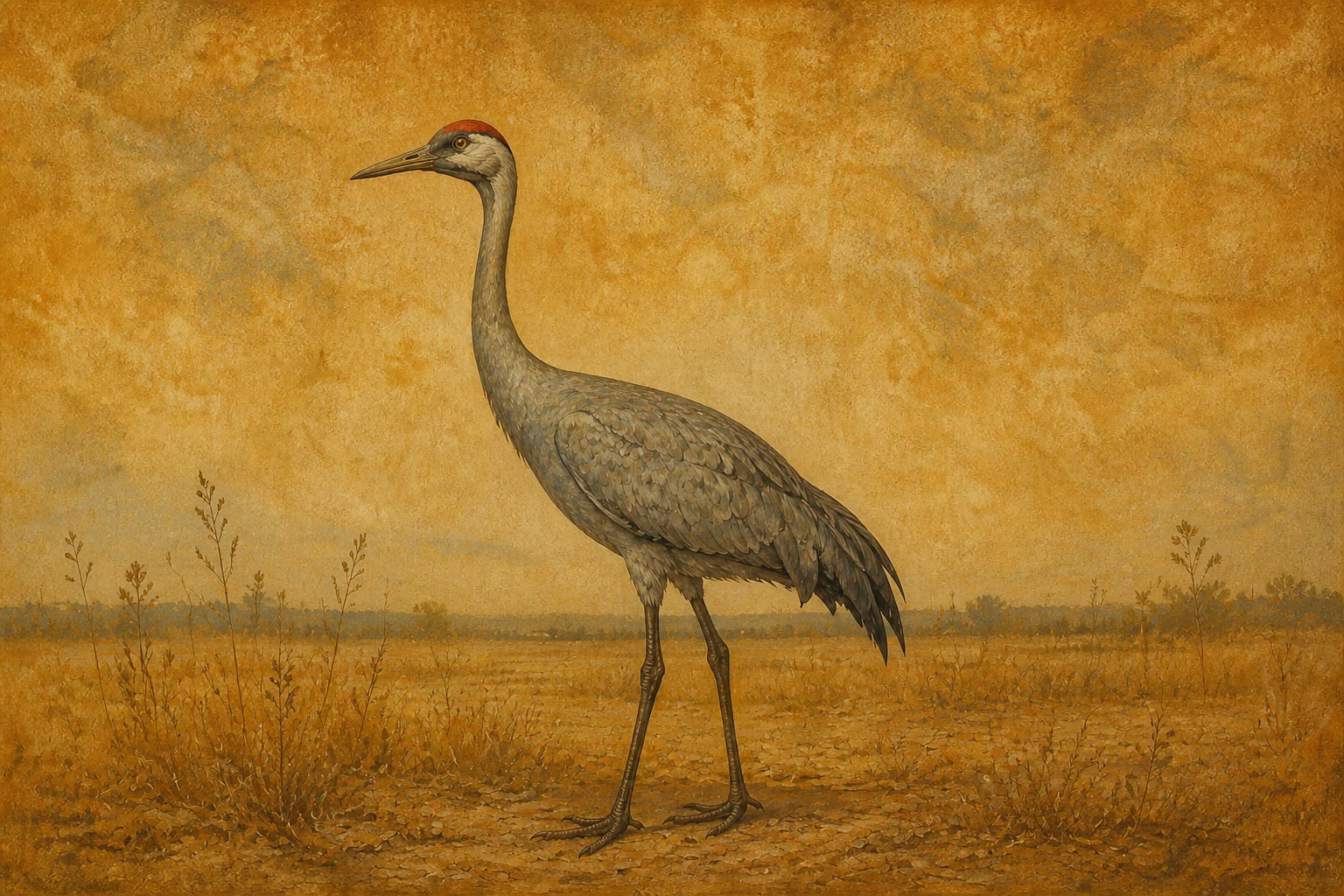
Venerunt in Italiam Bedriacensibus bellis civilibus trans Padum et novae aves— ita enim adhuc vocantur —, turdorum specie, paulum infra columbas magnitudine, sapore gratae. Baliares insulae nobiliorem etiam supra dicto porphyrionem mittunt. ibi et buteo accipitrum generis in honore mensarum est, item vibiones; sic vocant minorem gruem.
Pegasos equino capite volucres et grypas aurita aduncitate rostri fabulosos reor, illos in Scythia, hos in Aethiopia. equidem et tragopana, de qua plures adfirmant, maiorem aquila, cornua in temporibus curvata habentem, ferruginei coloris, tantum capite phoeniceo. nec Sirenes impetraverint fidem, adfirmet licet Dinon, Clitarchi celebrati auctoris pater, in India esse mulcerique earum cantu quos gravatos somno lacerent. qui credat ista, et Melampodi profecto aures lambendo dedisse intellectum avium sermonis dracones non abnuat vel quae Democritus tradit nominando aves quarum confuso sanguine serpens gignatur, quem quisquis ederit intellecturus sit alitum colloquia, quaeque de una ave galerita privatim commemorat, etiam sine his inmensa vitae ambage circa auguria. nominantur ab Homero scopes avium genus: neque harum saturicos motus, cum insidientur, plerisque memoratos facile conceperim mente, neque ipsae iam aves noscuntur, quam ob rem de confessis disseruisse praestiterit.
English · Bostock & Riley 1855–57
During the civil wars that took place at Bebriacum, beyond the river Padus, the “new birds” were introduced into Italy—for by that name they are still known. They resemble the thrush in appearance, are a little smaller than the pigeon in size, and of an agreeable flavour. The Balearic islands also send us a porphyrio, that is superior to the one previously mentioned. There the buteo, a kind of hawk, is held in high esteem for the table, as also the vipio, the name given to a small kind of crane.
I look upon the birds as fabulous which are called “pegasi,” and are said to have a horse’s head; as also the griffons, with long ears and a hooked beak. The former are said to be natives of Scythia, the latter of Æthiopia. The same is my opinion, also, as to the tragopan; many writers, however, assert that it is larger than the eagle, has curved horns on the temples, and a plumage of iron colour, with the exception of the head, which is purple. Nor yet do the sirens obtain any greater credit with me, although Dinon, the father of Clearchus, a celebrated writer, asserts that they exist in India, and that they charm men by their song, and, having first lulled them to sleep, tear them to pieces. The person, however, who may think fit to believe in these tales, may probably not refuse to believe also that dragons licked the ears of Melampodes, and bestowed upon him the power of understanding the language of birds; as also what Democritus says, when he gives the names of certain birds, by the mixture of whose blood a serpent is produced, the person who eats of which will be able to understand the language of birds; as well as the statements which the same writer makes relative to one bird in particular, known as the “galerita,” —indeed, the science of augury is already too much involved in embarrassing questions, without these fanciful reveries.
There is a kind of bird spoken of by Homer as the “scops:” but I cannot very easily comprehend the grotesque movements which many persons have attributed to it, when the fowler is laying snares for it; nor, indeed, is it a bird that is any longer known to exist. It will be better, therefore, to confine my relation to those the existence of which is generally admitted.