LIBER X · CAPUT 55
AN AUGURY DERIVED FROM EGGS BY AN EMPRESS
Latine · Mayhoff 1906
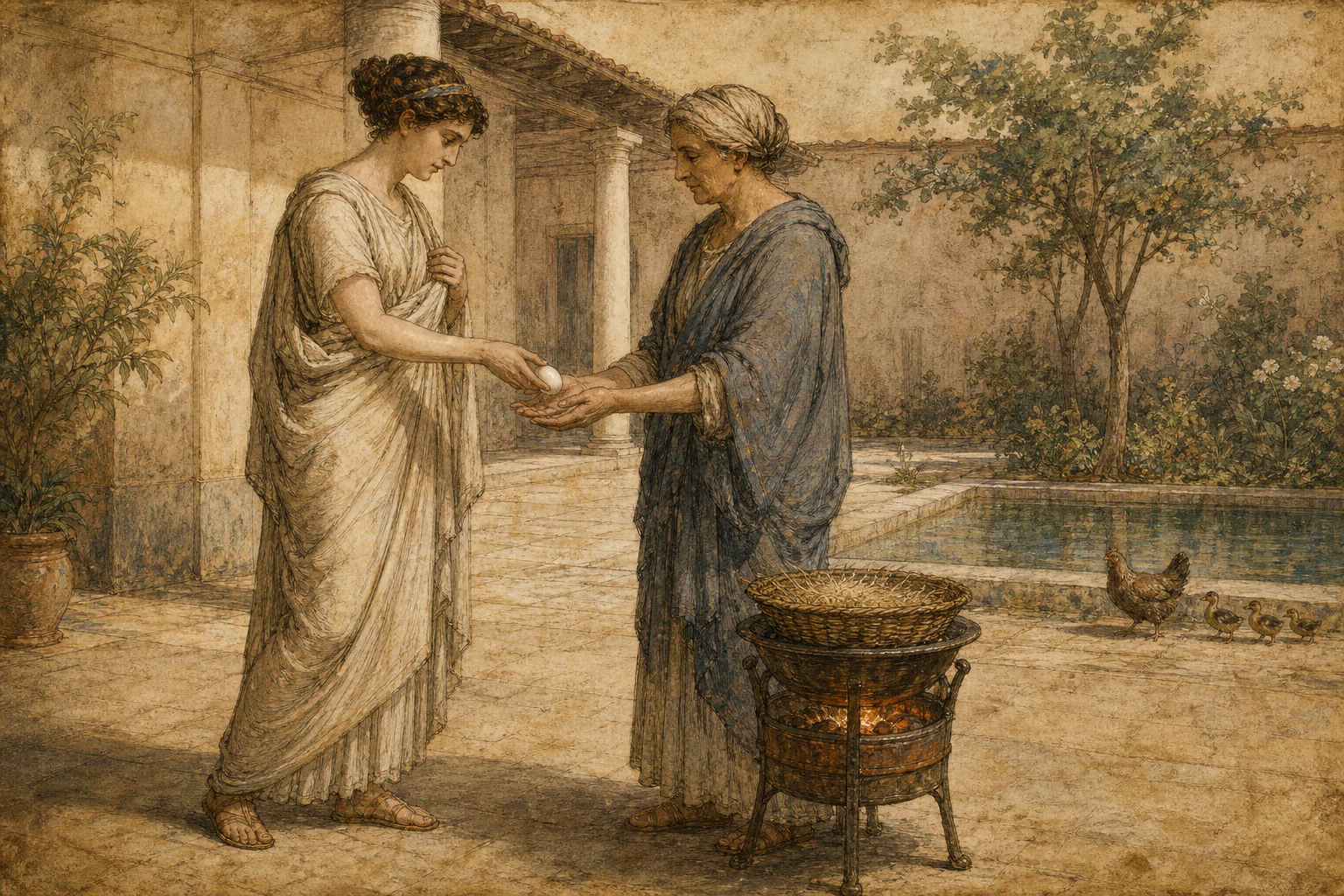
Quin et ab homine perficiuntur. Iulia Augusta prima sua iuventa Tib. Caesare ex Nerone gravida, cum parere virilem sexum admodum cuperet, hoc usa est puellari augurio, ovum in sinu fovendo atque, cum deponendum haberet, nutrici per sinum tradendo, ne intermitteretur tepor; nec falso augurata proditur. nuper inde fortassis inventum, ut ova calido in loco inposita paleis igne modico foverentur homine versante, pariterque et stato die illinc erumperet fetus. traditur quaedam ars gallinarii cuiusdam dicentis, quod ex quaque esset. narrantur et mortua gallina mariti earum visi succedentes in vicem et reliqua fetae more facientes abstinentesque se cantu. super omnia est anatum ovis subditis atque exclusis admiratio prima non plane agnoscentis fetum, mox incerti singultus sollicite convocantis, postremo lamenta circa piscinae stagna mergentibus se pullis natura duce.
English · Bostock & Riley 1855–57
And, what is even more singular still, eggs can be hatched also by a human being. Julia Augusta, when pregnant in her early youth of Tiberius Cæsar, by Nero, was particularly desirous that her offspring should be a son, and accordingly employed the following mode of divination, which was then much in use among young women: she carried an egg in her bosom, taking care, whenever she was obliged to put it down, to give it to her nurse to warm in her own, that there might be no interruption in the heat: it is stated that the result promised by this mode of augury was not falsified.
It was perhaps from this circumstance, that the modern invention took its rise, of placing eggs in a warm spot and covering them with chaff, the heat being maintained by a moderate fire, while in the meantime a man is employed in turning them. By the adoption of this plan, the young, all of them, break the shell on a stated day. There is a story told of a breeder of poultry, of such remarkable skill, that on seeing an egg he could tell which hen had laid it. It is said also that when a hen has happened to die while sitting, the males have been seen to take her place in turns, and perform all the other duties of a brood-hen, taking care in the meantime to abstain from crowing. But the most remarkable thing of all, is the sight of a hen, beneath which ducks’ eggs have been put and hatched.—At first, she is unable to quite recognize the brood as her own, while in her anxiety she gives utterance to her clucking as she doubtfully calls them; then at last she will stand at the margin of the pond, uttering her laments, while the ducklings, with Nature for their guide, are diving beneath the water.