LIBER X · CAPUT 58
WHEN BIRDS LAY, AND HOW MANY EGGS. THE VARIOUS KINDS OF HERONS
Latine · Mayhoff 1906
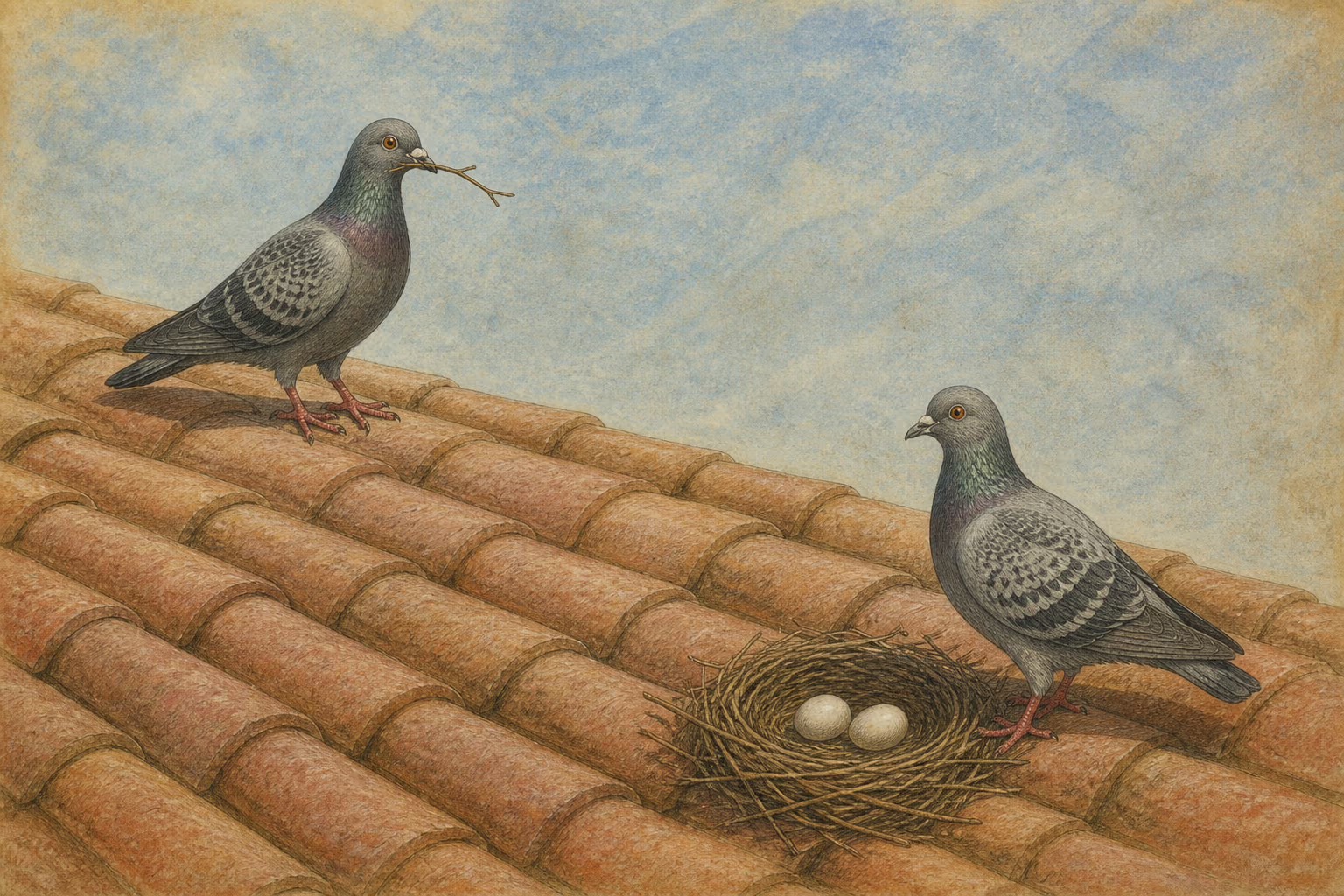
Columbae proprio ritu osculantur ante coitum. pariunt fere bina ova, ita natura moderante, ut aliis crebrior sit fetus, aliis numerosior. palumbis et turtur plurimum terna nec plus quam bis vere pariunt, atque ita, si prior fetus corruptus est et ut, quamvis III pepererint, numquam plus II educant. tertium inritum est; urinum vocant. palumbis incubat femina post meridiana in matutinum, cetero mas. columbae marem semper et feminam pariunt, priorem marem, postridie feminam. incubant in eo genere ambo, interdiu mas, noctu femina. excludunt XX die, pariunt a coitu V. aestate quidem interdum binis mensibus terna educunt paria, namque XVIII die excludunt statimque concipiunt; quare inter pullos saepe ova inveniuntur, et alii provolant, alii erumpunt. ipsi deinde pulli quinquemenstres fetificant. et ipsae autem inter se, si mas non sit, feminae aeque saliunt pariuntque ova inrita, ex quibus nihil gignitur, quae hypenemia Graeci vocant.
English · Bostock & Riley 1855–57
Pigeons have the peculiarity of billing before they couple; they generally lay two eggs, Nature so willing it, that among birds the produce should be more frequent with some, and more numerous with others. The ring-dove and turtle-dove mostly lay three eggs, and never more than twice, in the spring; such being the case when the first brood has been lost. Although they may happen to lay three eggs, they never hatch more than two; the third egg, which is barren, is generally known by the name of “urinum.” The female ring-dove sits on the eggs from mid-day till morning, the male the rest of the time. Pigeons always produce a male and a female; the male first, the female the day after. Both the male and the female pigeon sit on the eggs; the male in the day-time, the female during the night. They hatch on the twentieth day of incubation, and lay the fifth day after coupling. Sometimes, indeed, in summer, these birds will rear three couples in two months; for then they hatch on the eighteenth day of incubation, and immediately conceive again; hence it is that eggs are often found among the young ones, some of which last are just taking wing, while others are only bursting the shell. The young ones, themselves, begin to produce at the age of five months. The females, if there should happen to be no male among them, will even tread each other, and lay barren eggs, from which nothing is produced. By the Greeks, these eggs are called “hypenemia.”