LIBER X · CAPUT 60
WHAT EGGS ARE CALLED HYPENEMIA, AND WHAT CYNOSURA. HOW EGGS ARE BEST KEPT
Latine · Mayhoff 1906
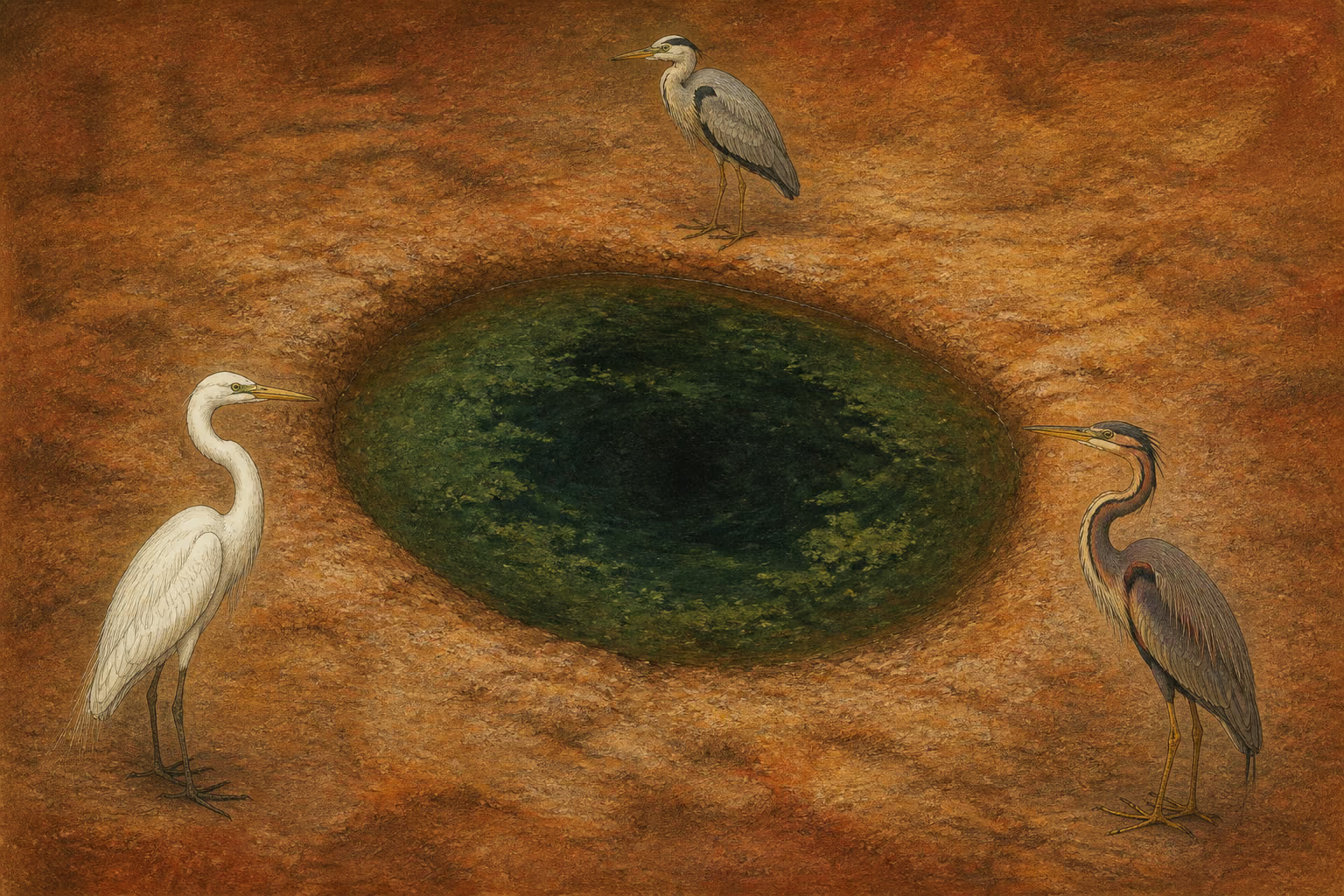
Ardiolarum tria genera: leucon, asterias, pelion. hi in coitu anguntur; mares quidem cum vociferatu sanguinem etiam ex oculis profundunt. nec minus aegre pariunt gravidae. aquila tricenis diebus incubat et fere maiores alites, minores vicenis, ut miluus et accipiter. miluus fere parit numquam plus ternos, is qui aegolios vocatur et quaternos, corvus aliquando et quinos. incubant totidem diebus. cornicem incubantem mas pascit. pica novenos, melancoryphus supra XX parit, semper numero inpari, nec alia iis plures: tanto fecunditas maior parvis. hirundini caeci primo pulli sunt et fere omnibus quibus numerosior fetus.
Inrita ova, quae hypenemia diximus, aut mutua feminae inter se libidinis imaginatione concipiunt aut pulvere, nec columbae tantum, sed et gallinae, perdices, pavones, anseres, chenalopeces. sunt autem sterilia et minora ac minus iucundi saporis et magis umida. quidam et vento putant ea generari, qua de causa etiam zephyria appellant. urina autem vere tantum fiunt incubatione derelicta, quae alii cynosura dixere. ova aceto macerata in tantum emolliuntur, ut per anulos transeant. servari ea in lomento aut hieme in paleis, aestate in furfuribus utilissimum. sale exinaniri creduntur.
English · Bostock & Riley 1855–57
There are three kinds of herons, called, respectively, the leucon, the asterias, and the pellos. These birds experience great pain in coupling; uttering loud cries, the males bleed from the eyes, while the females lay their eggs with no less difficulty.
The eagle sits for thirty days, as do most of the larger birds; the smaller ones, the kite and the hawk for instance, only twenty. The eagle mostly lays but one egg, never more than three. The bird which is known as the “ægolios,” lays four, and the raven sometimes five; they sit, too, the same number of days as the kite and the hawk. The male crow provides the female with food while she is sitting. The magpie lays nine eggs, the malancoryphus more than twenty, but always an uneven number, and no bird of this kind ever lays more; so much superior in fecundity are the smaller birds. The young ones of the swallow are blind at first, as is the case also with almost all the birds the progeny of which is numerous.
The barren eggs, which we have mentioned as “hypenemia,” are either conceived by the females when they are influenced by libidinous fancies, and couple with one another, or else at the moment when they are rolling themselves in the dust; they are produced not only by the pigeon, but by the common hen as well, the partridge, the pea-hen, the goose, and the chenalopex; these eggs are barren, smaller than the others, of a less agreeable flavour, and more humid. There are some who think that they are generated by the wind, for which reason they give them the name of “zephyria.” The eggs known as “urina,” and which by some are called “cynosura,” are only laid in the spring, and at a time when the hen has discontinued sitting. Eggs, if soaked in vinegar, are rendered so soft thereby, that they may be twisted round the finger like a ring. The best method of preserving them is to keep them packed in bean-meal, or chaff, during the winter, and in bran during the summer. It is a general belief, that if kept in salt, they will lose their contents.