LIBER X · CAPUT 71
DIVERSITIES IN THE FEEDING OF ANIMALS
Latine · Mayhoff 1906
Tactus sensus omnibus est, etiam quibus nullus alius; nam et ostreis et terestrium vermibus quoque.
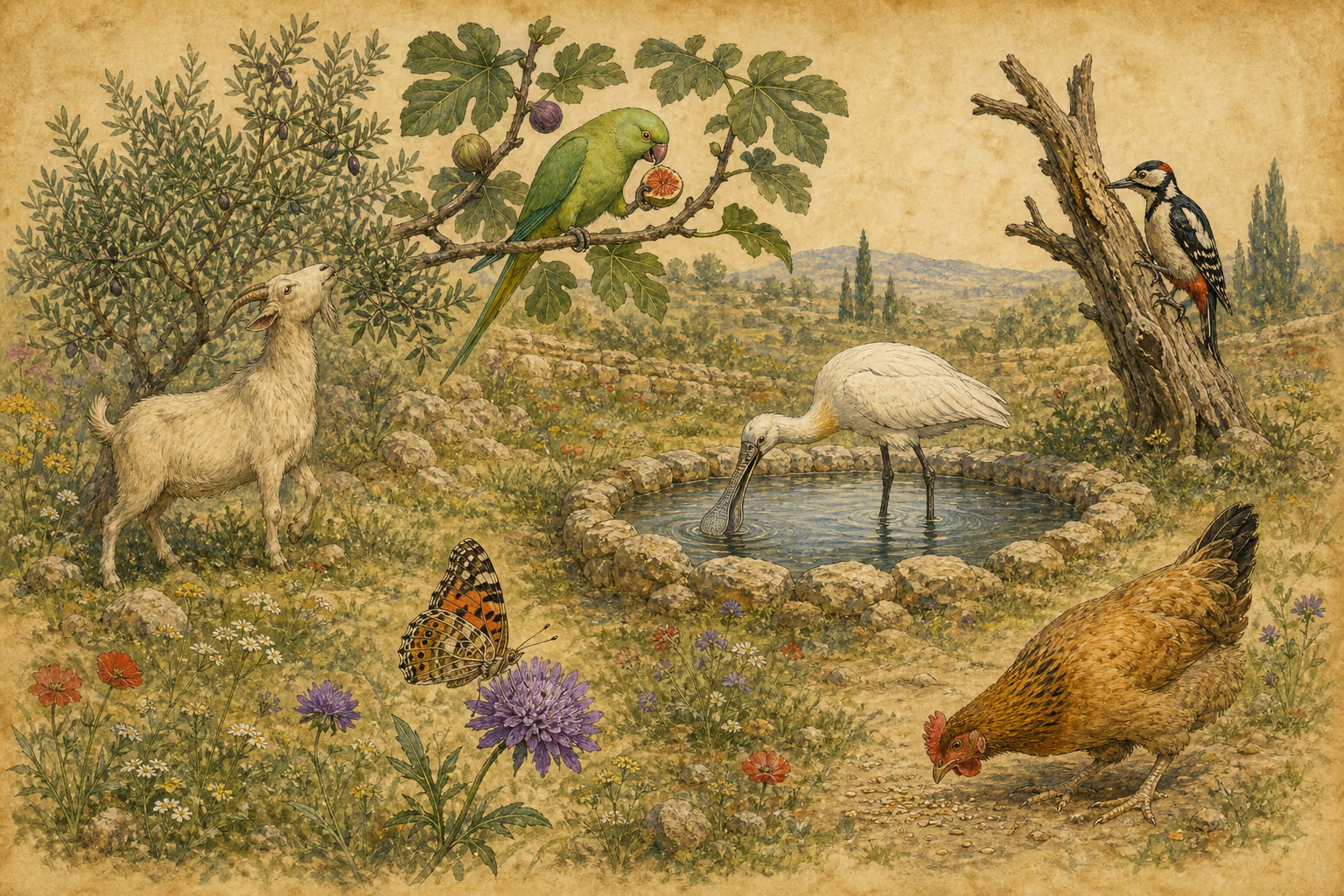
Existimaverim omnibus sensum et gustatus esse. cur enim alios alia sapores adpetant? in quo vel praecipua naturae varietas et lusus: alia dentibus praedantur, alia unguibus, alia rostri aduncitate carpunt, alia latitudine eruunt, alia acumine excavant, alia sugunt, alia lambunt, sorbent, mandunt, vorant. nec minor varietas in pedum ministerio, ut rapiant, distrahant, teneant, premant, pendeant, tellurem scabere non cessent.
English · Bostock & Riley 1855–57
All animals have the sense of touch, those even which have no other sense; for even in the oyster, and, among land animals, in the worm, this sense is found.
I am strongly inclined to believe, too, that the sense of taste exists in all animals; for why else should one seek one kind of food, and another another? And it is in this more especially that is to be seen the wondrous power of Nature, the framer of all things. Some animals seize their prey with their teeth, others, again, with their claws; some tear it to pieces with their hooked beak; others, that have a broad bill, wabble in their food; others, with a sharp nib, work holes into it; others suck at their food; others, again, lick it, others sup it in, others chew it, and others bolt it whole. And no less a diversity is there in the uses they make of their feet, for the purpose of carrying, tearing asunder, holding, squeezing, suspending their bodies, or incessantly scratching the ground.