LIBER X · CAPUT 70
WHICH FISHES HAVE THE BEST HEARING
Latine · Mayhoff 1906
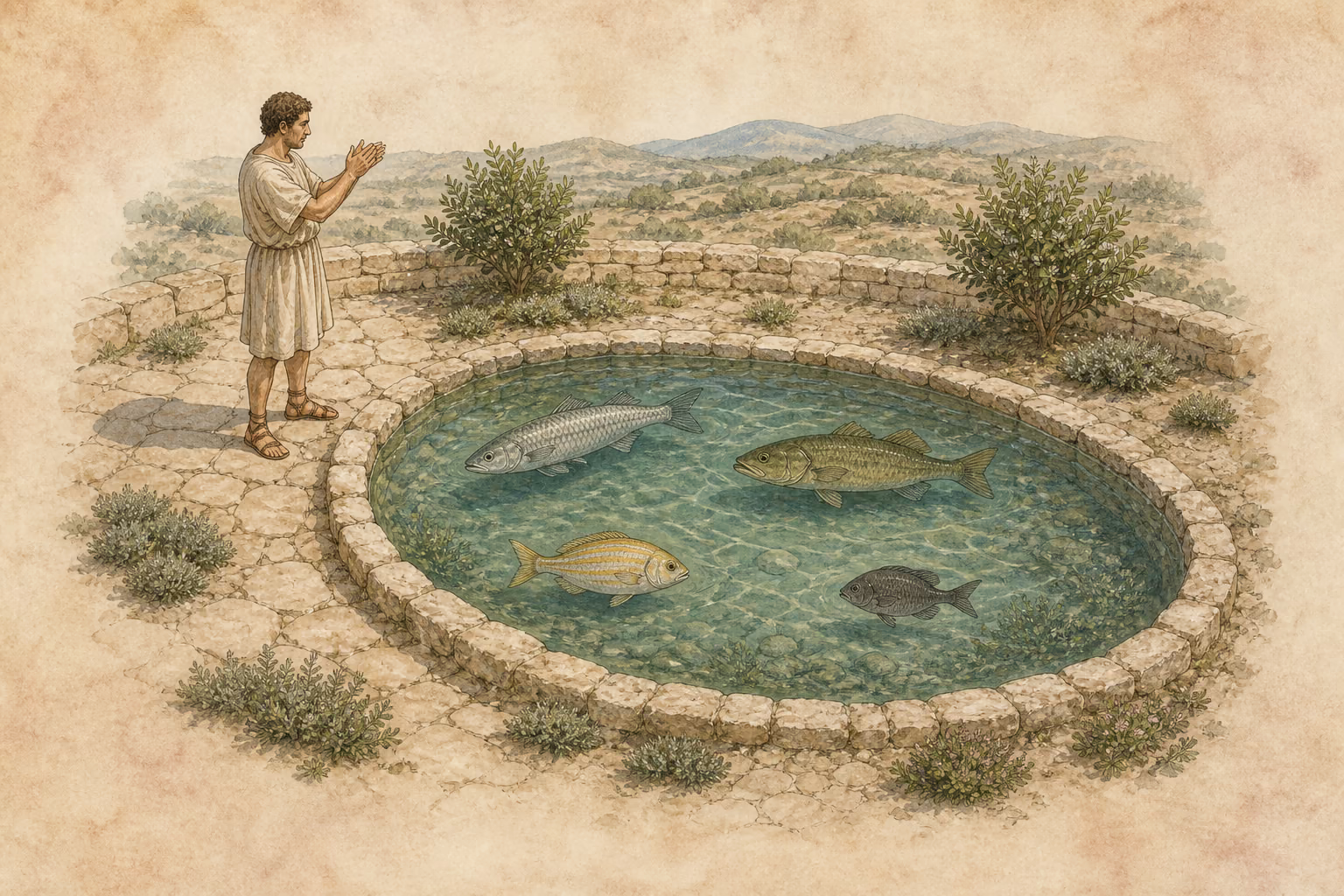
pisces quidem auditus nec membra habent nec foramina, audire tamen eos palam est, utpote cum plausu congregari feros ad cibum adsuetudine in quibusdam vivariis spectetur et in piscinis Caesaris genera piscium ad nomen venire quosdamve singulos. itaque produntur etiam clarissimeaudire mugil, lupus, salpa, chromis et ideo in vado vivere.
Olfactum iis esse manifeste patet, quippe non omnes eadem esca capiuntur et prius quam adpetant odorantur. quosdam et speluncis latentes salsamento inlitis faucibus scopuli piscator expellit velut sui cadaveris agnitionem fugientes, conveniuntque ex alto etiam ad quosdam odores, ut saepiam ustam et polypum, quae ideo coiciuntur in nassas. sentinae quidem navium odorem procul fugiunt, maxime tamen piscium sanguinem. non potest petris avelli polypus; idem cunila admota ab odore protinus resilit. purpurae quoque faetidis capiuntur. nam de reliquo animalium genere quis dubitet? cornus cervini odore serpentes fugantur, sed maxime styracis; origani aut calcis aut sulpuris formicae necantur. culices acida petunt, ad dulcia non advolant.
English · Bostock & Riley 1855–57
Fishes have neither organs of hearing, nor yet the exterior orifice. And yet, it is quite certain that they do hear; for it is a well-known fact, that in some fish-ponds they are in the habit of being assembled to be fed by the clapping of the hands. In the fish-ponds, too, that belong to the Emperor, the fish are in the habit of coming, each kind as it bears its name. So too, it is said, the mullet, the wolf-fish, the salpa, and the chromis, have a very exquisite sense of hearing, and that it is for this reason that they frequent shallow water.
It is quite manifest that fishes have the sense of smell also; for they are not all to be taken with the same bait, and are seen to smell at it before they seize it. Some, too, that are concealed in the bottom of holes, are driven out by the fisherman, by the aid of the smell of salted fish; with this he rubs the entrance of their retreat in the rock, immediately upon which they take to flight from the spot, just as though they had recognized the dead carcases of those of their kind. Then, again, they will rise to the surface at the smell of certain odours, such, for instance as roasted sæpia and polypus; and hence it is that these baits are placed in the osier kipes used for taking fish. They immediately take to flight upon smelling the bilge water in a ship’s hold, and more especially upon scenting the blood of fish.
The polypus cannot possibly be torn away from the rock to which it clings; but upon the herb cunila being applied, the instant it smells it the fish quits its hold. Purples also are taken by means of fetid substances. And then, too, as to the other kinds of animals, who is there that can feel any doubt? Serpents are driven away by the smell of harts’ horns, and more particularly by that of storax. Ants, too, are killed by the odours of origanum, lime, or sulphur. Gnats are attracted by acids, but not by anything sweet.