LIBER XI · CAPUT 10
THE MODE IN WHICH BEES WORK
Latine · Mayhoff 1906
Ratio operismire divisi: statio ad portas more castrorum, quies in matutinum, donec una excitet gemino aut triplici bombo ut bucino aliquo. tune universae provolant, si dies mitis futurus est. praedivinant enim ventos imbresque, cum se continent tectis; itaque temperie caeli otium hoc inter praescita habent. cum agmen ad opera processit, aliae flores adgerunt pedibus, aliae aquam ore guttasque lanugine totius corporis. quibus est earum adulescentia, ad opera exeunt et supra dicta convehunt, seniores intus operantur. quae flores comportant, prioribus pedibus femina onerant propter id natura scabra, pedes priores rostro, totaeque onustae remeant sarcina pandatae. excipiunt eas ternae quaternae, quae exonerant. sunt enim intus quoque officia divisa: aliae struunt, aliae poliunt, aliae suggerunt, aliae cibum comparant ex eo quod adlatum est; neque enim separatim vescuntur, ne inaequalitas operis et cibi fiat et temporis. struunt orsae a concamaratione alvi textumque velut a summa tela deducunt, limitibus binis circa singulos actus, ut aliis intrent, aliis exeant. favi, superiore parte adfixi et paulum etiam lateribus, simul haerent et pendent; ima alvum non contingunt, oblongiaut rotundi, qualiter poposcit alvus, aliquando et duorum generum, cum duo examina concordibus populis dissimiles habuere ritus. ruentes ceras fulciunt, pilarum intergerivis a solo fornicatis, ne desit aditus ad sarciendum. primi fere tres versus inanes struuntur, ne promptum sit quod invitet furantem; novissimi maxime inplentur mille. ideo aversa alvo favi eximuntur. gerulae secundos flatus captant. si cooriatur procella, adprehensi pondusculo lapilli se librant; quidam in umeros eum inponi tradunt. iuxta vero terram volant in adverso flatu vepribus evitatis. mira observatio operis: cessantium inertiam notant, castigant, mox et puniunt morte. mira munditia amoliuntur omnia e medio, nullaeque inter opera spurcitiae iacent; quin et excrementa operantium intus, ne longius recedant, unum congesta in locum turbidis diebus et operis otio egerunt. cum advesperascit, in alvo strepunt minus ac minus, donec una circumvolet eodem quo excitavit bombo ceu quietem capere imperans, et hoc castrorum more. tunc repente omnes conticescunt.
English · Bostock & Riley 1855–57
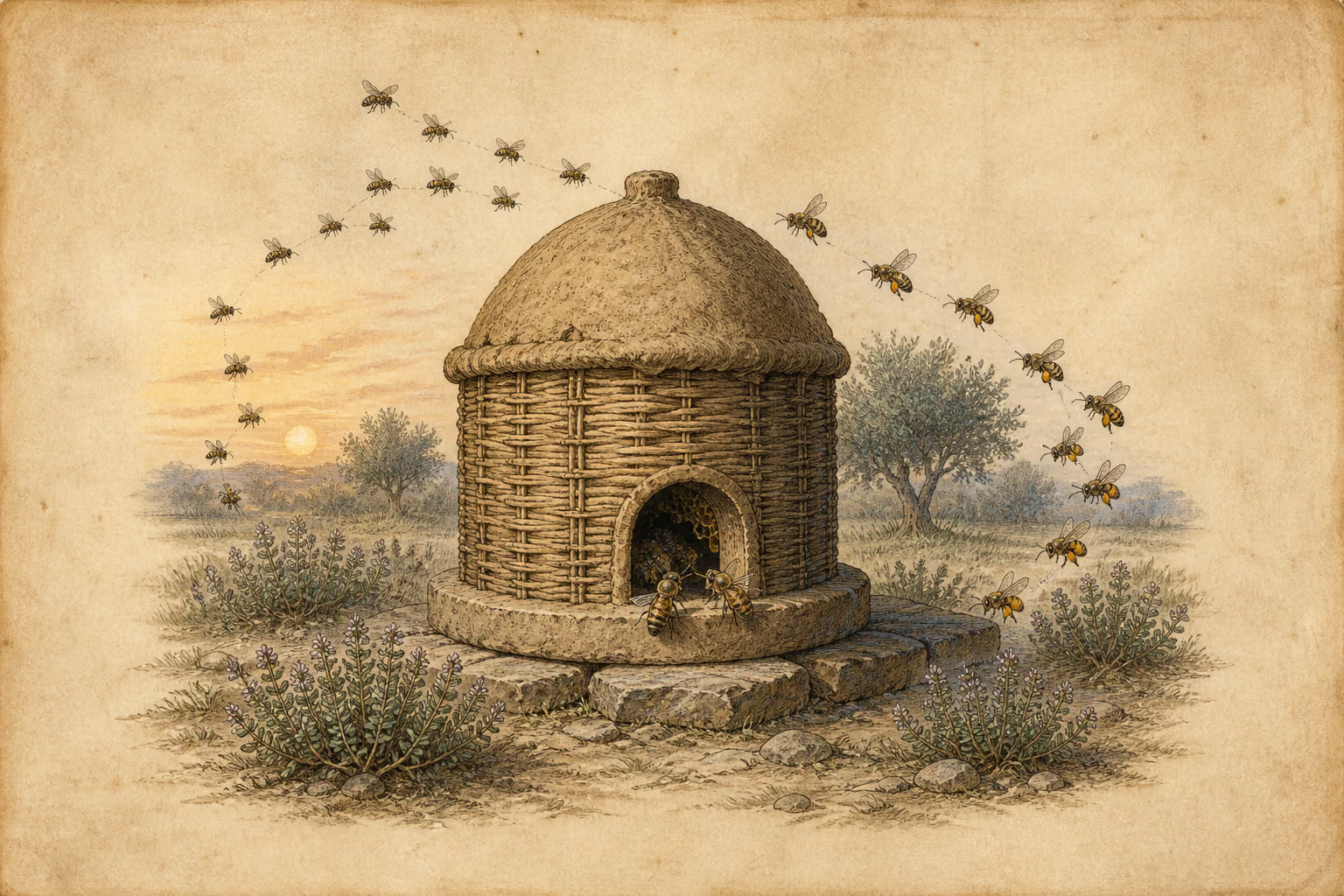
The manner in which bees carry on their work is as follows. In the day time a guard is stationed at the entrance of the hive, like the sentries in a camp. At night they take their rest until the morning, when one of them awakes the rest with a humming noise, repeated twice or thrice, just as though it were sounding a trumpet. They then take their flight in a body, if the day is likely to turn out fine; for they have the gift of foreknowing wind and rain, and in such case will keep close within their dwellings. On the other hand, when the weather is fine—and this, too, they have the power of foreknowing—the swarm issues forth, and at once applies itself to its work, some loading their legs from the flowers, while others fill their mouths with water, and charge the downy surface of their bodies with drops of liquid. Those among them that are young go forth to their labours, and collect the materials already mentioned, while those that are more aged stay within the hives and work. The bees whose business it is to carry the flowers, with their fore feet load their thighs, which Nature has made rough for the purpose, and with their trunks load their fore feet: bending beneath their load, they then return to the hive, where there are three or four bees ready to receive them, and aid in discharging their burdens. For, within the hive as well, they have their allotted duties to perform: some are engaged in building, others in smoothing, the combs, while others again are occupied in passing on the materials, and others in preparing food from the provision which has been brought; that there may be no unequal division, either in their labour, their food, or the distribution of their time, they do not even feed separately.
Commencing at the vaulted roof of the hive, they begin the construction of their cells, and, just as we do in the manufacture of a web, they construct their cells from top to bottom, taking care to leave two passages around each compartment, for the entrance of some and the exit of others. The combs, which are fastened to the hive in the upper part, and in a slight degree also at the sides, adhere to each other, and are thus suspended altogether. They do not touch the floor of the hive, and are either angular or round, according to its shape; sometimes, in fact, they are both angular and round at once, when two swarms are living in unison, but have dissimilar modes of operation. They prop up the combs that are likely to fall, by means of arched pillars, at intervals springing from the floor, so as to leave them a passage for the purpose of effecting repairs. The first three ranks of their cells are generally left empty when constructed, that there may be nothing exposed to view which may invite theft; and it is the last ones, more especially, that are filled with honey: hence it is that the combs are always taken out at the back of the hive.
The bees that are employed in carrying look out for a favourable breeze, and if a gale should happen to spring up, they poise themselves in the air with little stones, by way of ballast; some writers, indeed, say that they place them upon their shoulders. When the wind is contrary, they fly close to the ground, taking care, however, to keep clear of the brambles. It is wonderful what strict watch is kept upon their work: all instances of idleness are carefully remarked, the offenders are chastised, and on a repetition of the fault, punished with death. Their sense of cleanliness, too, is quite extraordinary; everything is removed that might be in the way, and no filth is allowed to remain in the midst of their work. The ordure even of those that are at work within, that they may not have to retire to any distance, is all collected in one spot, and on stormy days, when they are obliged to cease their ordinary labours, they employ themselves in carrying it out. When it grows towards evening, the buzzing in the hive becomes gradually less and less, until at last one of their number is to be seen flying about the hive with the same loud humming noise with which they were aroused in the morning, thereby giving the signal, as it were, to retire to rest: in this, too, they imitate the usage of the camp. The moment the signal is heard, all is silent.