LIBER XI · CAPUT 11
DRONES
Latine · Mayhoff 1906
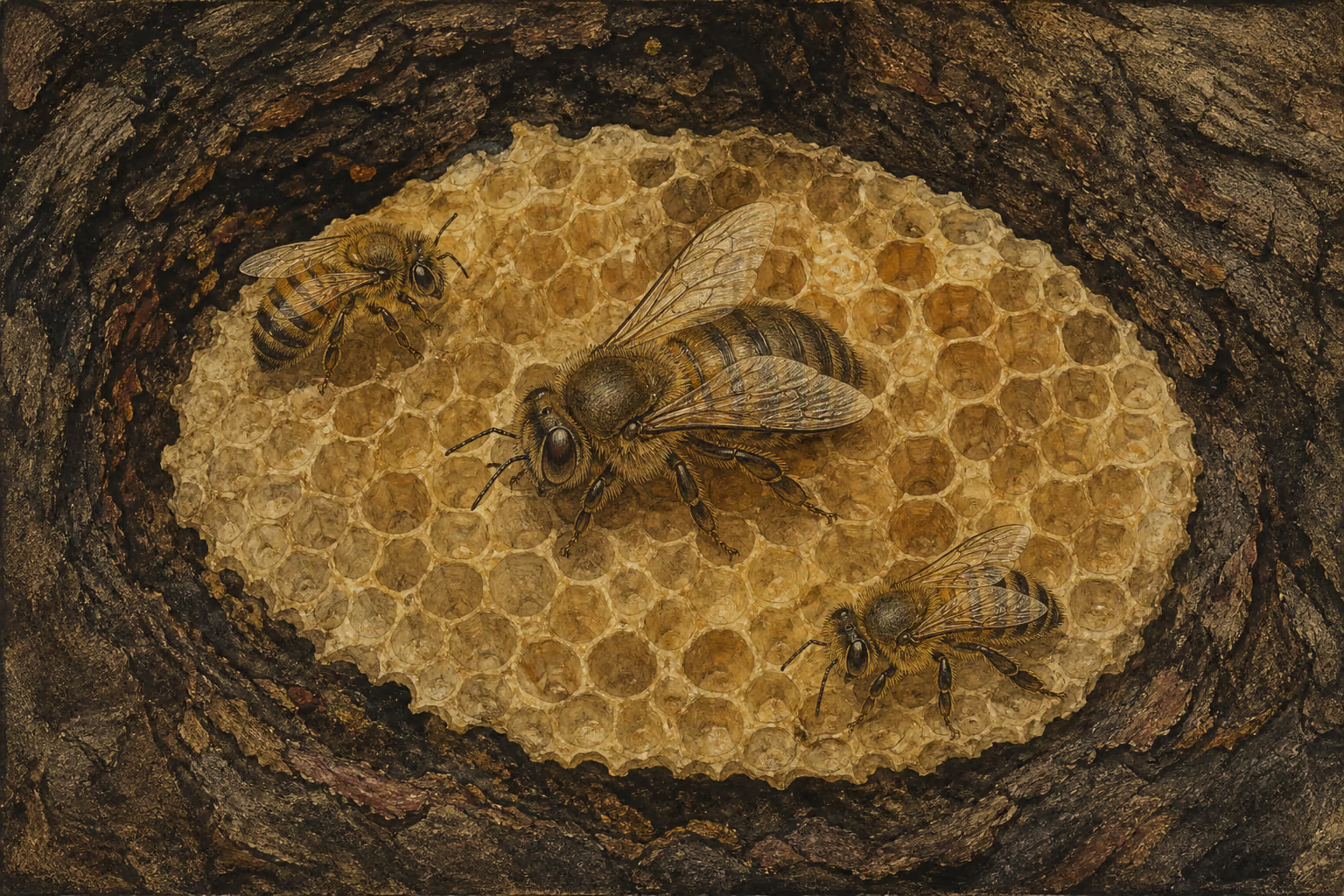
Domos primum plebei exaedificant, deinde regibus. si speratur largior proventus, adiciuntur contubernia et fucis. hae cellarum minimae, sed ipsi maiores apibus. sunt autem fuci sine aculeo, velut inperfectae apes novissimaeque a fessis aut iam emeritis inchoatae, serotinus fetus et quasi servitia verarum apium, quam ob rem imperant iis primosque expellunt in opera, tardantes sine dementia puniunt. neque in opere tantum, sed in fetu quoque adiuvant eas, multum ad calorem conferente turba. certe quo maior eorum fuit multitudo, hoc maior fit et examinum proventus. cum mella coeperunt maturescere, abigunt eos multaeque singulos adgressae trucidant. nec id genus nisi vere conspicitur. fucus ademptis alis in alvum reiectus ipse ceteris adimit. regias imperatoribus futuris in ima parte alvi exstruunt amplas, magnificas, separatas, tuberculo eminentes, quod si exprimatur, non gignuntur. sexangulae omnes cellae a singulorum pedum opere. nihil horum stato tempore, sed rapiunt diebus serenis munia. melle uno alterove summum die cellas replent.
English · Bostock & Riley 1855–57
They first construct the dwellings of the commonalty, and then those of the king-bee. If they have reason to expect an abundant season, they add abodes also for the drones: these are cells of a smaller size, though the drones themselves are larger than the bees.
The drones have no sting, and would seem to be a kind of imperfect bee, formed the very last of all; the expiring effort, as it were, of worn-out and exhausted old age, a late and tardy offspring, and doomed, in a measure, to be the slaves of the genuine bees. Hence it is that the bees exercise over them a rigorous authority, compel them to take the foremost rank in their labours, and if they show any sluggishness, punish them without mercy. And not only in their labours do the drones give them their assistance, but in the propagation of their species as well, the very multitude of them contributing greatly to the warmth of the hive. At all events, it is a well-known fact, that the greater the multitude of the drones, the more numerous is sure to be the progeny of the swarm. When the honey is beginning to come to maturity, the bees drive away the drones, and setting upon each in great numbers, put them all to death. It is only in the spring that the drones are ever to be seen. If you deprive a drone of its wings, and then replace it in the hive, it will pull off the wings of the other drones.
In the lower part of the hive they construct for their future sovereign a palatial abode, spacious and grand, separated from the rest, and surmounted by a sort of dome: if this prominence should happen to be flattened, all hopes of progeny are lost. All the cells are hexagonal, each foot having formed its own side. No part of this work, however, is done at any stated time, as the bees seize every opportunity for the performance of their task when the days are fine; in one or two days, at most, they fill their cells with honey.