LIBER XI · CAPUT 12
THE QUALITIES OF HONEY
Latine · Mayhoff 1906
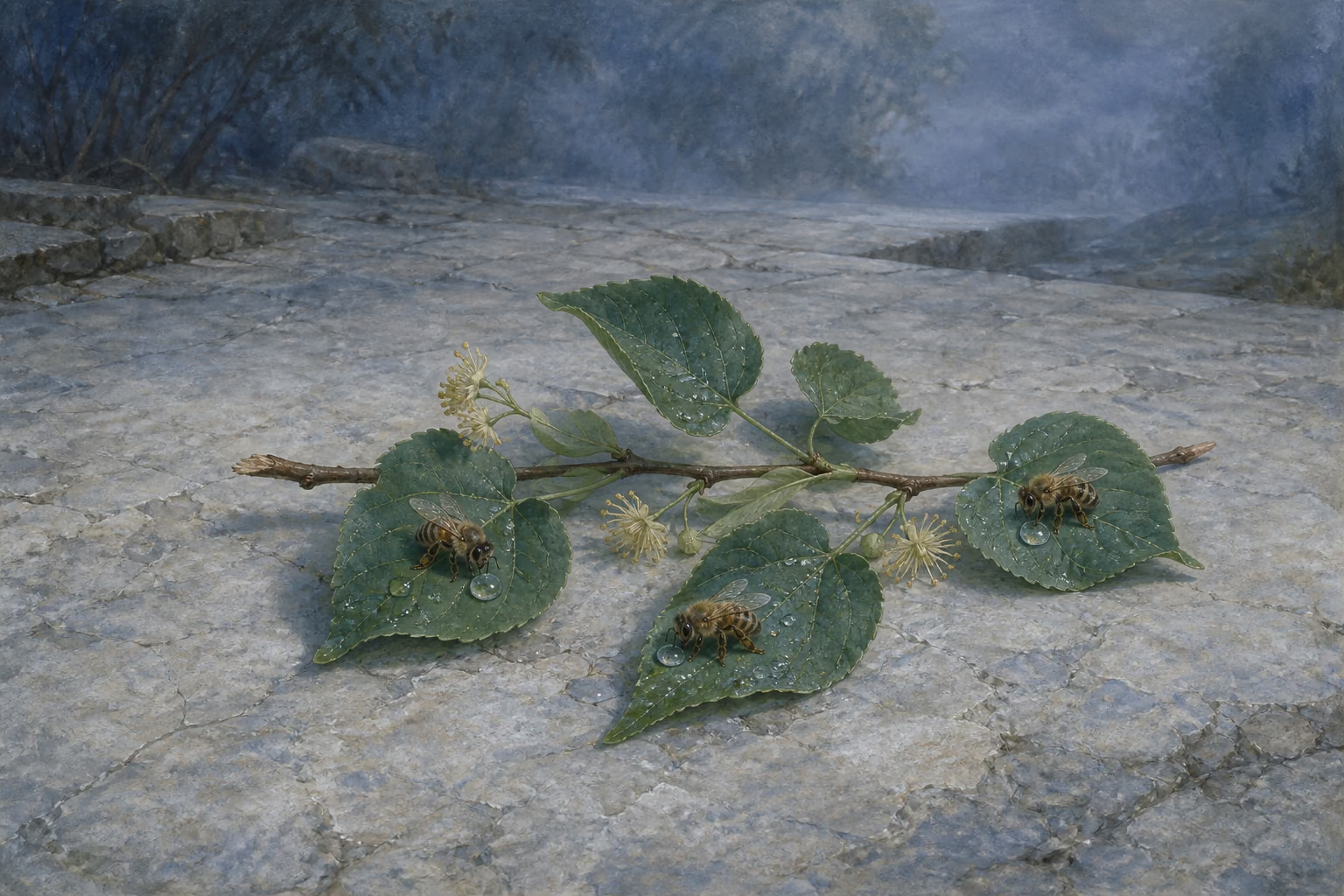
Venit hoc ex aëre et maxime siderum exortu, praecipueque ipso sirio explendescente, nec omnino prius vergiliarum exortu, sublucanis temporibus. itaque tum prima aurora folia arborum melle roscida inveniuntur ac, si qui matutino sub diu fuere, unctas liquore vestes capillumque concretum sentiunt, sive ille est caeli sudor sive quaedam siderum saliva sive purgantis se aëris sucus; utinamque esset purus ac liquidus et suae naturae, qualis defluit primo! nunc vero e tanta cadens altitudine multumque, dum venit, sordescens et obvio terrae halitu infectus, praeterea e fronde ac pabulis potus et in utriculos congestus apium — ore enim eum vomunt —, ad hoc suco florum corruptus et alvi vitiis maceratus totiensque mutatus, magnam tamen caelestis naturae voluptatem adfert.
English · Bostock & Riley 1855–57
This substance is engendered from the air, mostly at the rising of the constellations, and more especially when Sirius is shining; never, however, before the rising of the Vergiliæ, and then just before day-break. Hence it is, that at early dawn the leaves of the trees are found covered with a kind of honey-like dew, and those who go into the open air at an early hour in the morning, find their clothes covered, and their hair matted, with a sort of unctuous liquid. Whether it is that this liquid is the sweat of the heavens, or whether a saliva emanating from the stars, or a juice exuding from the air while purifying itself, would that it had been, when it comes to us, pure, limpid, and genuine, as it was, when first it took its downward descent. But as it is, falling from so vast a height, attracting corruption in its passage, and tainted by the exhalations of the earth as it meets them, sucked, too, as it is from off the trees and the herbage of the fields, and accumulated in the stomachs of the bees—for they cast it up again through the mouth—deteriorated besides by the juices of flowers, and then steeped within the hives and subjected to such repeated changes—still, in spite of all this, it affords us by its flavour a most exquisite pleasure, the result, no doubt, of its æthereal nature and origin.