LIBER XI · CAPUT 14
THE KINDS OF HONEY PECULIAR TO VARIOUS PLACES
Latine · Mayhoff 1906
Summa quidem bonitatis natione constat, ut supra diximus, pluribus modis. aliubi enim favi cera spectabiles tabiles gignuntur, ut in Sicilia, Paelignis, aliubi copia mellis, ut in Creta, Cypro, Africa, aliubi magnitudine, ut in septentrionalibus, viso iam in Germania octo pedum longitudinis favo in cava parte nigro. in quocumque tamen tractu terna sunt genera mellis. vernum ex floribus constructo favo, quod ideo vocatur anthinum. hoc quidam attingi vetant, ut largo alimento valida exeat suboles. alii ex nullo minus apibus relinquunt, quoniam magna sequatur ubertas magnorum siderum exortu, praeterea solstitio, cum thymum et uva florere incipiunt, praecipua cellarum materia. est autem in eximendis favis necessaria dispensatio, quoniam inopia cibi desperant moriunturque aut diffugiunt, contra copia ignaviam adfert, ac iam melle, non erithace, pascuntur. ergo diligentiores ex hac vindemia XV partem apibus relinquunt. dies status inchoandae, ut quadam lege naturae, si scire aut observare homines vellent, tricensimus ab educto examine, fereque Maio mense includitur haec vindemia.
Alterum genus est mellis aestivi, quod ideo vocatur horaeon a tempestivitate praecipua, ipso sirio exsplendescente post solstitium diebus XXX fere. inmensa circa hoc subtilitas naturae mortalibus patefacta est, nisi fraus hominum cuncta pernicie corrumperet. namque ab exortu sideris cuiuscumque, sed nobilium maxime, aut caelestis arcus, si non sequantur imbres, sed ros tepescat solis radiis, medicamenta, non mella, gignuntur, oculis, ulceribus internisque visceribus dona caelestia. quod si servetur hoc sirio exoriente casuque congruat in eundem diem, ut saepe, Veneris aut lovis Mercurive exortus, non alia suavitas visque mortalium malis a morte revocandis quam divini nectaris fiat.
English · Bostock & Riley 1855–57
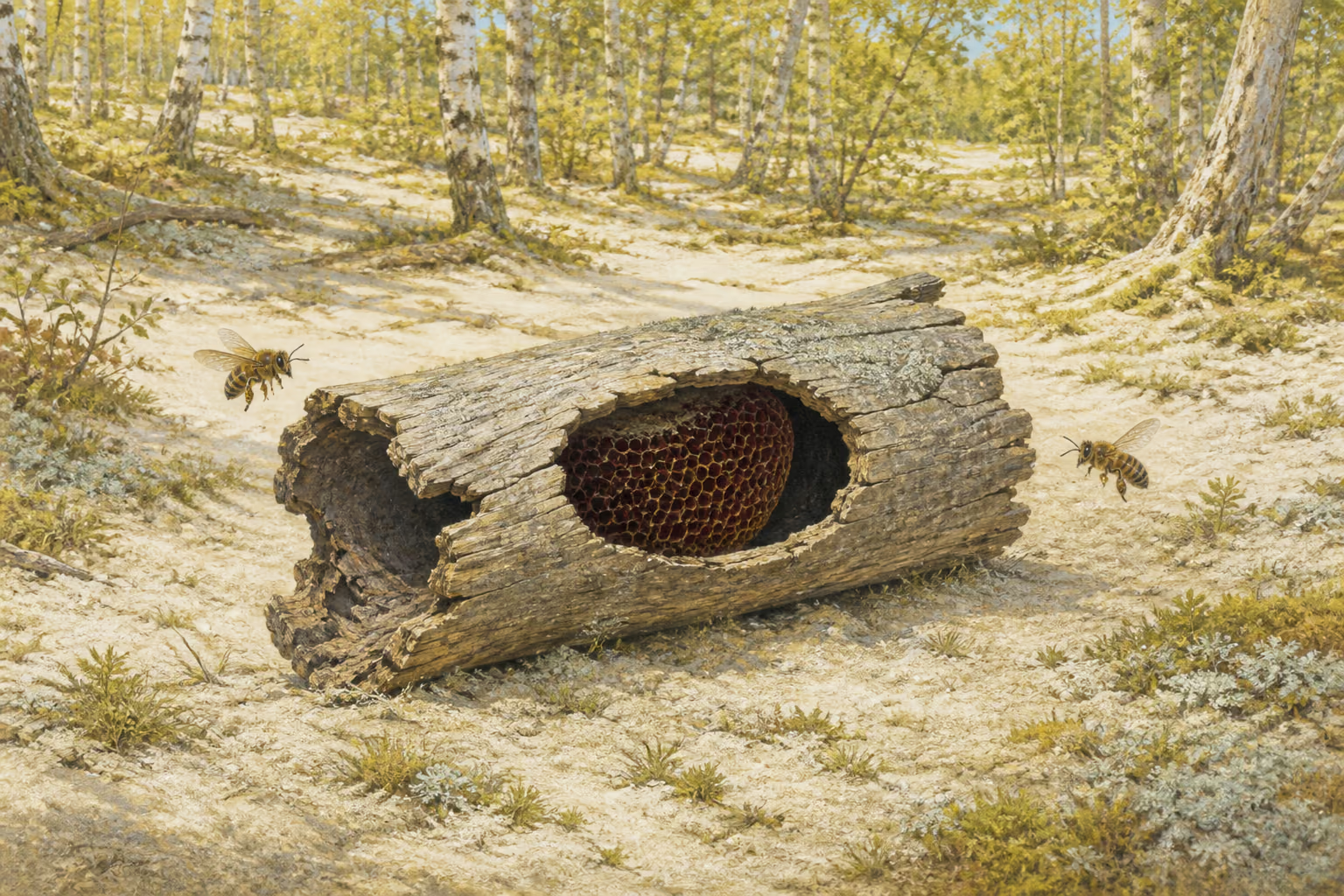
The peculiar excellence of honey depends, as already stated, on the country in which it is produced; the modes, too, of estimating its quality are numerous. In some countries we find the honey-comb remarkable for the goodness of the wax, as in Sicily, for instance, and the country of the Peligni; in other places the honey itself is found in greater abundance, as in Crete, Cyprus, and Africa; and in others, again, the comb is remarkable for its size; the northern climates, for instance, for in Germany a comb has been known to be as much as eight feet in length, and quite black on the concave surface.
But whatever the country in which it may happen to have been produced, there are three different kinds of honey.—Spring honey is that made in a comb which has been constructed of flowers, from which circumstance it has received the name of anthinum. There are some persons who say that this should not be touched, because the more abundant the nutriment, the stronger will be the coming swarm; while others, again, leave less of this honey than of any other for the bees, on the ground that there is sure to be a vast abundance at the rising of the greater constellations, as well as at the summer solstice, when the thyme and the vine begin to blossom, for then they are sure to find abundant materials for their cells.
In taking the combs the greatest care is always requisite, for when they are stinted for food the bees become desperate, and either pine to death, or else wing their flight to other places: but on the other hand, over-abundance will entail idleness, and then they will feed upon the honey, and not the bee-bread. Hence it is that the most careful breeders take care to leave the bees a fifteenth part of this gathering. There is a certain day for beginning the honey-gathering, fixed, as it were, by a law of Nature, if men would only understand or observe it, being the thirtieth day after the bees have swarmed and come forth. This gathering mostly takes place before the end of May.
The second kind of honey is “summer honey,” which, from the circumstance of its being produced at the most favourable season, has received the Greek name of horaion; it is generally made during the next thirty days after the solstice, while Sirius is shining in all its brilliancy. Nature has revealed in this substance most remarkable properties to mortals, were it not that the fraudulent propensities of man are apt to falsify and corrupt everything. For, after the rising of each constellation, and those of the highest rank more particularly, or after the appearance of the rainbow, if a shower does not ensue, but the dew becomes warmed by the sun’s rays, a medicament, and not real honey, is produced; a gift sent from heaven for the cure of diseases of the eyes, ulcers, and maladies of the internal viscera. If this is taken at the rising of Sirius, and the rising of Venus, Jupiter, or Mercury should happen to fall on the same day, as often is the case, the sweetness of this substance, and the virtue which it possesses of restoring men to life, are not inferior to those attributed to the nectar of the gods.