LIBER XI · CAPUT 15
HOW HONEY IS TESTED. ERICÆUM. TETRALIX, OR SISIRUM
Latine · Mayhoff 1906
Mel plenilunio uberius capitur, sereno die pinguius. in omni melle quod per se fluxit ut mustum oleumque, appellatur acetum. maxime laudabile est aestivum omne rutilum, ut siccioribus confectum diebus. album mel non fit ubi thymum est, sed oculis et ulceribus aptissimum existimatur. e thymo coloris aurei, saporis gratissimi, quo fit palam;.... doliolis pingue, e marino rore spissum. quod concrescit autem, minime laudatur. thymosum non coit et tactu praetenuia fila mittit, quod primum bonitatis argumentum est; abrumpi statim et resilire guttas vilitatis indicium habetur. sequens probatio ut sit odoratum etex dulci acre, glutinosum, perlucidum. aestiva mellatione X partem Cassio Dionysio apibus relinqui placet, si plenae fuerint alvi; si minus, pro rata portione aut, si inanes, omnino non attingi. huic vindemiae Attici signum dedere initium caprifici, alii diem Volcano sacrum.
English · Bostock & Riley 1855–57
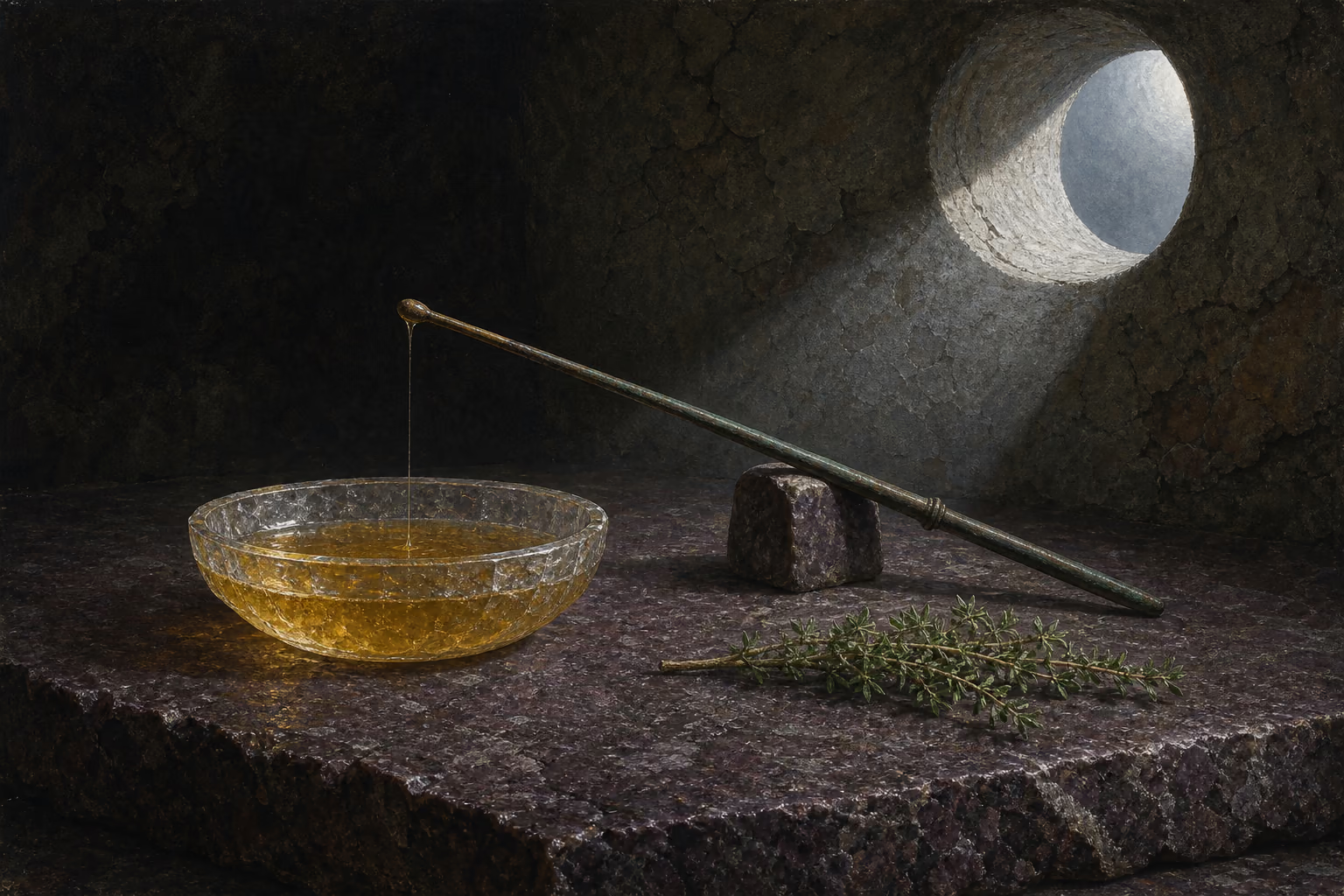
The crop of honey is most abundant if gathered at full moon, and it is richest when the weather is fine. In all honey, that which flows of itself, like must or oil, has received from us the name of acetum. The summer honey is the most esteemed of all, from the fact of its being made when the weather is driest: it is looked upon as the most serviceable when made from thyme; it is then of a golden colour, and of a most delicious flavour. The honey that we see formed in the calix of flowers is of a rich and unctuous nature; that which is made from rosemary is thick, while that which is candied is little esteemed. Thyme honey does not coagulate, and on being touched will draw out into thin viscous threads, a thing which is the principal proof of its heaviness. When honey shows no tenacity, and the drops immediately part from one another, it is looked upon as a sign of its worthlessness. The other proofs of its goodness are the fine aroma of its smell, its being of a sweetness that closely borders on the sour, and being glutinous and pellucid.
Cassius Dionysius is of opinion that in the summer gathering the tenth part of the honey ought to be left for the bees if the hives should happen to be well filled, and even if not, still in the same proportion; while, on the other hand, if there is but little in them, he recommends that it should not be touched at all. The people of Attica have fixed the period for commencing this gathering at the first ripening of the wild fig; others have made it the day that is sacred to Vulcan.