LIBER XI · CAPUT 21
WASPS AND HORNETS: ANIMALS WHICH APPROPRIATE WHAT BELONGS TO OTHERS
Latine · Mayhoff 1906
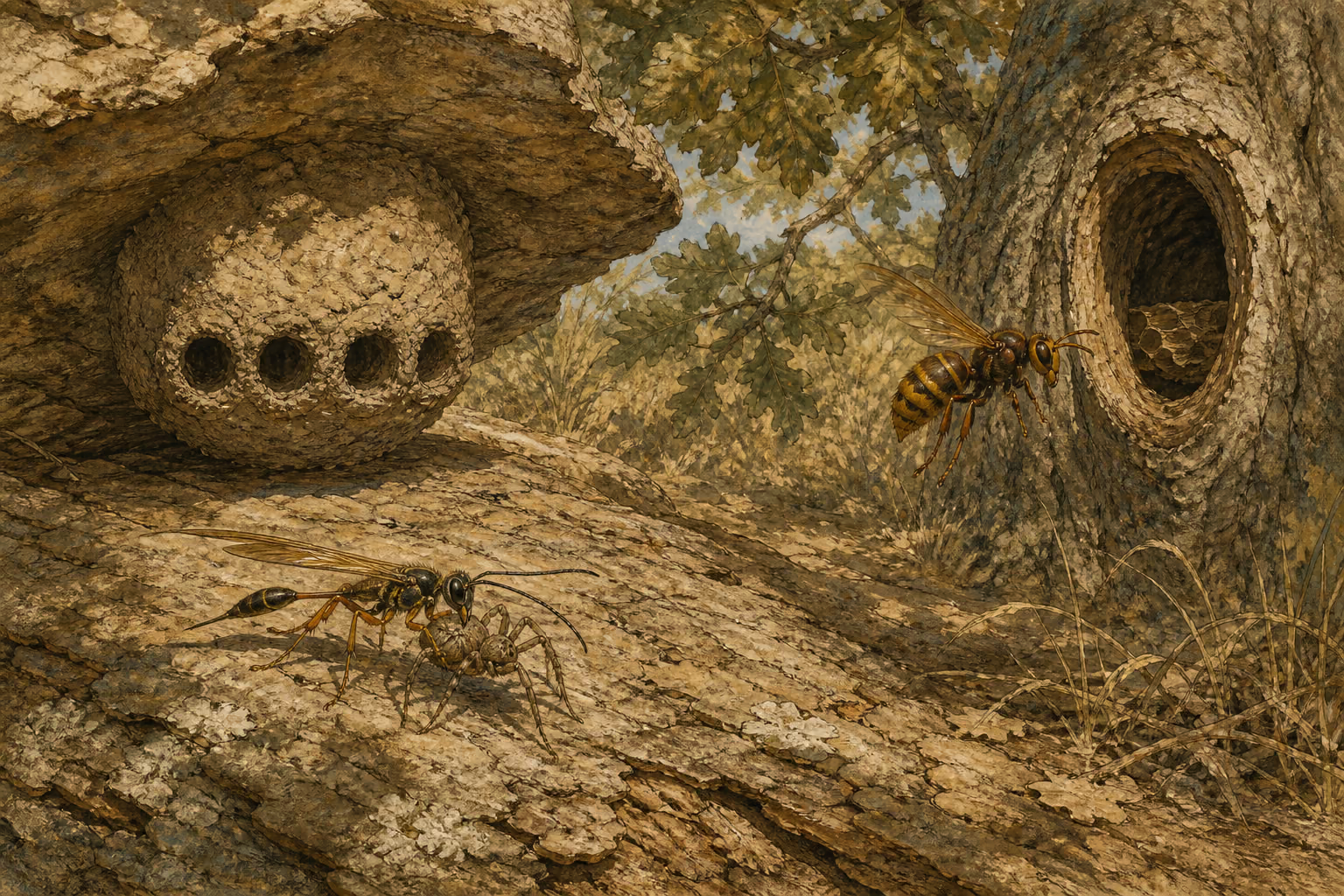
Vespae in sublimi e luto nidos faciunt, in iis ceras, crabrones cavernis aut sub terra. et horum omnium sexangulae cellae, cerae autem e cortice, araneosae. fetus ipse inaequalis ut barbaris: alius evolat, alius in nympha est, alius in vermiculo, et autumno, non vere, omnia ea. plenilunio maxime crescunt. vespae quae ichneumones vocantur — sunt autem minores quam aliae — unum genus ex araneis peremunt, phalangium appellatum, et in nidos suos ferunt, deinde inlinunt et ex iis incubando suum genus procreant. praeterea omnes care vescuntur contra quam apes, quae nullum corpus attingunt. sed vespae muscas grandiores venantur amputatoque iis capite reliquum corpus auferunt. crabronum silvestres in arborum cavernis degunt; hieme ut cetera insecta conduntur; vita bimatum non transit. ictus eorum haut temere sine febri est. auctores sunt ter novenis punctis interfici hominem. aliorum, qui mitiores videntur, duo genera: opifices, minores corpore, qui moriuntur hieme, matres, quae biennio durant; hi et clementes. nidos vere faciunt fere quadrifores, in quibus opifices generentur. his eductis alios deinde maiores nidos fingunt, in quibus matres futuras producant iam: tum opifices funguntur munere et pascunt eas. latior matrum species, dubiumque an habeant aculeos, quia non egrediuntur. et iis sui fuci. quidam opinantur omnibus his ad hiemem decidere aculeos. nec crabronum autem nec vesparum generi reges aut examina, sed subinde renovatur multitudo subole.
English · Bostock & Riley 1855–57
Wasps build their nests of mud in lofty places, and make wax therein: hornets, on the other hand, build in holes or under ground. With these two kinds the cells are also hexagonal, but, in other respects, though made of the bark of trees, they strongly resemble the substance of a spider’s web. Their young also are found at irregular intervals, and are of unshapely appearance; while one is able to fly, another is still a mere pupa, and a third only in the maggot state. It is in the autumn, too, and not in the spring, that all their young are produced; and they grow during the full moon more particularly. The wasp which is known as the ichneumon, a smaller kind than the others, kills one kind of spider in particular, known as the phalangium; after which it carries the body to its nest, covers it over with a sort of gluey substance, and then sits and hatches from it its young. In addition to this, they are all of them carnivorous, while on the other hand bees will touch no animal substance whatever. Wasps more particularly pursue the larger flies, and after catching them cut off the head and carry away the remaining portion of the body.
Wild hornets live in the holes of trees, and in winter, like other insects, keep themselves concealed; their life does not exceed two years in length. It is not unfrequently that their sting is productive of an attack of fever, and there are authors who say that thrice nine stings will suffice to kill a man. Of the other hornets, which seem not to be so noxious, there are two kinds; the working ones, which are smaller in size and die in the winter; and the parent hornets, which live two years; these last, indeed, are quite harmless. In spring they build their nests, which have generally four entrances, and here it is that the working hornets are produced: after these have been hatched they form other nests of larger size, in which to bring forth the parents of the future generation. From this time the working hornets begin to follow their vocation, and apply themselves to supplying the others with food. The parent hornets are of larger size than the others, and it is very doubtful whether they have a sting, as it is never to be seen protruded. These races, too, have their drones. Some persons are of opinion that all these insects lose their stings in the winter. Neither hornets nor wasps have a king, nor do they ever congregate in swarms; but their numbers are recruited by fresh offspring from time to time.