LIBER XI · CAPUT 20
HOW TO KEEP BEES TO THE HIVE
Latine · Mayhoff 1906
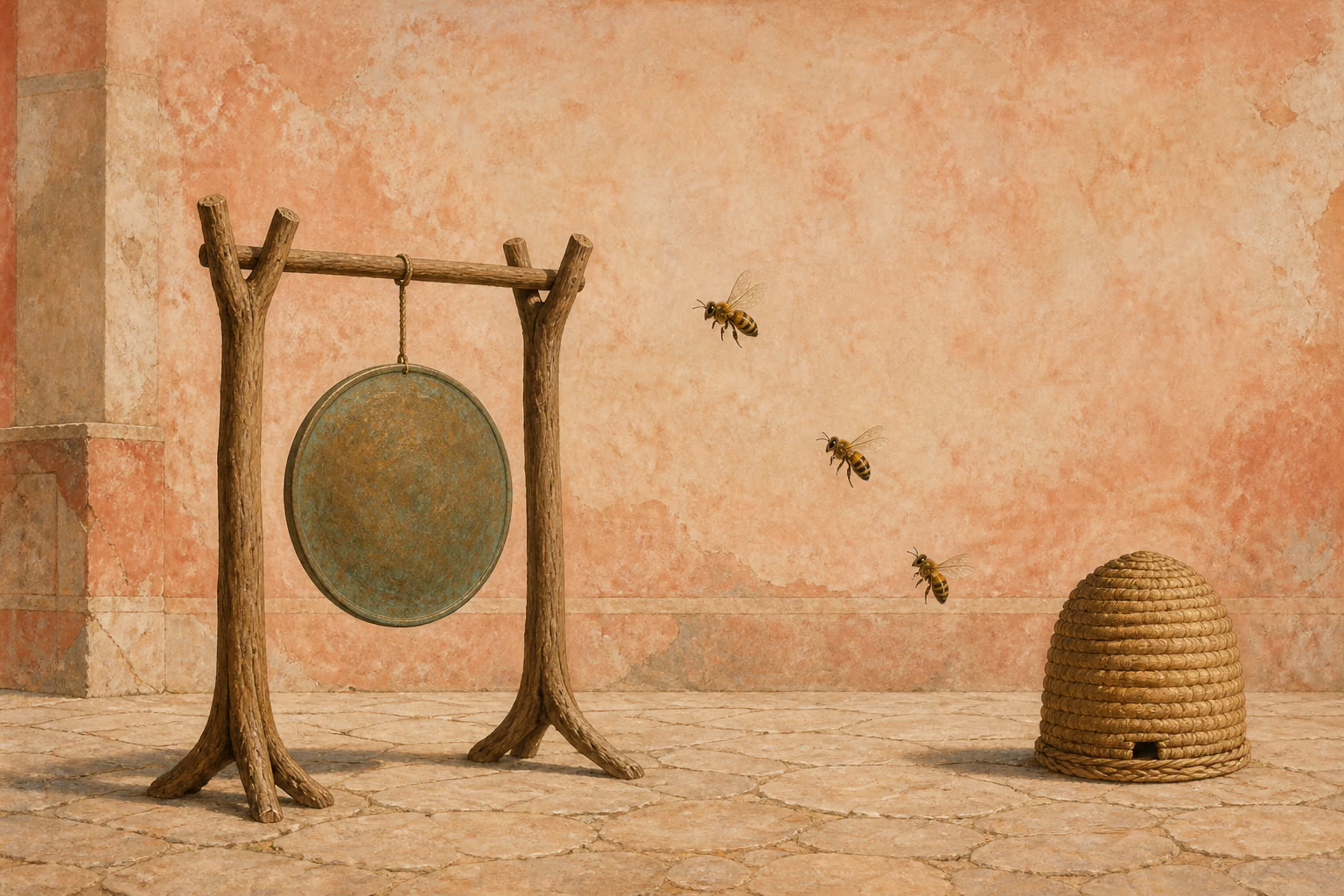
Gaudent plausu atque tinnitu aeris eoque convocantur. quo manifestum est auditus quoque inesse sensum. effecto opere, educto fetu functae munere omni exercitationem tamen sollemnem habent, spatiataeque in aperto et in altum elatae, gyris volatu editis, tum demum ad cibum redeunt. vita iis longissima, ut prospere inimica ac fortuita cedant, septenis annis. universas alvos numquam ultra decem annos durasse proditur. sunt qui mortuas, si intra tectum hieme serventur, dein sole verno torreantur ac ficulneo cinere tepido foveantur, putent revivescere; in totum vero amissas reparari ventribus bubulis recentibus cum fimo obrutis, Vergilius iuvencorum corpore exanimato, sicut equorum vespas atque crabrones, sicut asinorum scarabaeos, mutante natura ex aliis quaedam in alia. sed horum omnium coitus cernuntur, et tamen in fetu eadem prope natura quae apibus.
English · Bostock & Riley 1855–57
The clapping of the hands and the tinkling of brass afford bees great delight, and it is by these means that they are brought together; a strong proof, in fact, that they are possessed of the sense of hearing. When their work is completed, their offspring brought forth, and all their duties fulfilled, they still have certain formal exercises to perform, ranging abroad throughout the country, and soaring aloft in the air, wheeling round and round as they fly, and then, when the hour for taking their food has come, returning home. The extreme period of their life, supposing that they escape accident and the attacks of their enemies, is only seven years; a hive, it is said, never lasts more than ten. There are some persons, who think that, when dead, if they are preserved in the house throughout the winter, and then exposed to the warmth of the spring sun, and kept hot all day in the ashes of fig-tree wood, they will come to life again.
These persons say also, that if the swarm is entirely lost, it may be replaced by the aid of the belly of an ox newly killed, covered over with dung. Virgil also says that this may be done with the body of a young bull, in the same way that the carcase of the horse produces wasps and hornets, and that of the ass beetles, Nature herself effecting these changes of one substance into another. But in all these last, sexual intercourse is to be perceived as well, though the characteristics of the offspring are pretty much the same as those of the bee.