LIBER XI · CAPUT 19
THINGS THAT ARE NOXIOUS TO BEES
Latine · Mayhoff 1906
sunt et operis morbi: cum favos non explent, claron vocant; item blapsigonian, si fetum non peragant.
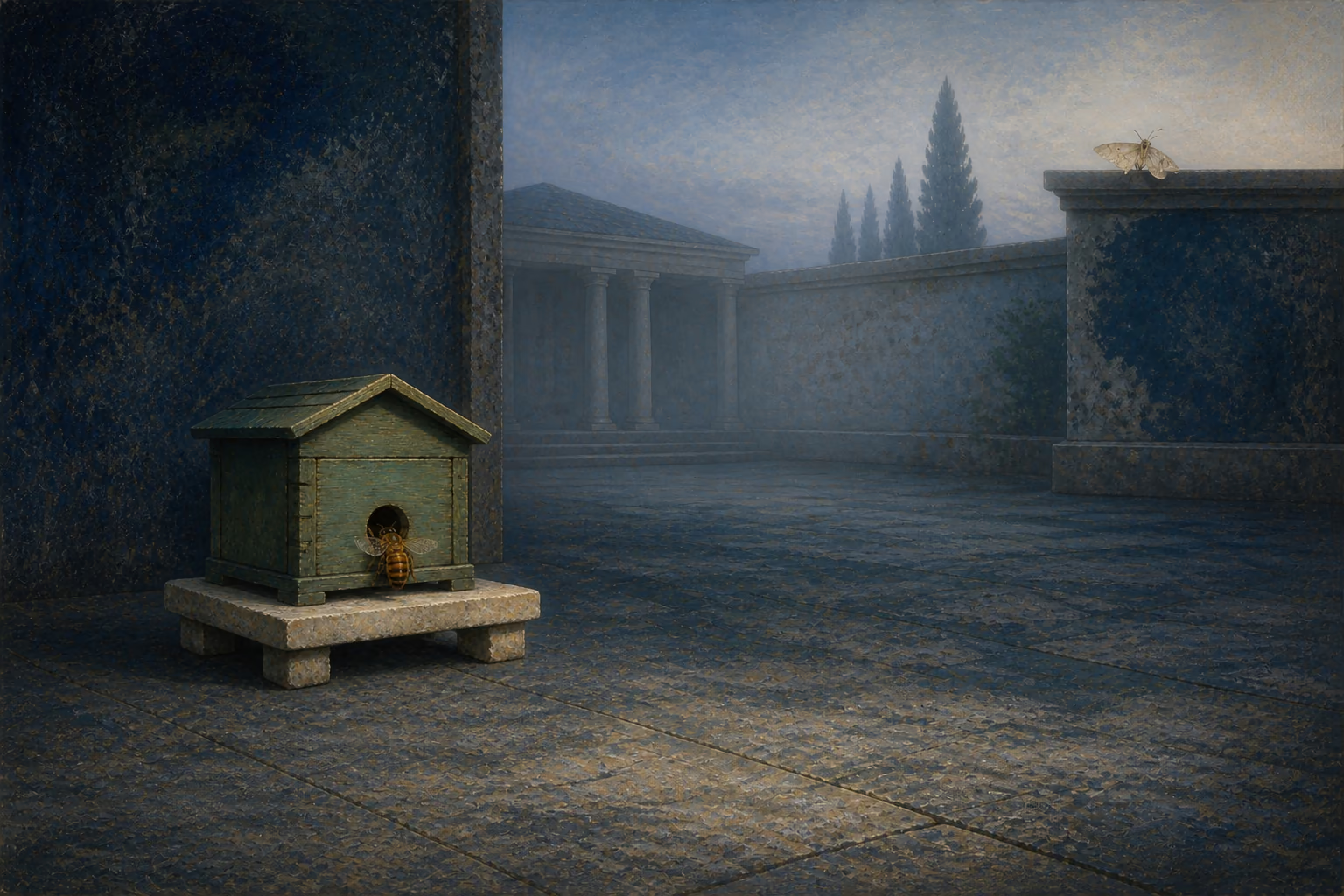
Inimica et echo est resultanti sono, qui pavidas alterno pulset ictu; inimica et nebula. aranei quoque vel maxime hostiles: cum praevaluere, ut intexant, enecant alvos. papilio etiam hic ignavus et inhonoratus, luminibus accensis advolitans, pestifer, nec uno modo: nam et ipse ceras depascitur et relinquit excrementa, e quibus teredines gignuntur; fila etiam araneosa, quacumque incessit, alarum maxime e lanugine obtexit. nascuntur et in ipso ligno teredines, quae ceras praecipue adpetunt. infestat et aviditas pastus, nimia forum satietate verno maxime tempore alvo cita. oleo quidem non apes tantum, sed omnia insecta exanimantur, praecipue si capite uncto in sole ponantur. aliquando et ipsae contrahunt mortis sibi causas, cum sensere eximi mella,avide vorantes, cetero preaparce et quae alioqui prodigas atque edaces non secus ac pigras et ignavas proturbent. nocent et sua mella ipsis inlitaeque ab aversa parte moriuntur. tot hostibus, tot casibus — et quotam portionem eorum commemoro? — tam munificum animal expositum est. remedia dicemus suis locis; nunc enim sermo de natura est.
English · Bostock & Riley 1855–57
There are certain maladies, also, which affect their productions; when they do not fill their combs, the disease under which they are labouring is known by the name of claros, and if they fail to rear their young, they are suffering from the effects of that known as blapsigonia.
Echo, or the noise made by the reverberation of the air, is also injurious to bees, as it dismays them by its redoubled sounds; fogs, also, are noxious to them. Spiders, too, are especially hostile to bees; when they have gone so far as to build their webs within the hive, the death of the whole swarm is the result. The common and ignoble moth, too, that is to be seen fluttering about a burning candle, is deadly to them, and that in more ways than one. It devours the wax, and leaves its ordure behind it, from which the maggot known to us as the “teredo” is produced; besides which, wherever it goes, it drops the down from off its wings, and thereby thickens the threads of the cobwebs. The teredo is also engendered in the wood of the hive, and then it proves especially destructive to the wax. Bees are the victims, also, of their own greediness, for when they glut themselves overmuch with the juices of the flowers, in the spring season more particularly, they are troubled with flux and looseness. Olive oil is fatal to not only bees, but all other insects as well, and more especially if they are placed in the sun, after the head has been immersed in it. Sometimes, too, they themselves are the cause of their own destruction; as, for instance, when they see preparations being made for taking their honey, and immediately fall to devouring it with the greatest avidity. In other respects they are remarkable for their abstemiousness, and they will expel those that are inclined to be prodigal and voracious, no less than those that are sluggish and idle. Their own honey even may be productive of injury to them; for if they are smeared with it on the fore-part of the body, it is fatal to them. Such are the enemies, so numerous are the accidents—and how small a portion of them have I here enumerated!—to which a creature that proves so bountiful to us is exposed. In the appropriate place we will treat of the proper remedies; for the present the nature of them is our subject.