LIBER XI · CAPUT 18
THE VARIOUS KINDS OF BEES
Latine · Mayhoff 1906
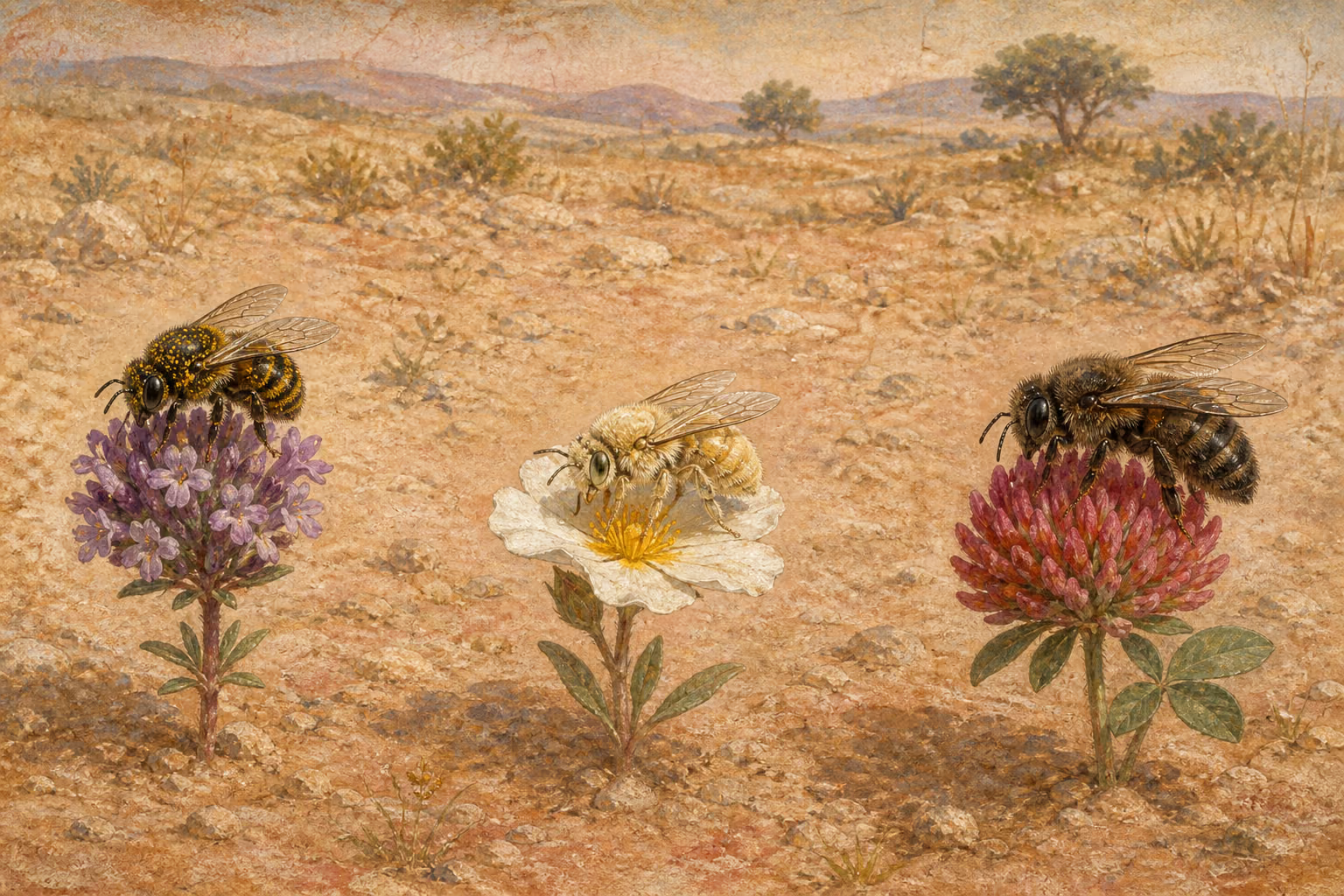
Apes sunt et rusticae silvestresque, horridae aspectu, multo iracundiores, sed opere ac labore praestantes. urbanarum duo genera: optimae breves variaeque et in rotunditatem compactiles, deteriores longae et quibus similitudo vesparum, etiamnum deterrimae ex iis pilosae. in Ponto sunt quaedam albae, quae bis in mense mella faciunt, circa Thermodontem autem fluvium duo genera, aliarum quae in arboribus mellificant, aliarum quae sub terra, triplici cerarum ordine, uberrimi proventus. aculeum apibus dedit natura, ventri consertum ad unum ictum. hoc infixo quidam eas statim emori putant, aliqui non nisi in tantum adacto, ut intestini quippiam sequatur, sed fucos postea esse nec mella facere velut castratis viribus pariterque et nocere et prodesse desinere. est in exemplis equus ab iis occisus. odere foedos odores proculque fugiunt, sed et fictos; itaque unguenta redolentes infestant. ipsae plurimorum animalium iniuriis obnoxiae. inpugnant eas naturae eiusdem degeneres vespae atque crabrones, etiam e culicum genere qui vocantur muliones. populantur hirundines et quaedam aliae aves. insidiantur aquantibus ranae, quae maxima earum est operatio tum cum subolem faciunt; nec hae tantrum quae stagna rivosque obsident, verum et rubetae veniunt ultro adrepentesque foribus portas sufflant: ad hoc statio provolat confestimque abripitur. nec sentire ictus apium ranae traduntur. inimicae et oves difficile se e lanis earum explicantibus. cancrorum etiam odore, si quis iuxta coquat, exanimantur.
Quin et morbos suapte natura sentiunt. index eorum tristitia torpens et cum ante fores in teporem solis promotis aliae cibos ministrant, cum defunctas progerunt funerantiumque more comitantur exequias. rege ea peste consumpto maeret plebes ignavo dolore, non cibos convehens, non procedens; tristi tantum murmure glomeratur circa corpus eius. subtrahitur itaque deductae multitudini. alias spectantes exanimem luctum non minuunt; tunc quoque ni subveniatur, fame moriuntur. hilaritate igitur et nitore sanitas aestimatur.
English · Bostock & Riley 1855–57
There are field bees also, and wild bees, ungainly in appearance, and much more irascible than the others, but remarkable for their laboriousness and the excellence of their work. Of domestic bees there are two sorts; the best are those with short bodies, speckled all over, and of a compact round shape. Those that are long, and resemble the wasp in appearance, are an inferior kind; and of these last, the very worst of all are those which have the body covered with hair. In Pontus there is a kind of white bee, which makes honey twice a month. On the banks of the river Thermodon there are two kinds found, one of which makes honey in the trees, the other under ground: they form a triple row of combs, and produce honey in the greatest abundance.
Nature has provided bees with a sting, which is inserted in the abdomen of the insect. There are some who think that at the first blow which they inflict with this weapon they will instantly die, while others, again, are of opinion that such is not the case, unless the animal drives it so deep as to cause a portion of the intestines to follow; and they assert, also, that after they have thus lost their sting they become drones, and make no honey, being thus castrated, so to say, and equally incapable of inflicting injury, and of making themselves useful by their labours. We have instances stated of horses being killed by bees.
They have a great aversion to bad smells, and fly away from them; a dislike which extends to artificial perfumes even. Hence it is that they will attack persons who smell of unguents. They themselves, also, are exposed to the attacks of wasps and hornets, which belong to the same class, but are of a degenerate nature; these wage continual warfare against them, as also does a species of gnat, which is known by the name of “mulio;” swallows, too, and various other birds prey upon them. Frogs lie in wait for them when in quest of water, which, in fact, is their principal occupation at the time they are rearing their young. And it is not only the frog that frequents ponds and streams that is thus injurious to them, but the bramble-frog as well, which will come to the hives even in search of them, and, crawling up to the entrance, breathe through the apertures; upon hearing which, a bee flies to the spot, and is snapped up in an instant. It is generally stated that frogs are proof against the sting of the bee. Sheep, too, are peculiarly dangerous to them, as they have the greatest difficulty in extricating themselves from the fleece. The smell of crabs, if they happen to be cooked in their vicinity, is fatal to them.
Bees are also by nature liable to certain diseases of their own. The sign that they are diseased, is a kind of torpid, moping sadness: on such occasions, they are to be seen bringing out those that are sick before the hives, and placing them in the warm sun, while others, again, are providing them with food. Those that are dead they carry away from the hive, and attend the bodies, paying their last duties, as it were, in funeral procession. If the king should happen to be carried off by the pestilence, the swarm remains plunged in grief and listless inactivity; it collects no more food, and ceases to issue forth from its abode; the only thing that it does is to gather around the body, and to emit a melancholy humming noise. Upon such occasions, the usual plan is to disperse the swarm and take away the body; for otherwise they would continue listlessly gazing upon it, and so prolong their grief. Indeed, if due care is not taken to come to their aid, they will die of hunger. It is from their cheerfulness, in fact, and their bright and sleek appearance that we usually form an estimate as to their health.