LIBER XI · CAPUT 26
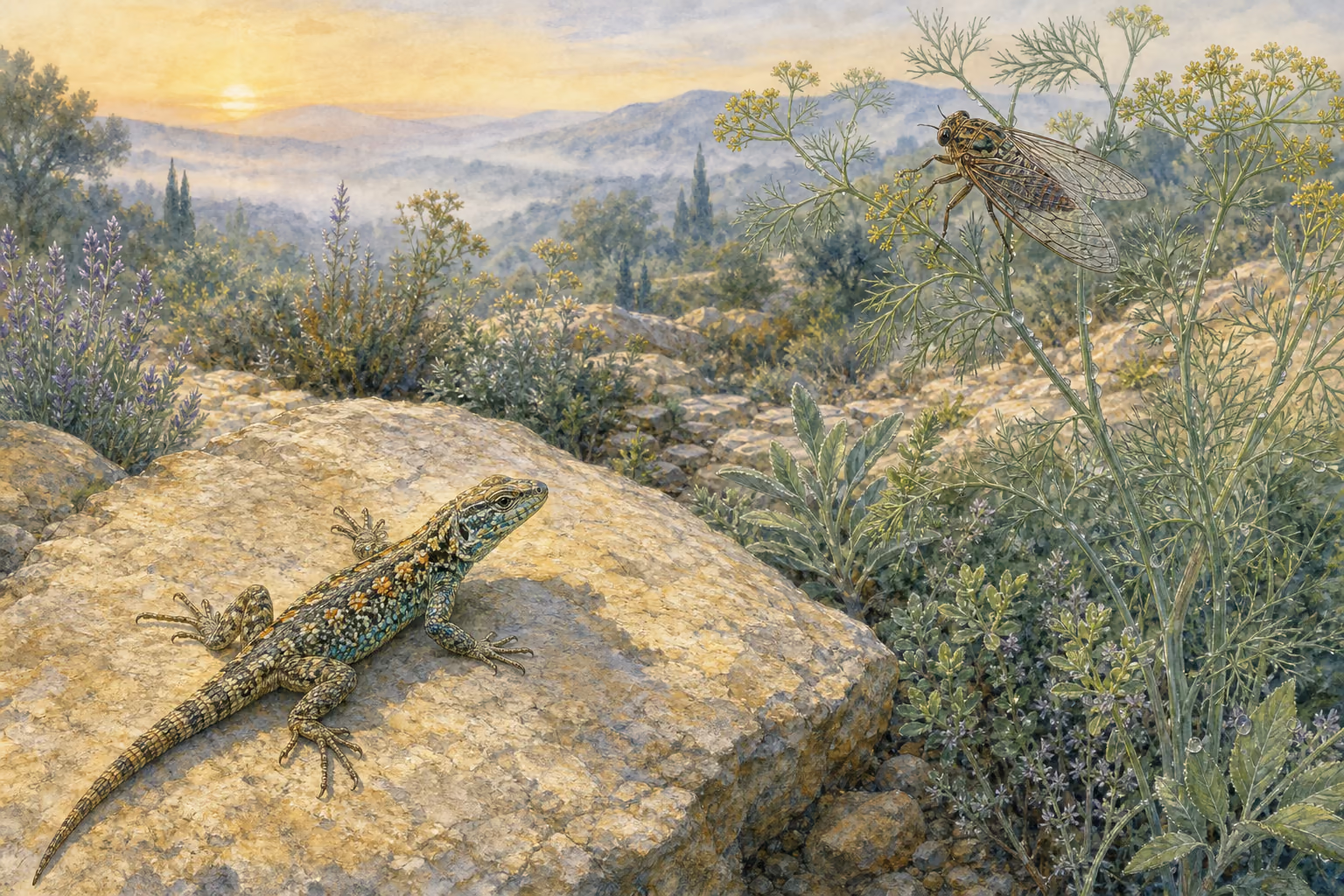
THE STELLIO
Latine · Mayhoff 1906
Chamaeleonum stelliones hi quodam modo naturam habent, rore tantum viventes praeterque araneis.
Similis cicadis vita, quarum duo genera: minores quae primae proveniunt et novissimae pereunt; sunt autem mutae. sequens est volatura earum quae canunt; vocantur achetae et, quae minores ex his sunt, tettigonia. sed illae magis canorae. mares canunt in utroque genere, feminae silent. gentes vescuntur iis ad orientem, etiam Parthi opibus abundantibus. ante coitum mares praeferunt, a coitu feminas, ovis earum corrupti, quae sunt candida. coitus supinis. asperitas praeacuta in dorso, qua excavant feturae locum in terra. fit primo vermiculus, deinde ex eo quae vocatur tettigometra, cuius cortice rupto circa solstitia evolant, noctu semper, primo nigrae atque durae. unum hoc ex iis, quae vivunt, et sine ore est; pro eo quiddam aculeat orum linguis simile, et hoc in pectore, quo rorem lambunt. pectus ipsum fistulosum. hoc canunt achetae, ut dicemus. de cetero in ventre nihil est. excitatae cum subvolant, umorem reddunt, quod solum argumentum est rore eas ali. isdem solis nullum ad excrementa corporis foramen. oculis tam hebetes, ut, si quis digitum contrahens ac remittens adpropinquetiis, transeant velut folioludente. quidam duo alia genera faciunt earum: surculariam, quae sit grandior; frumentariam, quam alii avenariam vocant, apparet enim simul cum frumentis arescentibus.
English · Bostock & Riley 1855–57
The stellio has in some measure the same nature as the chameleon, as it lives upon nothing but dew, and such spiders as it may happen to find.
The cicada also lives in a similar manner, and is divided into two kinds. The smaller kind are born the first and die the last, and are without a voice. The others are of the flying kind, and have a note; there are two sorts, those known as achetæ, and the smaller ones called tettigonia: these last have the loudest voice. In both of these last-mentioned kinds, it is the male that sings, while the female is silent. There are nations in the east that feed upon these insects, the Parthians even, wealthy and affluent as they are. They prefer the male before it has had sexual intercourse, and the female after; and they take their eggs, which are white. They engender with the belly upwards. Upon the back they have a sharp-edged instrument, by means of which they excavate a hole to breed in, in the ground. The young is, at first, a small maggot in appearance, after which the larva assumes the form in which it is known as the tettigometra. It bursts its shell about the time of the summer solstice, and then takes to flight, which always happens in the night. The insect, at first, is black and hard.
This is the only living creature that has no mouth; though it has something instead which bears a strong resemblance to the tongues of those insects which carry a sting in the mouth: this organ is situate in the breast of the animal, and is employed by it in sucking up the dew. The corselet itself forms a kind of pipe; and it is by means of this that the achetæ utter their note, as already mentioned. Beyond this, they have no viscera in the abdomen. When surprised, they spring upwards, and eject a kind of liquid, which, indeed, is our only proof that they live upon dew. This, also, is the only animal that has no outlet for the evacuations of the body. Their powers of sight are so bad, that if a person contracts his finger, and then suddenly extends it close to them, they will come upon it just as though it were a leaf. Some authors divide these animals into two kinds, the “surcularia,” which is the largest, and the “frumentaria,” by many known as the “avenaria;” this last makes its appearance just as the corn is turning dry in the ear.