LIBER XI · CAPUT 25
SCORPIONS
Latine · Mayhoff 1906
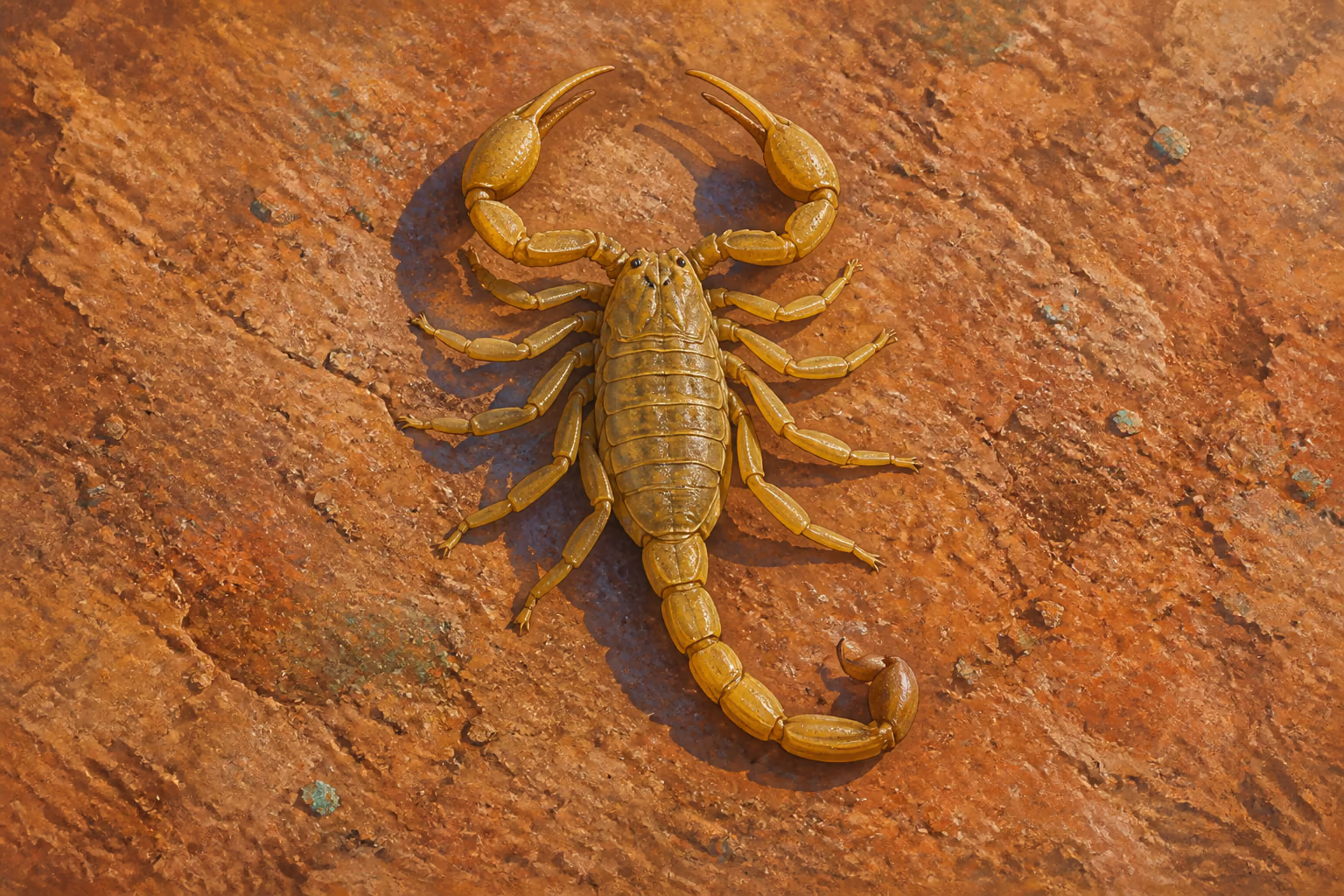
Similiter his et scorpiones terrestres vermiculos ovorum specie pariunt similiterque pereunt, pestis inportuna, veneni serpentium, nisi quod graviore supplicio lenta per triduum morte conficiunt, virginibus letali semper ictu et feminis fere in totum, viris autem matutino, exeuntes cavernis prius quam aliquo fortuito ictu ieiunum egerant venenum. semper cauda in ictu est nulloque momento meditari cessat, ne quando desit occasioni; ferit et obliquo ictu et inflexo. venenum ab iis candidum fundi Apollodorus auctor est, in novem genera discriptis per colores maxime supervacuos, quoniam non est scire quos minime exitiales praedixerit. geminos quibusdanm aculeos esse, maresque saevissimos — nam coitum iis tribuit —, intellegi autem gracilitate et longitudine. venenum omnibus medio die, cum incanduere solis ardoribus, itemque, cum sitiunt, inexplebiles potus. constat et septena caudae internodia saeviora esse; pluribus enim sena sunt. hoc malum Africae volucre etiam austri faciunt pandentibus bracchia ut remigia sublevantes; Apollodorus idem plane quibusdam inesse pinnas tradit. saepe Psylli, qui reliquarum venena terrarum invehentes quaestus sui causa peregrinis malis implevere Italiam, hos quoque importare conati sunt, sed vivere intra Siculi caeli regionem non potuere. visuntur tamen aliquando in Italia, sed innocui, multisque aliis in locis, ut circa Pharum in Aegypto. in Scythia interemunt etiam sues, alioqui vivaciores contra venena talia, nigras quidem celerius, si in aquam se inmerserint. homini icto putatur esse remedio ipsorum cinis potus in vino. magnam adversitatem oleo mersis et stellionibus putant esse, innocuis dumtaxat iis qui et ipsi carent sanguine, lacertarum figura; aeque scorpiones in totum nullis nocere quibus non sit sanguis. quidam et ab ipsis fetum devorari arbitrantur; unum modo relinqui sollertissimum et qui se ipsius matris clunibus inponendo tutus et a cauda et a morsu loco fiat; hunc esse reliquorum ultorem, qui postremo genitores superne conficiat. pariuntur autem undeni.
English · Bostock & Riley 1855–57
In a similar manner to the spider, the land scorpion also produces maggots similar to eggs, and dies in a similar manner. This animal is a dangerous scourge, and has a venom like that of the serpent; with the exception that its effects are far more painful, as the person who is stung will linger for three days before death ensues. The sting is invariably fatal to virgins, and nearly always so to matrons. It is so to men also, in the morning, when the animal has issued from its hole in a fasting state, and has not yet happened to discharge its poison by any accidental stroke. The tail is always ready to strike, and ceases not for an instant to menace, so that no opportunity may possibly be missed. The animal strikes too with a sidelong blow, or else by turning the tail upwards. Apollodorus informs us, that the poison which they secrete is of a white colour, and he has divided them into nine classes, distinguished mostly by their colours—to very little purpose, however, for it is impossible to understand which among these it is that he has pronounced to be the least dangerous. He says, also, that some of them have a double sting, and that the males—for he asserts that they are engendered by the union of the sexes—are the most dangerous. These may easily be known, he says, by their slender form and greater length. He states, also, that they all of them have venom in the middle of the day, when they have been warmed by the heat of the sun, as, also, when they are thirsty—their thirst, indeed, can never be quenched. It is an ascertained fact, that those which have seven joints in the tail are the most deadly; the greater part, however, have but six.
For this pest of Africa, the southern winds have provided means of flight as well, for as the breeze bears them along, they extend their arms and ply them like so many oars in their flight; the same Apollodorus, however, asserts that there are some which really have wings. The Psylli, who for their own profit have been in the habit of importing the poisons of other lands among us, and have thus filled Italy with the pests which belong to other regions, have made attempts to import the flying scorpion as well, but it has been found that it cannot live further north than the latitude of Sicily. However, they are sometimes to be seen in Italy, but are quite harmless there; they are found, also, in many other places, the vicinity of Pharos, in Egypt, for instance. In Scythia, the scorpion is able to kill the swine even with its sting, an animal which, in general, is proof against poisons of this kind in a remarkable degree. When stung, those swine which are black die more speedily than others, and more particularly if they happen to throw themselves into the water. When a person has been stung, it is generally supposed that he may be cured by drinking the ashes of the scorpion mixed with wine. It is the belief also that there is nothing more baneful to the scorpion and the stellio, than to dip them in oil. This last animal is also dangerous to all other creatures, except those which, like itself, are destitute of blood: in figure it strongly resembles the common lizard. For the most part, also, the scorpion does no injury to any animal which is bloodless. Some writers, too, are of opinion that the scorpion devours its offspring, and that the one among the young which is the most adroit avails itself of its sole mode of escape, by placing itself on the back of the mother, and thus finding a place where it is in safety from the tail and the sting. The one that thus escapes, they say, becomes the avenger of the rest, and at last, taking advantage of its elevated position, puts its parents to death. The scorpion produces eleven at a birth.