LIBER XI · CAPUT 3
WHETHER INSECTS RESPIRE, AND WHETHER THEY HAVE BLOOD
Latine · Mayhoff 1906
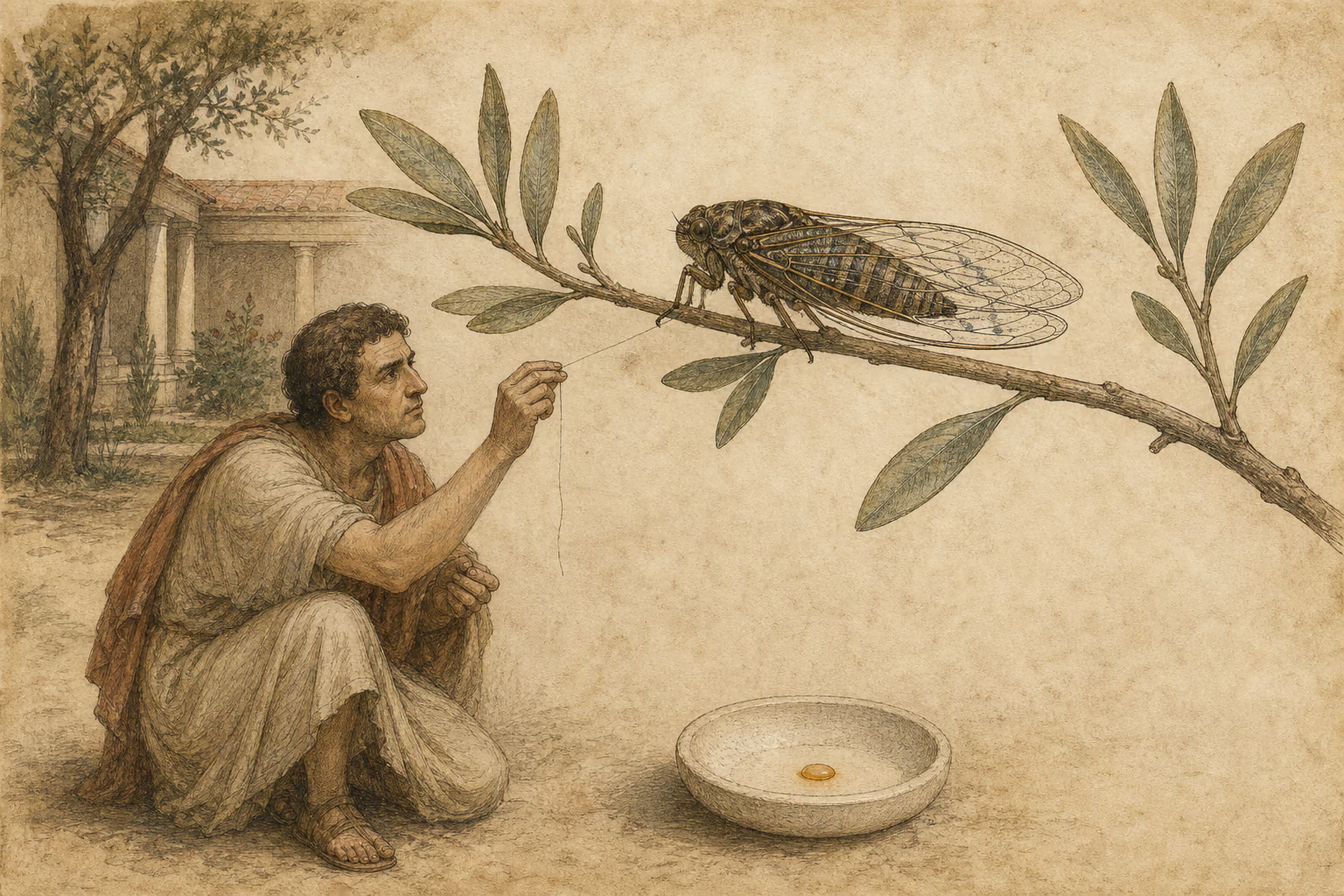
Insecta multi negarunt spirare, idque ratione persuadentes, quoniam viscera interiora nexus spirabilis non inessent. itaque vivere ut fruges arboresque, sed plurimum interesse, spiret aliquid an vivat. eadem de causa nec sanguinem iis esse, qui sit nullis carentibus corde atque iecore. sic nec spirare ea quibus pulmo desit. unde numerosa quaestionum series exoritur.iidem enim et vocem esse iis negant in tanto murmure apium, cicadarum sono, et alia quae suis aestimabuntur locis. nam mihi contuenti semper suasit rerum natura nilil incredibile existimare de ea. nec video cur magis possint non trahere animam talia et vivere quam spirare sine visceribus, quod etiam in marinis docuimus quamvis arcente spiritum densitate et altitudine umoris. volare quidem aliqua et animatu carere in ipso spiritu viventia, habere sensum victus, generationis, operis atque etiam de futuro curam, et quamvis non sint membra quae velut carina sensus invehant, esse tamen iis auditum, olfactum, gustatum, eximia praeterea naturae dona, sollertiam, animum, artem, quis facile crediderit? sanguinem non esse iis fateor sic ut terrestribus quidem, cunctis inter se similem: verum ut saepiae in mari sanguinis vires atramentum optineat, purpurarum generi infector ille sucus, sic et insectis quisquis est vitalis umor, hic erit sanguis. denique existimatio sua cuique sit: nobis propositum est naturas rerum manifestas indicare, non causas indagare dubias.
English · Bostock & Riley 1855–57
Many authors deny that insects respire, and make the assertion upon the ground, that in their viscera there is no respiratory organ to be found. On this ground, they assert that insects have the same kind of life as plants and trees, there being a very great difference between respiring and merely having life. On similar grounds also, they assert that insects have no blood, a thing which cannot exist, they say, in any animal that is destitute of heart and liver; just as, according to them, those creatures cannot breathe which have no lungs. Upon these points, however, a vast number of questions will naturally arise; for the same writers do not hesitate to deny that these creatures are destitute also of voice, and this, notwithstanding the humming of bees, the chirping of grasshoppers, and the sounds emitted by numerous other insects which will be considered in their respective places. For my part, whenever I have considered the subject, I have ever felt persuaded that there is nothing impossible to Nature, nor do I see why creatures should be less able to live and yet not inhale, than to respire without being possessed of viscera, a doctrine which I have already maintained, when speaking of the marine animals; and that, notwithstanding the density and the vast depth of the water which would appear to impede all breathing. But what person could very easily believe that there can be any creatures that fly to and fro, and live in the very midst of the element of respiration, while, at the same time, they themselves are devoid of that respiration; that they can be possessed of the requisite instincts for nourishment, generation, working, and making provision even for time to come, in the enjoyment too (although, certainly, they are not possessed of the organs which act, as it were, as the receptacles of those senses) of the powers of hearing, smelling, and tasting, as well as those other precious gifts of Nature, address, courage, and skilfulness? That these creatures have no blood I am ready to admit, just as all the terrestrial animals are not possessed of it; but then, they have something similar, by way of equivalent. Just as in the sea, the sæpia has a black liquid in place of blood, and the various kinds of purples, those juices which we use for the purposes of dyeing; so, too, is every insect possessed of its own vital humour, which, whatever it is, is blood to it. While I leave it to others to form what opinion they please on this subject, it is my purpose to set forth the operations of Nature in the clearest possible light, and not to enter upon the discussion of points that are replete with doubt.