LIBER XI · CAPUT 2
THE EXTREME SMALLNESS OF INSECTS
Latine · Mayhoff 1906
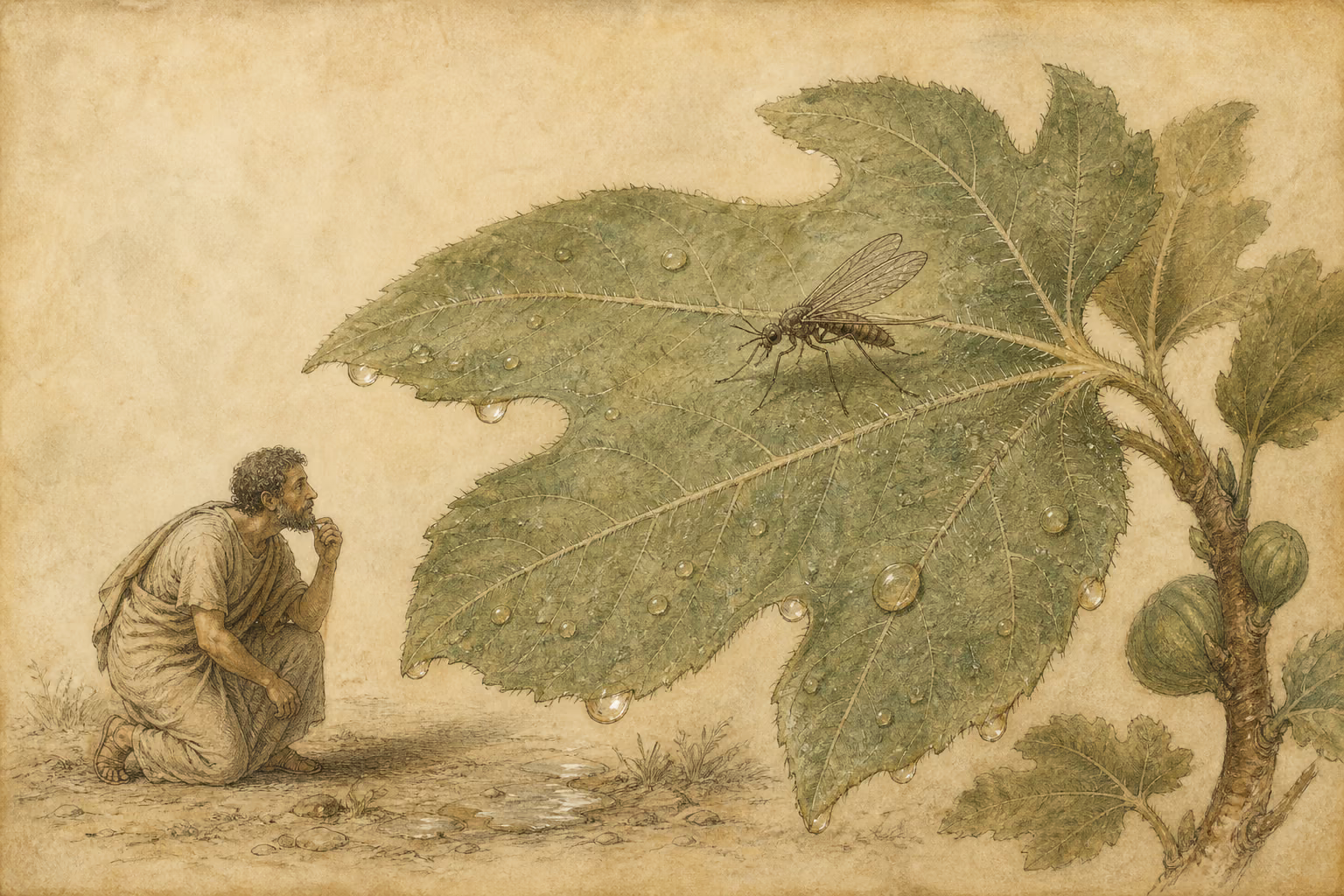
in magnis siquidem corporibus aut certe maioribus facilis officina sequaci materia fuit: in his tam parvis atque tam nullis quae ratio, quanta vis, quam inextricabilis perfectio! ubi tot sensus collocavit in culice? et sunt alia dictu minora: sed ubi visum in eo praetendit? ubi gustatum adplicavit? ubi odoratum inseruit? ubi vero truculentam illam et portione maximam vocem ingeneravit? qua subtilitate pinnas adnexuit, praelongavit pedum crura, disposuit ieiunam caveam uti alvum, avidam sanguinis et potissimum humani sitim accendit! telum vero perfodiendo tergori quo spiculavit ingenio atque, ut in capaci, cum cerni non possit exilitas, reciproca generavit arte, ut fodiendo acuminatum pariter sorbendoque fistulosum esset! quos teredini ad perforanda robora terebraum sono teste dentes adfixit potissimumque e ligno cibatum fecit! sed turrigeros elephantorum miramur umeros taurorumque colla et truces in sublime iactus, tigrium rapinas, leonum iubas, cum rerum natura nusquam magis quam in minimis tota sit. quapropter quaeso ne legentes, quoniam ex his spernunt multa, etiam relata fastidio damnent, cum in contemplatione naturae nihil possit videri supervacuum.
English · Bostock & Riley 1855–57
In large animals, on the other hand, or, at all events, in the very largest among them, she found her task easy and her materials ready and pliable; but in these minute creatures, so nearly akin as they are to non-entity, how surpassing the intelligence, how vast the resources, and how ineffable the perfection which she has displayed. Where is it that she has united so many senses as in the gnat?—not to speak of creatures that might be mentioned of still smaller size—Where, I say, has she found room to place in it the organs of sight? Where has she centred the sense of taste? Where has she inserted the power of smell? And where, too, has she implanted that sharp shrill voice of the creature, so utterly disproportioned to the smallness of its body? With what astonishing subtlety has she united the wings to the trunk, elongated the joints of the legs, framed that long, craving concavity for a belly, and then inflamed the animal with an insatiate thirst for blood, that of man more especially! What ingenuity has she displayed in providing it with a sting, so well adapted for piercing the skin! And then too, just as though she had had the most extensive field for the exercise of her skill, although the weapon is so minute that it can hardly be seen, she has formed it with a twofold mechanism, providing it with a point for the purpose of piercing, and at the same moment making it hollow, to adapt it for suction.
What teeth, too, has she inserted in the teredo, to adapt it for piercing oak even with a sound which fully attests their destructive power! while at the same time she has made wood its principal nutriment. We give all our admiration to the shoulders of the elephant as it supports the turret, to the stalwart neck of the bull, and the might with which it hurls aloft whatever comes in its way, to the onslaught of the tiger, or to the mane of the lion; while, at the same time, Nature is nowhere to be seen to greater perfection than in the very smallest of her works. For this reason then, I must beg of my readers, notwithstanding the contempt they feel for many of these objects, not to feel a similar disdain for the information I am about to give relative thereto, seeing that, in the study of Nature, there are none of her works that are unworthy of our consideration.