LIBER XI · CAPUT 1
THE EXTREME SMALLNESS OF INSECTS
Latine · Mayhoff 1906
Restant inmensae subtilitatis animalia, quando aliqui ea neque spirare et sanguine etiam carere prodiderunt.
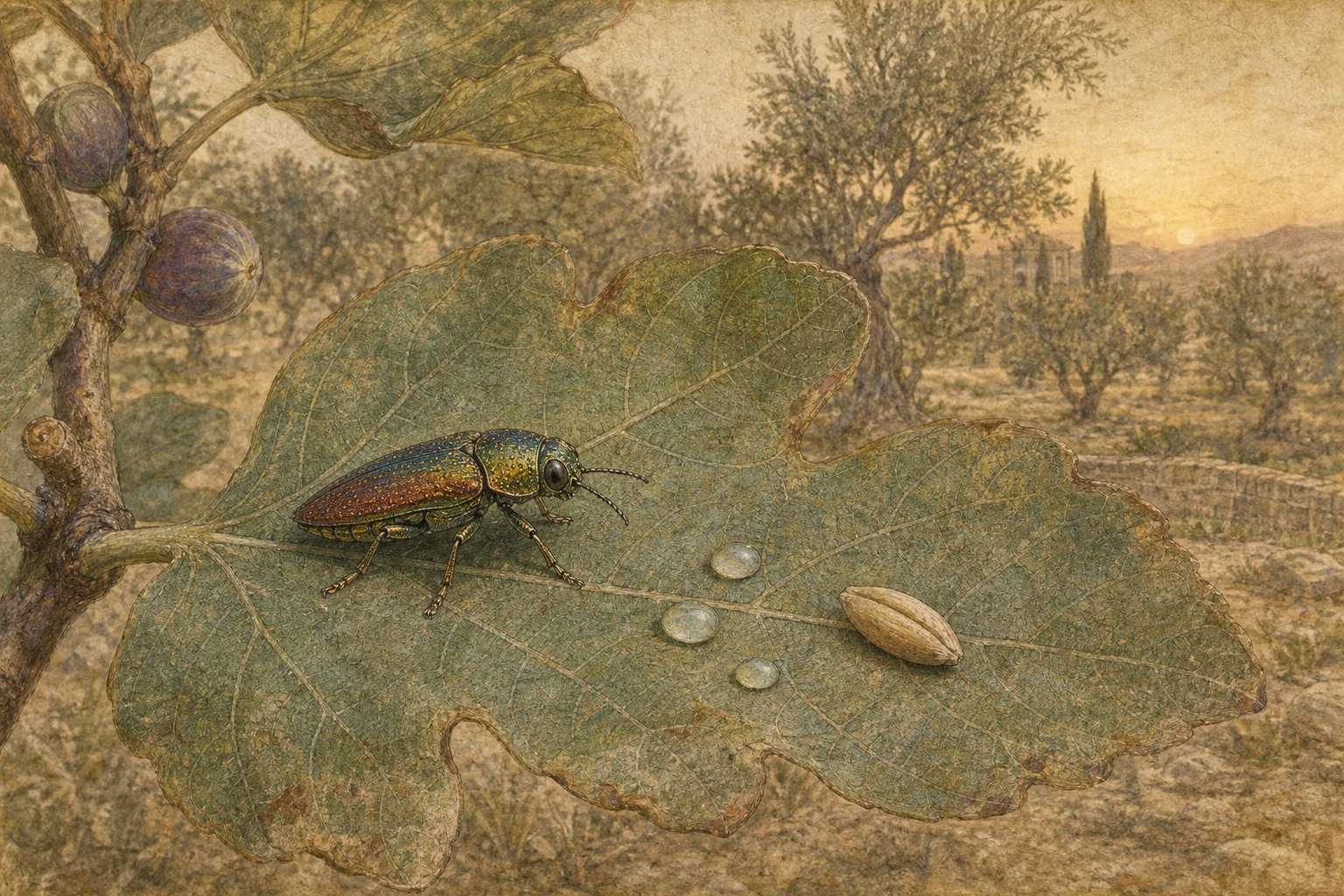
multa haec et multigenera, terrestrium volucrumque vita (alia... pinnata, ut apes, alia utroque modo, ut formicae, aliqua et pinnis et pedibus carentia), et iure omnia insecta appellata ab incisuris, quae nunc cervicium loco, nunc pectorum atque alvi, praecincta separant membra, tenui modo fistula cohaerentia, aliquis vero non tota incisurae ambiente ruga, sed in alvo aut superne tantum imbricatis flexili vertebris, nusquam alibi spectatiore naturae rerum artificio.
English · Bostock & Riley 1855–57
W E shall now proceed to a description of the insects, a subject replete with endless difficulties; for, in fact, there are some authors who have maintained that they do not respire, and that they are destitute of blood. The insects are numerous, and form many species, and their mode of life is like that of the terrestrial animals and the birds. Some of them are furnished with wings, bees for instance; others are divided into those kinds which have wings, and those which are without them, such as ants; while others, again, are destitute of both wings and feet. All these animals have been very properly called “insects,” from the incisures or divisions which separate the body, sometimes at the neck, and sometimes at the corselet, and so divide it into members or segments, only united to each other by a slender tube. In some insects, however, this division is not complete, as it is surrounded by wrinkled folds; and thus the flexible vertebræ of the creature, whether situate at the abdomen, or whether only at the upper part of the body, are protected by layers, overlapping each other; indeed, in no one of her works has Nature more fully displayed her exhaustless ingenuity.