LIBER X · CAPUT 75
THE SLEEP OF ANIMALS
Latine · Mayhoff 1906
Somni quaestio non obscuram coniectationem habet. in terrestribus omnia quae coniveant dormire manifestum est. aquatilia quoque exiguum quidem, etiam qui de ceteris dubitant, dormire tamen existimant, non oculorum argumento, quia non habent genas, verum ipsa quiete cernuntur placida ceu soporata neque aliud quam caudas moventia et ad tumultum aliquem expavescentia. de thynnis confidentius adfirmatur; iuxta ripas enim aut petras dormiunt, plani autem piscium in vado, ut manu saepe tollantur. nam delphini ballaenaeque stertentes etiam audiuntur. insecta quoque dormire silentio apparet, quae ne luminibus quidem admotis excitentur.
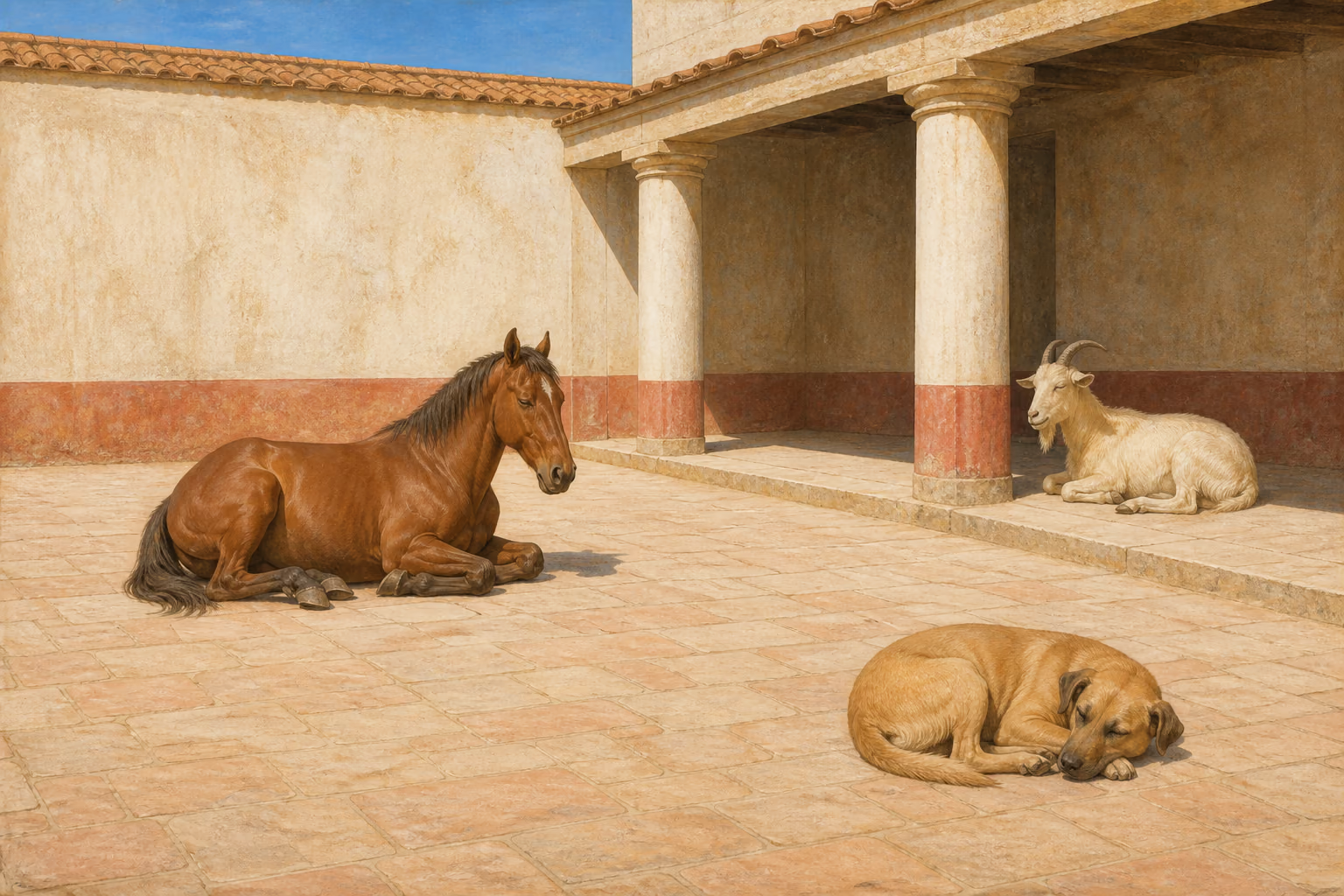
Homo genitus premitur somno per aliquot menses, dein longior in dies vigilia. somniat statim infans; nam et pavore expergiscitur et suctum imitatur. quidam vero numquam, quibus mortiferum fuisse signum contra consuetudinem somnium invenimus exempla. magnus hic in vita locus et diversis refertus documentis, utrumne sint aliqua praescita animi quiescentis, quae fiant ratione, an fortuita res sit ut pleraque. si exemplis agatur, profecto paria fiant. a vino et a cibis proxima atque in redormitione vana esse visa prope convenit. est autem somnus nihil aliud quam animi in medium sese recessus. praeter hominem somniare equos, canes, boves, pecora, capras palam est: ob hoc creditur et in omnibus quae animal pariant. de iis quae ova gignunt incertum est, sed dormire ea certum.
Verum et ad insecta transeamus; haec namque restant inmensae subtilitatis animalia.
English · Bostock & Riley 1855–57
The question as to their sleep, is one that is by no means difficult to solve. In the land animals, it is quite evident that all that have eyelids sleep. With reference to aquatic animals, it is admitted that they also sleep, though only for short periods, even by those writers who entertain doubts as to the other animals; and they come to this conclusion, not from any appearance of the eyes, for they have no eyelids, indeed, to close, but because they are to be seen buried in deep repose, and to all appearance fast asleep, betraying no motion in any part of the body except the tail, and by starting when they happen to hear a noise. With regard to the thunny, it is stated with still greater confidence that it sleeps; indeed, it is often found in that state near the shore, or among the rocks. Flat fish are also found fast asleep in shallow water, and are often taken in that state with the hand: and, as to the dolphin and the balæna, they are even heard to snore.
It is quite evident, also, that insects sleep, from the silent stillness which they preserve; and even if a light is put close to them, they will not be awoke thereby.
Man, just after his birth, is hard pressed by sleep for several months, after which he becomes more and more wakeful, day by day. The infant dreams from the very first, for it will suddenly awake with every symptom of alarm, and while asleep will imitate the action of sucking. There are some persons, however, who never dream; indeed, we find instances stated where it has been a fatal sign for a person to dream, who has never done so before. Here we find ourselves invited by a grand field of investigation, and one that is full of alleged proofs on both sides of the question, whether, when the mind is at rest in sleep, it has any foreknowledge of the future, and if so, by what process this is brought about, or whether this is not altogether a matter quite fortuitous, as most other things are? If we were to attempt to decide the question by instances quoted, we should find as many on the one side as on the other.
It is pretty generally agreed, that dreams, immediately after we have taken wine and food, or when we have just fallen asleep again after waking, have no signification whatever. Indeed, sleep is nothing else than the retiring of the mind into itself. It is quite evident that, besides man, horses, dogs, oxen, sheep, and goats have dreams; consequently, the same is supposed to be the case with all animals that are viviparous. As to those which are oviparous, it is a matter of uncertainty, though it is equally certain that they do sleep. But we must now pass on to a description of the insects.