LIBER X · CAPUT 74
ANTIPATHIES OF ANIMALS. PROOFS THAT THEY ARE SENSIBLE OF FRIENDSHIP AND OTHER AFFECTIONS
Latine · Mayhoff 1906
ergo et alios quosdam sensus esse quam supra dictos haut difficulter apparet.
Sunt enim quaedam iis bella amicitiaeque, unde et adfectus, praeter illa quae de quibusque eorum suis diximus locis. dissident olores et aquilae, corvus et chloreus noctu invicem ova exquirentes, simili modo corvus et miluus, illo praeripiente huic cibos, cornices atque noctua, aquilae et trochilus, si credimus, quoniam rex appellatur avium, noctuae et ceterae minores aves, rursus cum trochilo mustela et cornix, turtur et pyrallis, ichneumones vespae et phalangia aranei, aquaticaebrenthos et gavia et harpe, harpe et triorchis accipiter, sorices et ardiolae invicem fetibus insidiantes, — (aegithus avis minima cum asino; spinetis enim se scabendi causa atterens nidos eius dissipat, quod adeo pavet, ut voce omnino rudentis audita ova eiciat, pulli ipsi metu cadant; igitur advolans ulcera eius rostro excavat) — volpes et milui, angues et mustelae et sues. aesalon vocatur parva avis ova corvi frangens, cuius pulli infestantur a volpibus. invicem haec catulos eius ipsamque vellit; quod ubi viderunt corvi, contra auxiliantur velut adversus communem hostem. et acanthis in spinis vivit; idcirco asinos et ipsa odit flores spinae devorantes, aegithum vero in tantum, ut sanguinem eorum credant non coire multisque ideo veneficiis infament. dissident thoes et leones, et minima aeque ac maxima. formicosam arborem urucae cavent. librat araneus se filo in caput serpentis porrectae sub umbra arboris suae tantaque vi morsu cerebrum adprehendit, ut stridens subinde et vertigine rotata ne filum quidem pendentis rumpere, adeo non fugere queat. nec finis ante mortem est.
Rursus amici pavones et columbae, turtures et psittaci, merulae et turtures, cornix et ardiolae contra volpium genus communibus inimicitiis, harpe et miluus contra triorchin. quid, non et adfectus indicia sunt etiam in serpentibus, inmitissimo animalium genere? dicta sunt quae Arcadia narrat de domino a dracone servato et agnito voce [draconis]. de aspide miraculum Phylarcho reddatur. is enim auctor est, cum ad mensam cuiusdam veniens in Aegypto aleretur adsidue enixa catulos, quorum ab uno filium hospitis interemptum, illam reversam ad consuetudinem cibi intellexisse culpam et necem intulisse catulo nec postea in tectum id reversam.
English · Bostock & Riley 1855–57
Hence there will be no difficulty in perceiving that animals are possessed of other instincts besides those previously mentioned. In fact, there are certain antipathies and sympathies among them, which give rise to various affections besides those which we have mentioned in relation to each species in its appropriate place. The swan and the eagle are always at variance, and the raven and the chloreus seek each other’s eggs by night. In a similar manner, also, the raven and the kite are perpetually at war with one another, the one carrying off the other’s food. So, too, there are antipathies between the crow and the owl, the eagle and the trochilus; —between the last two, if we are to believe the story, because the latter has received the title of the “king of the birds:” the same, again, with the owlet and all the smaller birds.
Again, in relation to the terrestrial animals, the weasel is at enmity with the crow, the turtle-dove with the pyrallis, the ichneumon with the wasp, and the phalangium with other spiders. Among aquatic animals, there is enmity between the duck and the sea-mew, the falcon known as the “harpe,” and the hawk called the “triorchis.” In a similar manner, too, the shrew-mouse and the heron are ever on the watch for each other’s young; and the ægithus, so small a bird as it is, has an antipathy to the ass; for the latter, when scratching itself, rubs its body against the brambles, and so crushes the bird’s nest; a thing of which it stands in such dread, that if it only hears the voice of the ass when it brays, it will throw its eggs out of the nest, and the young ones themselves will sometimes fall to the ground in their fright; hence it is that it will fly at the ass, and peck at its sores with its beak. The fox, too, is at war with the nisus, and serpents with weasels and swine. Æsalon is the name given to a small bird that breaks the eggs of the raven, and the young of which are anxiously sought by the fox; while in its turn it will peck at the young of the fox, and even the parent itself. As soon as the ravens espy this, they come to its assistance, as though against a common enemy. The acanthis, too, lives among the brambles; hence it is that it also has an antipathy to the ass, because it devours the bramble blossoms. The ægithus and the anthus, too, are at such mortal enmity with each other, that it is the common belief that their blood will not mingle; and it is for this reason that they have the bad repute of being employed in many magical incantations. The thos and the lion are at war with each other; and, indeed, the smallest objects and the greatest just as much. Caterpillars will avoid a tree that is infested with ants. The spider, poised in its web, will throw itself on the head of a serpent as it lies stretched beneath the shade of the tree where it has built, and with its bite pierce its brain; such is the shock, that the creature will hiss from time to time, and then, seized with vertigo, coil round and round, while it finds itself unable to take to flight, or so much as to break the web of the spider, as it hangs suspended above; this scene only ends with its death.
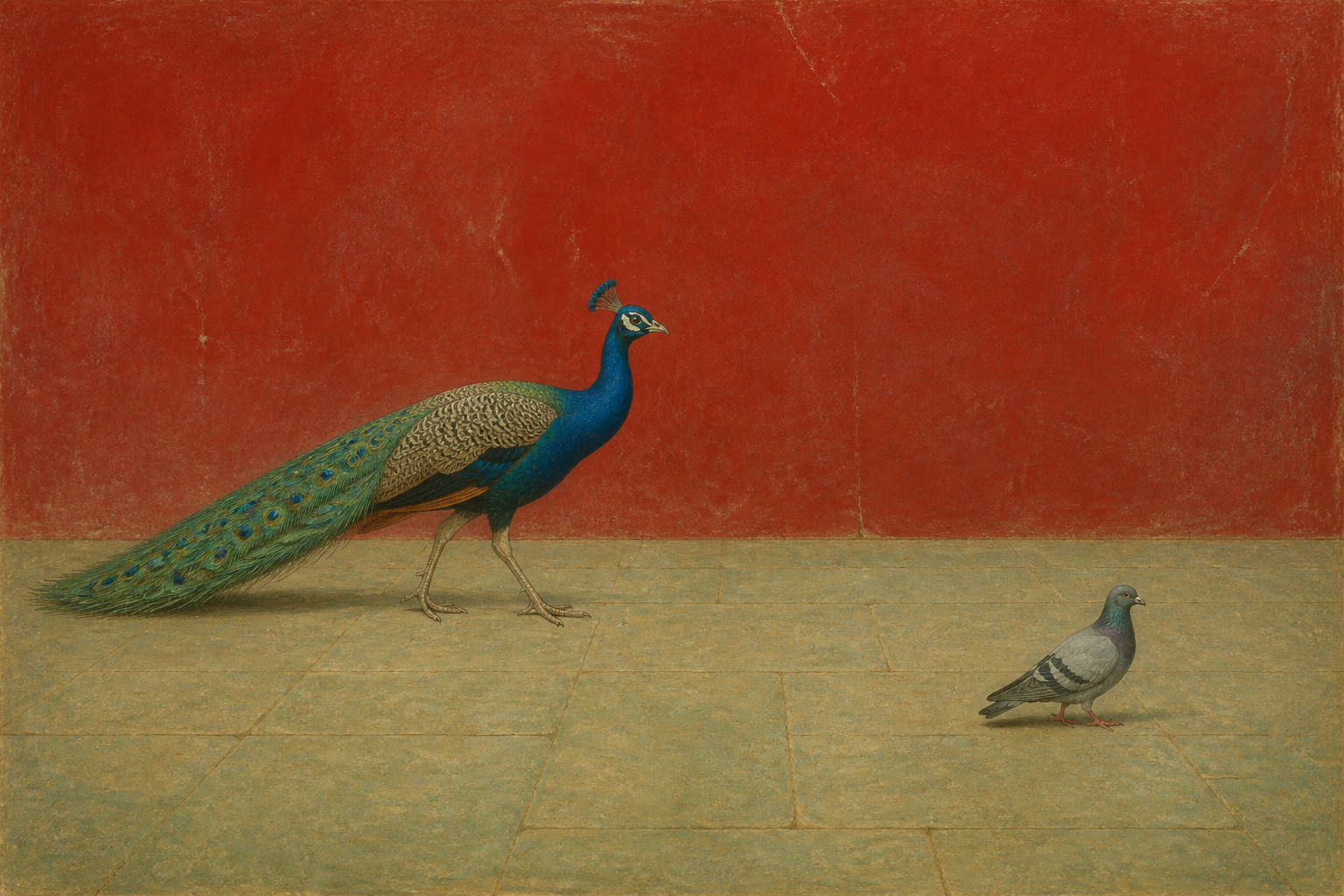
On the other hand, there is a strict friendship existing between the peacock and the pigeon, the turtle-dove and the parrot, the blackbird and the turtle, the crow and the heron, all of which join in a common enmity against the fox. The harpe also, and the kite, unite against the triorchis.
And then, besides, have we not seen instances of affection in the serpent even, that most ferocious of all animals? We have already related the story that is told of a man in Arcadia, who was saved by a dragon which had belonged to him, and of his voice being recognized by the animal. We must also make mention here of another marvellous story that is related by Phylarchus about the asp. He tells us, that in Egypt one of these animals, after having received its daily nourishment at the table of a certain person, brought forth, and that it so happened that the son of its entertainer was killed by one of its young ones; upon which, returning to its food as usual, and becoming sensible of the crime, it immediately killed the young one, and returned to the house no more.