LIBER XI · CAPUT 32
THE CHRYSALIS
Latine · Mayhoff 1906
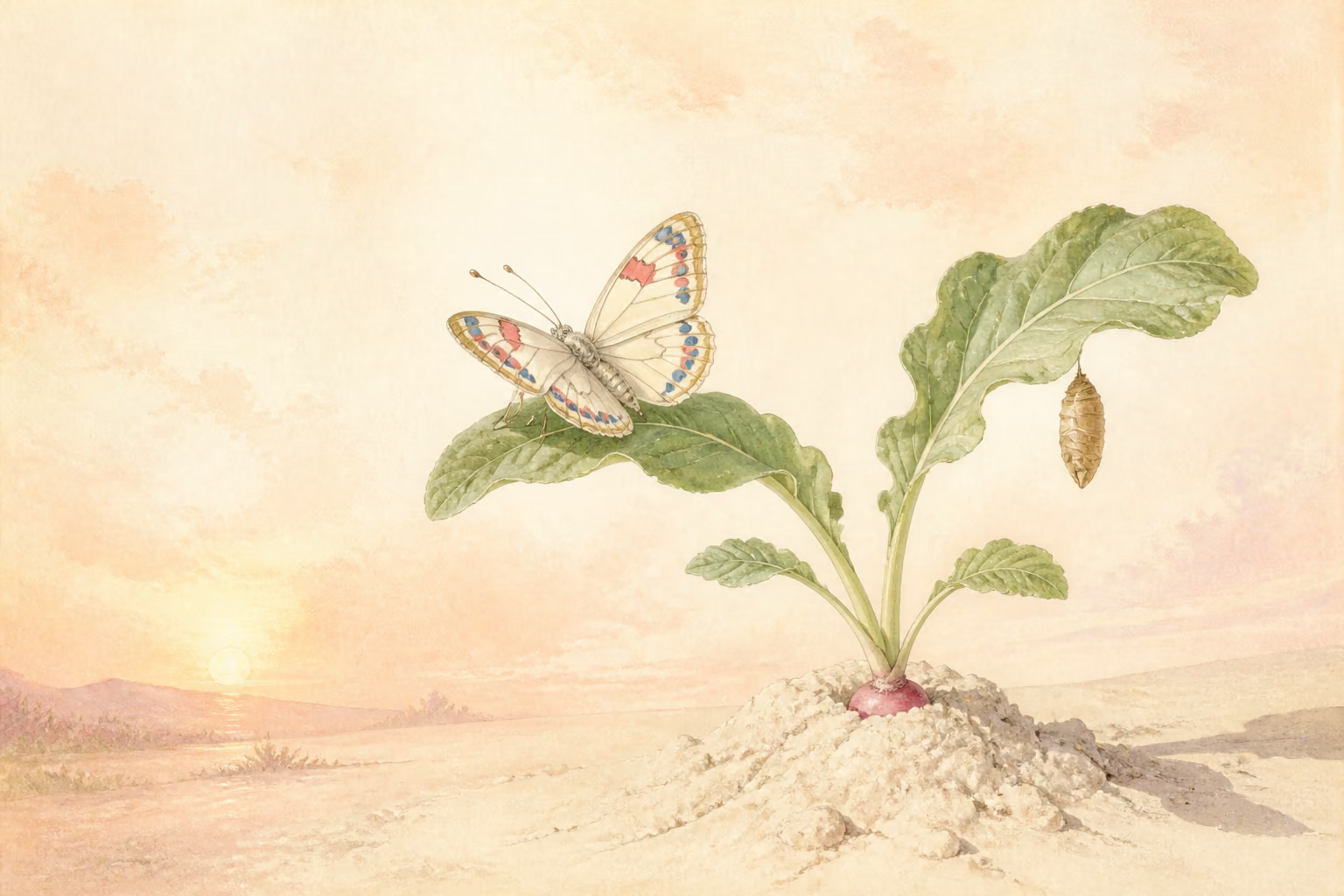
Multa autem insecta et aliter nascuntur, atque in primis e rore. insidet hic raphani folio primo vere et spissatus sole in magnitudinem milii cogitur. inde porrigitur vermiculus parvus et triduo mox uruca, quae adiectis diebus accrescit, inmobilis, duro cortice. ad tactum tantum movetur, araneo accreta, quam chrysallidem appellant. rupto deinde cortice volat papilio.
English · Bostock & Riley 1855–57
Many insects, however, are engendered in a different manner; and some more especially from dew. This dew settles upon the radish leaf in the early days of spring; but when it has been thickened by the action of the sun, it becomes reduced to the size of a grain of millet. From this a small grub afterwards arises, which, at the end of three days, becomes transformed into a caterpillar. For several successive days it still increases in size, but remains motionless, and covered with a hard husk. It moves only when touched, and is covered with a web like that of the spider. In this state it is called a chrysalis, but after the husk is broken, it flies forth in the shape of a butterfly.