LIBER XI · CAPUT 36
AN ANIMAL FOUND IN FIRE—THE PYRALLIS OR PYRAUSTA
Latine · Mayhoff 1906
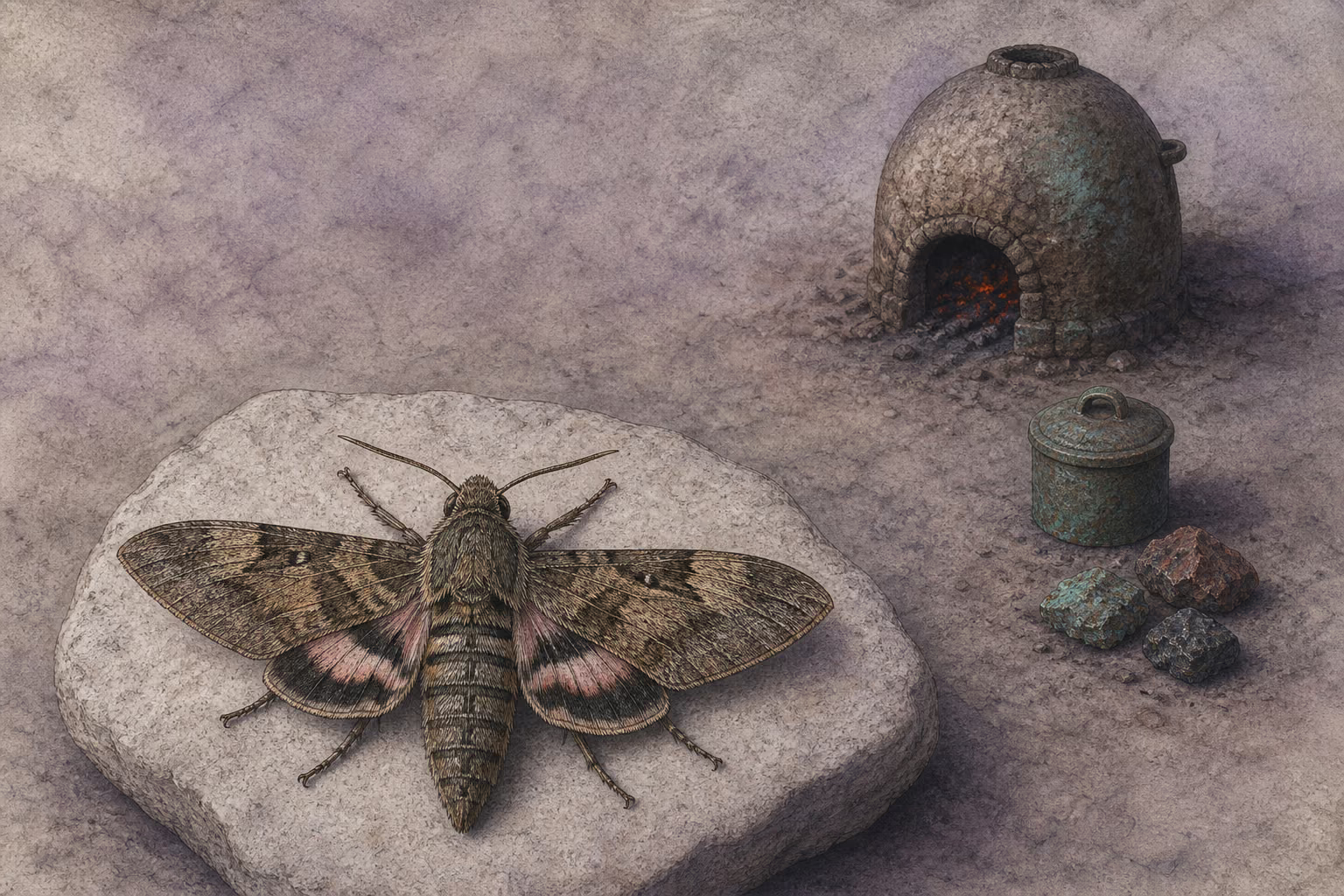
Gignit aliqua et contrarium naturae elementum. siquidem in Cypri aerariis fornacibus et medio igni maioris muscae magnitudinis volat pinnatum quadrupes; appellatur pyrallis, a quibusdam pyrotocon. quamdiu est in igni, vivit; cum evasit longiore paulo volatu, emoritur.
Hypanis fluvius in Ponto circa solstitium defert acinorum effigie tenues membranas, quibus erumpit volucre quadrupes supra dicti modo, nec ultra unum diem vivit, unde hemerobion vocatur. reliquis talium ab initio ad finem septenarii sunt numeri, culici et vermiculis ter septeni, corpus parientibus quater septeni; mutationes et in alias figuras transitus trinis aut quadrinis diebus. cetera ex his pinnata autumno fere moriuntur tabe alarum,tabani quidem etiam caecitate. muscis umore exanimatis, si cinere condantur, redit vita.
English · Bostock & Riley 1855–57
That element, also, which is so destructive to matter, produces certain animals; for in the copper-smelting furnaces of Cyprus, in the very midst of the fire, there is to be seen flying about a four-footed animal with wings, the size of a large fly: this creature is called the “pyrallis,” and by some the “pyrausta.” So long as it remains in the fire it will live, but if it comes out and flies a little distance from it, it will instantly die.
The Hypanis, a river of Pontus, brings down in its waters, about the time of the summer solstice, small membranous particles, like a grape-stone in appearance; from which there issues an animal with four legs and with wings, similar to the one just mentioned. It does not, however, live more than a single day, from which circumstance it has obtained the name of “hemerobion.” The life of other insects of a similar nature is regulated from its beginning to its end by multiples of seven. Thrice seven days is the duration of the life of the gnat and of the maggot, while those that are viviparous live four times seven days, and their various changes and transformations take place in periods of three or four days. The other insects of this kind that are winged, generally die in the autumn, the gad-fly becoming quite blind even before it dies. Flies which have been drowned in water, if they are covered with ashes, will return to life.