LIBER XI · CAPUT 37
THE NATURE AND CHARACTERISTICS OF ALL ANIMALS CONSIDERED LIMB BY LIMB. THOSE WHICH HAVE TUFTS AND CRESTS
Latine · Mayhoff 1906
Nunc per singulas corporum partes praeter iam dicta membratim tractetur historia.
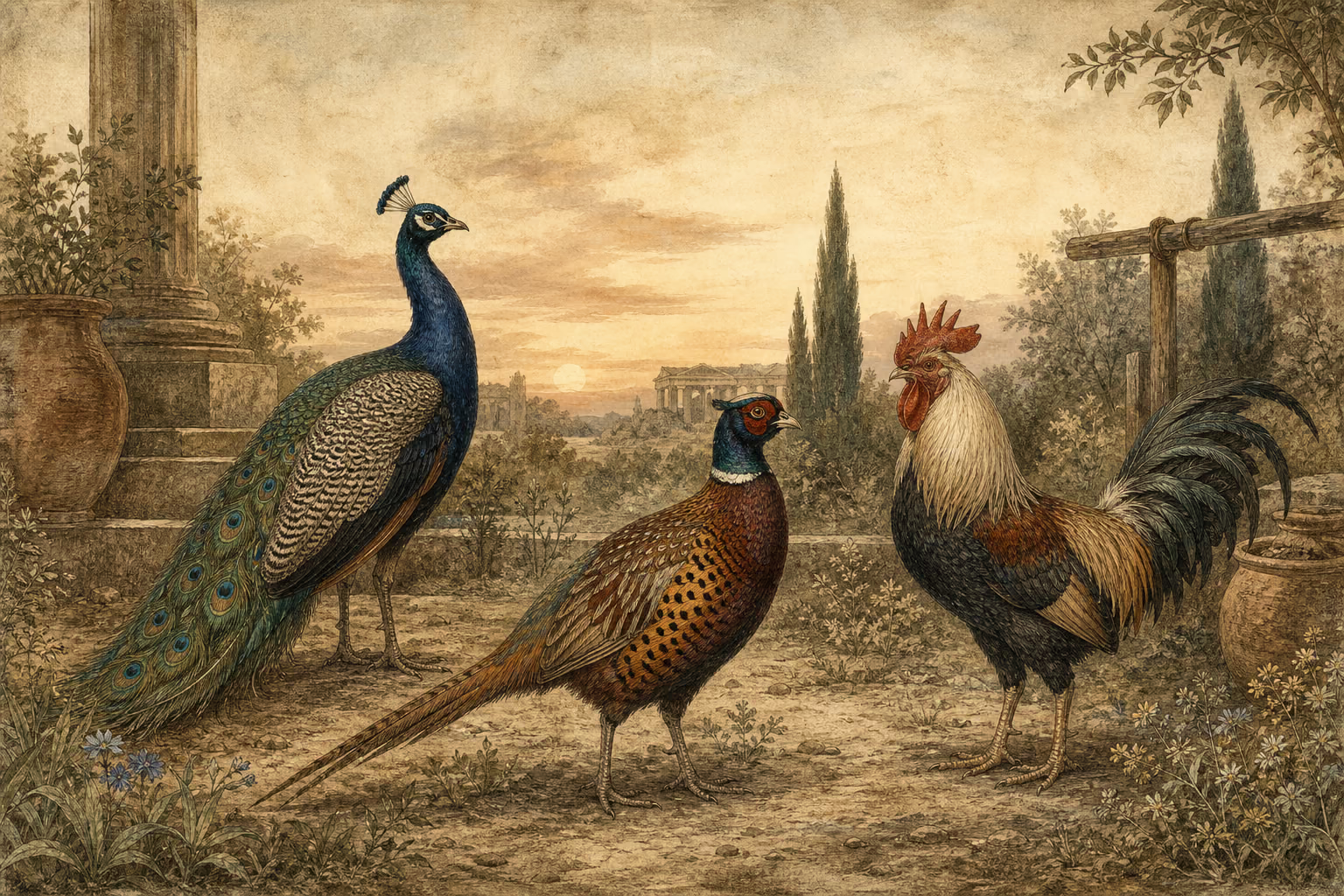
Caput habent cuncta quae sanguinem. in capite paucis animalium nec nisi volucribus apices, diversi quidem generis, phoenici plumarum serie e medio eo exeunte alia, pavonibus crinitis arbusculis, stymphalidi cirro, phasianae corniculis, praeterea parvae avi, quae, ab illo galerita appellata quondam, postea Gallico vocabulo etiam legioni nomen dederat alaudae. diximus et cui plicatilem cristam dedisset natura. per medium caput a rostro residentem et fulicarum generi dedit, cirros pico quoque Martio et grui Balearicae, sed spectatissimum insigne gallinaceis, corporeum, serratum; nec carnem ita esse nec cartilaginem nec callum iure dixerimus, verum peculiare datum. draconum enim cristas qui io viderit, non reperitur.
Cornua multis quidem et aquatilium et marinorum et serpentium variis data sunt modis, sed quae iure cornua intellegantur, quadripedum tantum generi; Actaeonem enim et Cipum etiam in Latia historia fabulosos reor. nec alibi maior naturae lascivia. lusit animalium armis, sparsit haec in ramos, ut cervorum, aliis simplicia tribuit, ut in eodem genere subulonibus ex argumento dictis, aliorum fudit in palmas digitosque emisit ex iis, unde platycerotas vocant. dedit ramosa capreis, sed parva nec fecit decidua, convoluta in anfractum arietum generi, ceu caestus daret, infesta tauris — in hoc quidem genere et feminis tribuit, in multis tantum maribus —, rupicapris in dorsum adunca, dammis in adversum; erecta autem rugarumque ambitu contorta et in leve fastigium exacuta, ut lyras decerent, strepsiceroti, quem addacem Africa appellat; mobilia eadem, ut aures, Phrygiae armentis, Trogodytarumn in terram derecta, qua de causa obliqua cervice pascuntur, aliis singula, et haec medio capite aut naribus, ut diximus. iam quidem aliis ad incursum robusta, aliis ad ictum, aliis adunca, aliis redunca, aliis ad iactum pluribus modis, supina, convexa, conversa, omnia in mucronem nigrantia. in quodam genere pro manibus ad scabendum corpus, cocleis ad praetemptandum iter, corporea haec, sicut cerastis; his aliquando singula, cocleis semper bina et ut protendantur ac resiliant.
Vrorum corlibus barbari septentrionales potant urnisque bina capitis unius cornua inplent; alii praefixa hastilia cuspidant. apud nos in lamnas secta tralucent atque etiam lumen inclusum latius fundunt multasque alias ad delicias conferuntur, nunc tincta, nunc sublita, nunc quae cestrotaa picturae genere dicuntur.— (Omnibus autem cava et in mucrone demum concreta sunt, cervis tantum tota solida et omnibus annis decidua) — boum attritis ungulis cornua unguendo arvina medentur agricolae, adeoque sequax natura est, ut in ipsis viventium corporibus ferventi cera flectantur atque nascentium in diversas partes torqueantur, ut singulis capitibus quaterna fiant.
Tenuiora feminis plerumque sunt, ut in pecore multis, ovium nulla nec cervorum; nec quibus multifidi pedes, nec solidipedum ulli excepto asino Indico, qui uno armatus est cornu. bisulcis bina natura tribuit, nulli superne primores habenti dentes. qui putant eos in cornua absumi, facile corguuntur cervarum natura, quae nec dentes habent (ut neque mares) nec tamen cornua. ceterorum ossibus adhaerent, cervorum tantum cutibus enascuntur.
Capita piscibus portione corporum maxima, fortassis ut mergantur. ostrearum generi nulla nec spongeis nec aliis fere, quibus solus ex sensibus tactus est. quibusdam indiscretum caput, ut cancris.
In capite animalium cunctorum homini plurimus pilus, iam quidem promiscue maribus ac feminis, apud intonsas utique gentes. atque etiam nomina ex eo Capillatis Alpium incolis, Galliae Comatae, ut tamen sit aliqua in hoc terrarum differentia. quippe Myconii carentes eo gignuntur, sicut in Cauno lienosi. et quaedam animalium naturaliter calvent, sicut struthocameli et corvi aquatici, quibus apud Graecos nomen inde. defluvium eorum in muliere rarum, in spadonibus non visum,nec in ullo ante veneris usum nec infra cerebrum aut infra verticem ant circa tempora atque aures. calvitium un tantum animalium homini praeterquam innatum. canities homini tantum et equo, sed homini semper a priore parte capitis, tum deinde ab aversa. vertices bini hominum tantum aliquis.
Capitis ossa plana, tenuia, sine medullis, serratis pectinatim structa conpagibus. perfracta non queunt solidari, sed exempta modice non sunt letalia, in vicem eorum succedente corporea cicatrice. infirmissima esse ursis, durissima psittacis suo diximus loco.
Cerebrum omni habent animalia quae sanguinem, etiam in maria quae mollia appellavimus, quamvis careant sanguine, ut polypus. sed homo portione maximum et umidissimum omniumque viscerum frigidissimum, duabus supra subterque membranis velatum, quarum alterutram rumpi mortiferum est. cetero viri quam feminae mains, omnibus hoc sine sanguine, sine venis, et sebosis sine pingui. aliud esse quam medullam eruditi docent, quoniam coquendo durescat. omnium cerebro medio insunt ossicula parva. uni hominiin infantia palpitat nec corroboratur ante primum sermonis exordium. hoc est viscerum excelsissimum.... que caelo capitis, sine carne, sine cruore, sine sordibus. hanc habent sensus arcem, huc venarum omnis a corde vis tendit, hic desinit, hoc columen altissimum, hic mentis est regimen. omnium autem animalium in priora pronum, quia et sensus ante nos tendunt. ab eo proficiscitur somnus, hinc capitis nutatio. quae cerebrum non habent, non dormiunt. —Cervis in capite inesse vermiculi sub linguae inanitate et circa articulum, qua caput iungitur, numero XX produntur.—
Aures homini tantum inmobiles. ab his Flaccorum cognomina. nec in alia parte feminis maius inpendium margaritis dependentibus; in Oriente quidem et viris aurum eo loci gestare decus existimatur. animalium aliis maiores, aliis minores; cervis tanlim scissae ac velut divisae, sorici pilosae, sed aliquae omnibus animal dumtaxat generantibus, excepto vitulo marino atque delphino et quae cartilaginea appellavimus et viperis: haec cavernas tantum habent aurium loco praeter cartilaginea et delphinum, quem tamen audire manifestum est. nam et cantu mulcentur et capiuntur attoniti sono. quanam audiant mirum. iidem nec olfactus vestigia habent, cum olfaciant sagacissime. pinnatorum animaliumn buboni tantum et oto plumae velut aures, ceteris cavernae ad audit m; simili modo squamigeris atque serpentibus. in equis et omni iumentorum genere indicia animi praeferunt, marcidae fessis, micantes pavidis, subrectae furentibus, resolutae aegris.
Facies homini tantum, ceteris os aut rostra. frons et aliis, sed homini tantui tristitiae, hilaritatis, clementiae, severitatis index. in assiisu eius supercilia homini et pariter et alterna mobilia. et in his pars animi: negamus iis, annuimus. haec maxime indicant fastum, superbiam. aliubi conceptaculum, sed hic sedem habet; in corde nascitur, huc subit, hic pendet. nihil altius simul abruptiusque invenit in corpore, ubi solitaria esset.
Subiacent oculi, pars corporis pretiosissima et quae lucis usu vitam distinguat a morte. non omnibus animalium hi; ostreis nulli, quibusdam concharum dubii. pectines enim, si quis digitos adversum hiantes eos moveat, contrahunturut videntes, et solenes fugiunt admota ferramenta. quadripedum talpis visus non est; oculorum effigies inest, si quis praetentam detrahat membranam. et inter aves ardiolarumin geniere quos leucos vocant, altero oculo carere tradunt, optimi augurii, cum ad austrum volent septentrionemve: solvi enim pericula et metus narrant. Nigidius nec locustis, cicadis esse dicit. cocleis oculorum vicem cornicula bina praetemptatu inplent. nec lumbricis ulli sunt vermiumve generi.
Oculi homini tantum diverso colore, ceteris in suo cuique genere similes. et equorum quibusdam glauci, sed in homine numerosissimae varietatis atque differentiae: grandiores, modici, parvi; prominentes quos hebetiores putant, conditi quos clarissime cernere, sicuti colore caprinos.
Praeterea alii contuentur longinqua, alii nisi prope admota non cernunt. multorum visus fulgore solis constat, nubilo die non cernentiun nec post occasus. alii interdiu hebetiores, noctu praeter ceteros cernunt. de geminis pupillis aut quibus noxii visus essent satis diximus. caesii in tenebris clariores. ferunt Ti. Caesari, nec alii genitorum mortalium, fuisse naturam ut expergefactus noctu paulisper haut alio modo quam luce clara contueretur omnia, paulatim tenebris sese obducentibus. Divo Augusto equorum modo glauci fuere superque hominem albicantis magnitudinis, quam ob causam diligentius spectari eos iracunde ferebat; Claudio Caesari ab angulis candore carnoso sanguineis venis subinde suffusi, Gaio principi rigentes, Neroni... at, nisi cum coniveret ad prope admota, hebetes. XX gladiatorum in Gai principis ludo fuere, in iis duo omnino qui contra comminationem aliquam non coniverent, et ob id invicti. tantae hoc difficultatis est homini. plerisque vero naturale ut nictari non cessent, quos pavidiores accepimus. oculus unicolor nulli; communi candore omnibus medius colos differens. neque ulla ex parte maiora animi indicia cunctis animalibus, sed homini maxime, id est moderationis, clementiae, misericordiae, odii, amoris, tristitiae, laetitiae. contuitu quoque multiformes, truces, torvi, flagrantes, graves transversi, limi, summissi, blandi. profecto in oculis animus habitat. ardent, intenduntur, umectant, conivent. hinc illa misericordiae lacrima, hos cum exosculamur, animum ipsum videmur attingere, hinc fetus et rigantes ora rivi. quis ille est umor in dolore tam fecundus et paratus ant ubi reliquo tempore? animo autem videmus, animo cernimus: oculi ceu vasa quaedam visibilem eius partem accipiunt atque tramittunt. sic magna cogitatio obcaecat abducto intus visu. sic in morbo comitiali animo caligante aperti nihil cernunt. quin et patentibus dormiunt lepores multique hominum, quosκορυβαντιᾶν Graeci dicunt. tenuibus multisque membranis eos natura composuit, callosis contra frigora caloresque in extumo tunicis. quas subinde purificat lacrimationum salivis, lubricos propter incursantia et mobiles.
Media eorum cornua fenestravit pupilla, cuius angustiae non sinunt vagari incertam aciem ac velut canali dirigunt obiterque incidentia facile declinant, aliis nigri, aliis ravi, aliis glauci coloris orbibus circumdatis, ut habili mixtura et accipiatur circumiecto candore lux et temperato repercussu non obstrepat. adeoque his absoluta vis speculi, ut tam parva illa pupilla totam imaginem reddat hominis. ea causa est, ut pleraeque alitum e manibus hominum oculos potissimum adpetant, quod effigiem suam in iis cernentes velut ad cognata desideria sua tendunt. veterina tantum quaedam ad incrementa lunae morbos sentiunt. sed homo solus emisso umore caecitate liberatur. post vicensimum annum multis restitutus est visus, quibusdam statim nascentibus negatus nullo oculorum vitio, multis repente ablatus simili modo nulla praecedente iniuria. venas ab iis pertinere ad cerebrum peritissimi auctores tradunt; ego et ad stomachum crediderim: certe nulli sine redundatione eius eruitur oculus. morientibus illos operire rursusque in rogo patefacere Quiritium magno ritu sacrufn est, ita more condito, ut neque ab homine supremum eos spectari fas sit et caelo non ostendi nefas. uni animalium homini depravantur, unde cognomina Strabonum et Paetorum. ab isdem qui altero lumine orbi nascerentur Coclites vocabantur; qui parvis utrisque, Ocellae; Iuscini iniuriae cognomen habuerunt. nocturnorum animalium veluti felium in tenebris fulgent radiantque oculi, ut contueri non sit; et caprae lupoque splendent lucemque iaculantur. vituli marini et hyaenae in mille colores transeunt subinde. quin et in tenebris multorum piscium refulgent, aridi sicut robusti caudices putresque vetustate. non, conivere diximus quae non obliquis oculis, sed circumacto capite cernerent. chamaeleonis oculos ipsos circumagi totos tradunt. cancri in oblicum aspiciunt crusta fragili inclusos gerentes. locustis, squillis magna ex parte sub eodem munimento praeduri eminent. quorum duri sunt, minus cernunt quam quorum umidi. serpentium catulis et hirundinum pullis, si quis eruat, renasci tradunt. insectorum omnium et testacei operimenti oculi moventur sicut quadripedum aures. quibus fragilia operimenta, his oculi duri. omnia talia et pisces et insecta non habent genas nec integunt oculos. omnibus membrana vitri modo tralucida obtenditur.
Palpebrae in genis homini utrimque, mulieribus fuco etiam infectae cotidiano: tanta est decoris adfectatio, ut tinguantur oculi quoque. alia de causa hoc natura dederat ceu vallum quoddam visus et prominens munimentum contra occursantia animalia ant alia fortuito incidentia. defluere eas haut inmerito venere abundantibus tradunt. ex ceteris nulli sunt nisi quibus et in reliquo corpore pili, sed quadripedibus in superiore tantum gena, volucribus in inferiore et quibus molle tergus, ut serpentibus, et quadripedum quae ova pariunt, ut lacertae. struthocamelus alitum sola ut homo utrimque palpebras habet.
Ne genae quidem omnibus. ideo neque nictatio nisi iis quae animal generant, graviores alitum inferiore gena conivent, eaedem nictantur ab angulis membrana obeunte. columbae et similia utraque conivent; at quadripedes quae ova pariunt, ut testudines, crocodili, inferiore tantum sine ulla nictatione propter praeduros oculos. extremum ambitum genae superioris antiqui cilium vocavere, unde et supercilia. hoc vulnere aliquo diductum non coalescit, ut in paucis humani corporis membris.
Infra oculos malae homini tantum, quas prisci genas vocabant, XII tabularum interdicto radi a feminis vetantes. pudoris haec sedes: ibi maxime ostenditur rubor.
Infra eas hilaritatem risumque indicantes buccae et altior homini tantum, quem novi mores subdolae inrisioni dicavere, nasus. non alii animalium nares eminent: avibus, serpentibus, piscibus foramina tantum ad olfactus sine naribus, et hinc cognomina Simorum, Silonum. septimo mense genitis saepenumero foramina aurium et narium defuere.
Labra, a quibus Brocchi, Labeones dicti, et os probum duriusve animal generantibus. pro his cornea et acuta volucribus rostra, eadem rapto viventibus adunca, collecto recta, herbas eruentibus limumque lata, ut et suum generi; iumentis vice manus ad colligenda pabula. ora apertiora laniatu viventibus.
Mentum nulli praeter hominem, nec malae. maxillas crocodilus tantum superiores movet, terrestres quadrupedes eodem quo cetera more praeterque in oblicum.
Dentium tria genera, serrati aut continui aut exerti: serrati pectinatim coeuntes, ne contrario occursu atterantur, ut serpentibus, piscibus, canibus; continui, ut homini, equo; exerti, ut apro, hippopotamio, elephanto. continuorum qui digerunt cibum lati et acuti, qui conficiunt duplices; qui discriminant eos canini appellantur: hi sunt serratis longissimi. continui aut utraque parte oris sunt, ut equo, ant superiore prifmores non sunt, ut bubus, ovibus omnibusque quae ruminant. caprae superiores non sunt praeter primores geminos. nulli exerti quibus serrati, raro feminae, et tamen sine usu. itaque cum apri percutiant, feminae sues mordent. nulli, cui cornua, exerti, sed omnibus concavi; ceteris dentes solidi. piscium omnibus serrati praeter scarum; huic uni aquatilium plani. cetero multis eorum in lingua et toto ore, ut turba vulnerum molliant quae attritu subigere non queunt, multis et in palato [atque etiam in cauda], praeterea in os vergentes, ne excidant cibi nullum habentibus retinendi adminiculum.
Similes aspidi et serpentibus, sed duo in supera parte dextra laevaque longissimi, tenui fistula perforati, ut scorpioni aculei, venenum infundentes. non aliud hoc esse quam fel serpentiumn et inde venas sub spina ad os pervenire diligentissimi auctores scribunt; quidam unum esse eum et, quia sit aduncus, resupinari, cum momorderit; aliqui tum decidere eum rursusque recrescere facilem decussu, et sine eo esse quas tractari cernamus. scorpionis caudae inesse eum et plerisque ternos. viperis dentes gingivis conduntur. haec, eodem praegnans veneno, inpressum dentium repulsu virus fundit in morsus. volucrum nulli dentes praeter vespertilionem. camelus una ex iis, quae non sunt cornigera, in superiore maxilla primores non habet. cornua habentium nulli serrati. et cocleae dentes habent. indicio est et a minimis earum derosa vicia. at in marinis crustata et cartilaginea primores habere, item echinis quinos esse unde intellegi potuerit miror. dentium vice aculeus - insectis. simiae dentes ut homini. elephanto intus ad mandendum IIII, praeterque eos prominent masculis reflexi, feminis recti atque proni. musculus marinus, qui ballaenam antecedit, nullos habet, sed pro iis saetis intus os hirtum et linguam etiam ac palatum. terrestrium minutis quadripedibus primores bini utrimque longissimi.
Ceteris cum ipsis nascuntur, homini post quam natus est septimo mense. reliquis perpetui manent, mutantur homini, leoni, iumento, cani et ruminantibus, sed leoni et cani non nisi canini appellati. lupi dexter caninus in magnis habetur operibus. maxillares, qui sunt a caninis, nullum animal mutat. homini novissimi, qui genuini vocantur, circiter vicensimum annum gignuntur, multis et octogensimo, feminis quoque, sed quibus in iuventa non fuere nati. decidere in senecta et mox renasci certum est. Zoclen Samothracen, cui renati essent post CIII annos, Mucianus visum a se prodidit. cetero maribus plures quam feminis in homine, pecude, capra, sue. Timarchus Nicoclis filius Paphi duos ordines habuit maxillarium; frater eius non mutavit primores ideoque praetrivit. est exemplum dentis homini et in palato geniti. a caninis amissi casu aliquo numquam renascuntur. ceteris senecta rufescunt, equo tantum candidiores fiunt.
Aetas veterinorum dentibus iudicatur. equo sunt numero XL. amittit tricensimo mense primores utrimque binos, sequenti anno totidem proximos, cum subeunt dicti columellares; quinto anno incipiente amittit binos, qui sexto anno renascuntur; septimo omnes habet et renatos et inmutabiles. equo castrato prius non decidunt dentes. asinorum genus tricensimo mense similiter amittit, dein senis mensibus. quod si non prius peperere quam decidant postremi, sterilitas certa. boves bimi mutant. subus non decidunt umquam. absumpta hac observatione senectus in equis et ceteris veterinis intellegitur dentium brocchitate, superciliorum canitia et circa ea lacunis, cumn fere XVI annorum existimantur. hominum dentibus quoddam inest virus; namque et speculi nitorem ex adverso nudati hebetant et et columbarum fetus inplumes necant. reliqua de iis in generatione hominum dicta sunt. erumpentibus morbi corpora infantium accipiunt reliqua animalia quae serratos habent saevissime dentiunt.
Linguae non omnibus eodem modo. tenuissima serpentibus et trisulca, vibrans, atri coloris et, si extrahas, praelonga; lacertis bifida et pilosa, vitulis quoque marinis duplex, sed supra dictis capillamenti tenuitate. ceteris ad circumlambenda ora, piscibus paulo minus quam tota adhaerens, crocodilis tota; sed in gustatu linguae vice carnosum aquatilibus palatum. leonibus, pardis omnibusque generis eius, etiam felibus, imbricatae asperitatis ac limae similis attenuansque lambendo cutem hominis, quae causa etiam mansuefacta, ubi ad vicinum sanguinem pervenit saliva, invitat ad raliiem. de purpurarum linguis diximus.ranis prima cohaeret, intima absoluta a gutture, qua vocem emittunt mares, cum vocantur ololygones. stato id tempore evenit, cientibus ad coitum feminas. tum siquidem inferiore labro demisso ad libramentum aquae modice receptae in fauces palpitante ibi lingua ululatus eliditur. tunc et extenti buccarum sinus perlucent, oculi flagrant labore perpulsi. quibus in posteriore parte aculei, his et dentes et lingua, apibus etiam praelonga, eminens et cicadis. quibus aculeus in ore fistulosus, his nec lingua nec dentes. quibusdam insectis intus lingua, ut formicis; ceterum latete elephanto praecipue. reliquis in suo genere semper absoluta, homini tantum ita saepe constricta venis, ut intercidi eas necesse sit. Metellum pontificem adeo inexplanatae fuisse accipimus, ut multis mensibus tortus credatur, dum meditatur in dedicanda aede Opi opiferae dicere. ceteris septimo ferme anno sermonem exprimit. multis vero talis ars eius contingit, ut avium et animalium vocis indiscreta edatur imitatio. intellectus saporum ceteris in prima lingua, homini et in palato.
Tonsillae in homine, in sue glandulae. quod inter eas uvae nomine ultimo dependet palato, homini tantum est. sub ea minor lingua nulli ova generantium. opera eius gemina duabus interpositae fistulis. interior earum appellatur arteria, ad pulmonem atque cor pertinens; hanc operit in epulando, spiritu et vocein illa meante, ne, si potus cibusve in alienum deerraverit tramitem, torqueat. altera exterior appelletur sane gula, qua cibus atque potus devolant. tendit haec ad stomachum, is ad ventrem. hanc per vices operit, cum spiritus tantum aut vox commeat, ne restagnatio intempestiva alvi obstrepat. ex cartilagine et carne arteria, gula e nervo et carne constat.
Cervix nulli nisi quibus utraque haec; ceteris collum, quibus tantum gula. sed quibus cervix, e multis vertebratisque orbiculatim ossibus flexilis ad circumspectum articulorum nodis iungitur, leoni tantum et lupo et hyaenae singulis rectisque ossibus rigens. cetero spinae adnectitur, spina lumbis, ossea, sed tereti structura, per mediae foramina a cerebro medulla descendente. eandem esse ei naturam quam cerebro colligunt, quoniam praetenui eius membrana modo incisa statim expiretur. quibus longa crura, his longa et colla, item aquaticis quamvis brevia crura habentibus, simili modo uncos ungues.
Guttur homini tantum et subus intumescit, aquarum quae potantur plerumque vitio. summum gulae fauces vocantur, extremum stomachus. hoc nomine est sub arteria iam carnosa inanitas adnexa spinae, ad latitudinem ac longitudinem lagonae modo fusa. quibus fauces non sunt, ne stomachus quidem est nec colla nec guttur, ut piscibus, et ora ventribus iunguntur. testudini marinae lingua nulla nec dentes: rostri acie comminuit omnia. postea arteria et stomachus denticulatus callo in modum rubi ad confi ciendos- cibos, decrescentibus crenis quicquid adpropinquent ventri; novissima asperitas ut scobinae fabrilis.
Cor animalibus ceteris medio pectore est, homini tantum infra laevam papillam turbinato mucrone in priora eminens. piscibus solis ad os spectat. hoc primum nascentibus formari in utero tradunt, deinde cerebrum, sicut tardissime oculos, sed hos primum emori, cor novissime. huic praecipuus calor. palpitat certe et quasi alterum movetur intra animal praemolli firmoque opertum membranae involucro, munitum costarum et pectoris muro, ut pariat praecipuam vitae causam et originem. prima domicilia intra se animo et sanguini praebet sinuoso specu et in magnis animalibus triplici, in nullo non gemino. ibi mens habitat. ex hoc fonte duae grandes venae in priora et terga discurrunt sparsaque ramorum serie per alias minores omnibus membris vitalem sanguinem rigant. solum hoc viscerum vitiis non maceratur nec supplicia vitae trahit laesumque mortem ilico adfert. ceteris corruptis vitalitas in corde durat.
Bruta existimantur animalium quibus durum riget, audacia quibus parvum est, pavida quibus praegrande. maximum autem est portione muribus, lepori, asino, cervo, pantherae, mustelis, hyaenis et omnibus timidis aut propter metum maleficis. in Paphlagonia bina perdicibus corda. in equorum corde et boum ossa reperiuntur interdum. augeri id per singulos annos in homine et binas drachmas ponderi ad quinquagensimum annum accedere, ah eo detrahi tantundem, et ideo non vivere hominem ultra centensimum annum defectu cordis Aegyptii existimant, quibus mos est cadavera adservare medicata. hirto corde gigni quosdam homines proditur neque alios fortioris esse industriae, sicut Aristomenen Messenium, qui trecentos occidit Lacedaemonios. ipse convolneratus captus semel per cavernam lautumiarum evasit angustias, volpium aditus secutus. iterum captus sopitis custodibus somno ad ignem advolutus lora cum corpore exussit. tertium capto Lacedaemonii pectus dissecuere viventi, hirsutumque cor repertum est.
In corde summo pinguitudo quaedam est laetis extis. non semper autem in parte extorum habitum est. L. Postumio L. F. Albino rege sacrorum post CXXVI Olympiadem, cum rex Pyrrhus ex Italia decessisset, cor in extis haruspices inspicere coeperunt. Caesari dictatori, quo die primum veste purpurea processit atque in sella aurea sedit, sacrificanti in extis defuit. unde quaestio magna de divinatione argumentantibus, potueritne sine illo viscere hostia vivere an ad tempus amiserit. negatur cremari posse in iis qui cardiaco morbo obierint, negatur et veneno interemptis. certe exstat oratio Vitelli, qua Gnaeum Pisonem eius sceleris coarguit, hoc usus argumento palamque testatus non potuisse ob venenum cor Germanici Caesaris cremari. contra genere morbi defensus est Piso.
Sub eo pulmo est spirandique officina attrahens ac reddens animam, idcirco spongeosus ac fistulis inanibus cavus. pauca eum, ut dictum est, habent aquatilia, cetera ova parientia exiguum spumosumque nec sanguineum. ideo non sitiunt. eadem est causa, quare sub aqua diu ranae et phocae urinentur. testudo quoque, quamvis praegrandem et sub toto tegumento habeat, sine sanguine tamen habet. quanto minor hic corporibus, tanto velocitas maior. chamaeleonti portione maximus et nihil aliud intus.
Iecur in dextera parte est, in eo quod caput extorum vocant magnae varietatis. M. Marcello circa mortem, cum periit ab Hannibale, defuit in extis; sequenti deinde die geminum repertum est. defuit et C. Mario, cum immolaret Vticae, item Gaio principi kal. Ian., cum iniret consulatum quo anno interfectus est, Claudio successori eius quo mense interemptus est veneno. Divo Augusto Spoleti sacrificanti primo potestatis suae die sex victimarum iocinera replicata intrinsecus ab ima fibra reperta sunt responsumque duplicaturum intra annum imperium. caput extorum tristis ostenti caesum quoque est, praeterquam in sollicitudine ac metu; tunc enim peremit curas. bina iocinera leporibus circa Briletum et Tharnen et in Cherroneso ad Propontidem, mirumque, tralatis alio interit alterum.
In eodem est fel, non omnibus datum animalibus. in Euboeae Chalcide nullum pecori, in Naxo praegrande geminumque, ut sit prodigii loco utrumque advenae. equi, muli, asini, cervi, capreae, apri, cameli, delphini non habent. murium aliqui habent. hominum paucis non est, quorum valitudo firma et vita longior. sunt qui equo non quidem in iecore esse, sed in alvo putent et cervo in cauda aut intestinis; ideo tantam an amaritudinem, ut a canibus non attingantur. est autem nihil aliud quam purgamentum, pessimumque sanguinis ideo et in materia eius. certe iecur nulli est nisi sanguinem habentibus. accipit hoc a corde, cui iungitur, funditque in venas.
Sed in felle nigro insaniae causa homini morsque toto reddito. hinc et in mores crimen bilis nomine: adeo magnum est in hac parte virus, cum se fundit in animum. quin et toto vagum corpore colorem oculis quoque aufert, illud quidem redditum etiam aënis, nigrescuntque contacta eo, ne quis miretur id venenum esse serpentium.— (Carent eo quae apsinthio vescuntur in Ponto) — Sed avibus et parte tamen altera intestino iungitur in corvis, coturnicibus, phasianis, quibusdam intestimo tantum, ut in columbis, accipitre, murenis; paucis avium in iecore. serpentibus portione maxime copiosum. et piscibus autem est toto plerisque intestino, sicut accipitri, miluo; praeterea et in iecore est, ut cetis omnibus. — Vitulis quidem marinis ad multa quoque nobile. taurosum felle aureus ducitur color. haruspices id Neptuno et umoris potentiae dicavere, geminumque fuit Divo Augusto quo die apud Actium vicit.
Murium iocusculis fibrae ad numerum lunae in mense congruere dicuntur totidemque inveniri, quotum lumen eius sit, praeterea bruma increscere. culiculorum exta in Baetica gemina saepe reperiuntur. ranarum rubetarum altera fibra a formicis non attingitur propter venenum, ut arbitrantur. iecur maxime vetustatis patiens centenis durare annis obsidionum exempla prodidere.
Exta serpentibus et lacertis longa. Caecinae Volaterrano dracones emicuisse de extis laeto prodigio traditur, et profecto nihil incredibile sit aestimantibus Pyrrho regi quo die periit praecisa hostiarum capita repsisse sanguinem suum lambentia. exta homini ab inferiore viscerum parte separantur membrana, quam praecordia appellant, quia a corde praetenditur quod Graeci appellaverunt φρένας.. omnia quidem principalia viscera membranis propriis ac velut vaginis inclusit providens natura; in hac fuit et peculiaris causa vicinitas alvi, ne cibo supprimeretur animus. huic certe refertur accepta subtilitas mentis; ideo nulla est ei caro, sed nervosa exilitas. in eadem praecipua hilaritatis sedes, quod titillatu maxime intellegitur alarum, ad quas subit, non aliubi tenuiore humana cute ideoque scabendi dulcedine ibi proxima. ob hoc in proeliis gladiatorumque spectaculis mortem cum risu traiecta praecordia attulerunt.
Subest venter stomachum habentibus, ceteris simplex, ruminantibus geminus, sanguine carentibus nullus. intestinum enim ab ore incipiens quibusdam eodem reflectitur, ut saepiae et polypo. in homine adnexus infimo stomacho similis canino. his solis animalium inferiore parte angustior; itaque et sola vomunt, quia repleto propter angustias supprimitur cibus, quod accidere non potest iis quorum spatiosa laxitas eum in inferiora transmittit.
Ab hoc ventriculo lactes in ove et homine, per quas labitur cibus, in ceteris hillae, a quibus capaciora intestina ad alvum, hominique flexuosissimis orbibus. idcirco magis avidi ciborum quibus ab alvo longius spatium. item minus sollertes quibus obesissimus venter. aves quoque geminos sinus habent quaedam: unum quo mergunt recentia ut guttur, alterum in quem ex eo dimittunt concoctione maturata, ut gallinae, palumbes, columbae, perdices. ceterae fere carent eo, sed gula patentiore utuntur, ut graculi, corvi, cornices. quaedam neutro modo, sed ventrem proximum habent, quibus praelonga colla et angusta, ut porphyrioni. venter solidipedum asper et durus; terrestrium aliis denticulatae asperitatis, aliis cancellatim mordacis, quibus neque dentes utrimque nec ruminatio. hic conficiuntur 01 cibi, hinc in alvum delabuntur. media haec umbilico adnexa omnibus, in homine suillae infima parte similis, a Graecis appellatur colon, ubi dolorum magna causa. angustissima canibus, qua de causa vehementi nisu nec sine cruciatu levant eam. insatiabilia animalium quibus a ventre protinus recto intestine transeunt cibi, ut lupis cervariis et inter aves mergis. ventres elephanto quattuor, cetera subus similia, pulmo quadruplo maior bubulo. avibus venter carnosus callosusque. in ventre hirundinum pullis lapilli candido aut rubenti colore, qui chelidonii vocantur, magicis narrati artibus, reperiuntur; et in iuvencarum secundo ventre pilae rotunditate nigricans tophus, nullo pondere, singulare, ut putant, remedium aegre parientibus, si tellurem non attigerit.
Ventriculus atque. intestina pingui ac tenui omento integuntur praeterquam ova gignentibus. huic adnectitur lien in sinistra parte adversus iecori, cum quo locum aliquando permutat, sed prodigiose. quidam eum putant inesse ova parientibus, item serpentibus admodum exiguum. ita certe apparet in testudine et crocodilo et lacertis et ranis. aegocephalo avi non inesse constat neque iis quae careant sanguine. peculiare cursus inpedimentum aliquando in eo, quam ob rem minuitur cursorum laborantibus. et per vulnus etiam exempto vivere animalia tradunt. sunt qui putent adimi simul risum homini intemperantiamque eius constare lienis magnitudine. Asiae regio Scepsis appellatur, in qua minimos esse pecori tradunt, et inde ad lienem invecta remedia.
At in Brileto et Tharne quaterni renes cervis, contra pinnatis squamosisqiue nulli. de cetero summis adhaerent lumbis. dexter omnibus elatior et minus pinguis sicciorque. utrique autem pinguitudo e medio exit praeterquam in vitulo marino. animalia in renibus pinguissima, oves quidem letaliter circum eos concrete pingui. aliquando in iis inveniuntur lapilli.— Renes habent omnia quadripedum quae animal generant, ova parientium testudo sola, quae et alia omnia viscera, sed ut homo bubulis similes velut e multis renibus compositos.
Pectus, hoc est ossa., praecordiis et vitalibus natura circumdedit, at ventri, quem necesse erat increscere, ademit: nulli animalium circa ventrem ossa pectus homini tantum latum, reliquis carinatum, volucribus magis et inter eas aquaticis maxime. costae homini octonae, subus denae, cornigeris XIII, serpentibus XXX.
Infra alvum est a priore parte vesica, quae nulli ova gignentium praeter testudinem, nulli nisi sanguineum pulmonem habenti, nulli pedibus carentium. inter eam et alvum arteriae ad pubem tendentes, quae ilia appellantur. in vesica lupi lapillus, qui syrites vocatur, sed in hominum quibusdam diro cruciatu subinde nascentes calculi et saetarum capillamenta. vesica membrana constat, quae volnerata cicatrice non solidescit nec qua cerebrum aut cor involvitur; plura enim membranarum genera.
Feminis eadem omnia praeterque vesicae iunctus utriculus, unde dictus uterus. quod alio nomine locos appellant, hoc in reliquis animalibus volvam haec viperae et intra se parientibus duplex, ova generantium adnexa praecordiis, et in mulnere geminos sinus an utraque parte laterum habet, funebris quotiens versa spiritum inclusit. boves gravidas negant praeterquam dextero volvae sinu ferre, etiam cum geminos ferant. volva eiecto partu melior quam edito: eiecticia vocatur illa, haec pprcaria. primiparae suis optima, contra effetis. a partu, praeterquam eodem die suis occisae, livida ac macra. nec novellarum suum praeter primiparas probatur potiusque veterum, dum ne effetarum, nec biduo ante partum aut post partum aut quo eiecerint die. proxima abeiecticia est occisae uno die post partum. huius et sumen optimum, si modo fetus non hauserit; eiecticiae deterrimum. antiqui abdomen vocabant prius quam calleret, incientes occidere non adsueti.
Cornigera una parte dentata et quae in pedibus talos habent sebo pinguescunt, bisulca scissisve in digitos pedibus et non cornigera adipe. concretus hic et, cum refrixit, fragilis semperque in fine carnis; contra pingue inter carnem cutemque suco liquidum. quaedam non pinguescunt, ut lepus, perdix. steriliora cuncta pinguia et in maribus et in feminis; senescunt quoque celerius praepinguia. omnibus animalibus est quoddam in oculis pingue. adips cunctis sine sensu, quia nec arterias habet nec venas. plerisque animalium et pinguitudo sine sensu; quam ob causam sues spirantes a muribus tradunt adrosos, quin et L. Aproni consularis viri filio detractos adipes levatumque corpus inmobili onere.
Medulla ex eodem videtur esse, iuventae rubens, in senecta albescens. non nisi cavis haec ossibus nec cruribus iumentorum aut canum; quare fracta non feruminantur, quod defluente evenit medulla. est autem pinguis iis quibus adips, sebosa cornigeris, nervosa et in spina tantum dorsi ossa non habentibus, ut piscium generi, ursis nulla, leoni in feminum et bracchiorum ossibus paucis exigua admodum; cetera sunt tanta duritia, ut ignis elidatur velut e silice. et iis dura quae non pinguescunt, asinorum ad tibias canora. delphinis ossa, non spinae, animal enim pariunt; serpentibus spinae. aquatilium mollibus nulla, sed corpus circulis carnis vinctum, ut saepiae atque lolligini. et insectis negatur aeque esse ulla. cartilaginea aquatilium habent medullam in spina, vituli marini cartilaginem, non ossa. item omnium auriculae ac nares, quae modo eminent, flexili mollitia, naturae providentia ne frangerentur. cartilago rupta non solidescit nec praecisa ossa recrescunt praeterquam veterinis ab ungula ad suffraginem..... homo in longitudinem usque ad ter septenos annos, tum deinde ad plenitudinem. maxime autem pubescens nodum quendam solvere, et praecipue aegritudine, sentitur.
Nervi, orsi a corde bubuloque etiam circumvoluti, similem naturam et causam habent, in omnibus lubricis applicati ossibus nodosque corporum, qui vocantur articuli, aliubi interventu, aliubi ambitu, aliubi transitu ligantes, hic teretes, illic lati, ut quaeque poscit figuratio. nec hi solidantur incisi, mirumque, vulneratis summus dolor, praesectis nullus. sine nervis sunt quaedam animalia, ut pisces, arteriis enim constant; sed neque his molles piscium generis. ubi sunt nervi, interiores conducunt membra, superiores revocant.
Inter hos latent arteriae, id est spiritus semitae; his innatant venae, id est sanguinis rivi. arteriarum pulsus in cacumine maxime membrorum evidens, index fere morborum, in modulos certos legesque metricas per aetates— stabilis aut citatus aut tardus —discriptusab Herophilo medicinae vate miranda arte; nimiam propter suptilitatem desertus, observatione tamen crebri aut languidi ictus gubernacula vitae temperat. arteriae carent sensu, nam et sanguine. nec omnes vitalem continent spiritum, praecisisque torpescit tantum pars ea corporis. aves nec venas nec arterias habent, item serpentes, testudines, lacertae, minimumque sanguinis.
Venae in praetenues postremo fimbrias supter totam cutem dispersae adeo in angustam suptilitatem tenuantur, ut penetrare sanguis non possit aliudve quam excitus umor ab illo, qui cacuminibus innumeris sudor appellatur. venarum in umbilico nodus ac coitus.
English · Bostock & Riley 1855–57
In addition to what is already stated, we will add an account of every part of the body of an animal, taken limb by limb.
All those which have blood, have a head as well. A small number of animals, and those only among the birds, have tufts of various kinds upon the head. The phœnix has a long row of feathers on it, from the middle of which arises another row; peacocks have a hairy tuft, resembling a bushy shrub; the stymphalis has a sort of pointed crest, and the pheasant, again, small horns. Added to these, there is the lark, a little bird, which, from the appearance of its tuft, was formerly called “galerita,” but has since received the Gallic name of “alauda,” a name which it has transferred to one of our legions. We have already made mention, also, of one bird to which Nature has given a crest, which it can fold or unfold at pleasure: the birds of the coot kind have also received from her a crest, which takes its rise at the beak, and runs along the middle of the head; while the pie of Mars, and the Balearic crane, are furnished with pointed tufts. But the most remarkable feature of all, is the crest which we see attached to the heads of our domestic fowls, substantial and indented like a saw; we cannot, in fact, strictly call it flesh, nor can we pronounce it to be cartilage or a callosity, but must admit that it is something of a nature peculiar to itself. As to the crests of dragons, there is no one to be found who ever saw one.
Horns, too, of various forms have been granted to many animals of the aquatic, marine, and reptile kind, but those which are more properly understood under that name belong to the quadrupeds only; for I look upon the tales of Actæon and of Cippus even, in Latin story, as nothing more nor less than fables. And, indeed, in no department of her works has Nature displayed a greater capriciousness. In providing animals with these weapons, she has made merry at their expense; for some she has spread them out in branches, the stag, for instance; to others she has given them in a more simple form, as in the “subulo,” so called from the resemblance of its horns to a “subula,” or shoemaker’s awl. In others, again, she has flattened them in the shape of a man’s hand, with the fingers extended, from which circumstance the animal has received the name of “platyceros.” To the roe-buck she has given branching horns, but small, and has made them so as not to fall off and be cast each year; while to the ram she has given them of a contorted and spiral form, as though she were providing it with a cæstus for offence. The horns of the bull, again, are upright and threatening. In this last kind, the females, too, are provided with them, while in most it is only the males. The chamois has them, curving backwards; while in the fallow deer they bend forward. The strepsiceros, which in Africa bears the name of addax, has horns erect and spiral, grooved and tapering to a sharp point, so much so, that you would almost take them to be the sides of a lyre. In the oxen of Phrygia, the horns are moveable, like the ears; and among the cattle of the Troglodytæ, they are pointed downwards to the ground, for which reason it is that they are obliged to feed with the head on one side. Other animals, again, have a single horn, and that situate in the middle of the head, or else on the nose, as already stated.
Then, again, in some animals the horns are adapted for butting, and in others for goring; with some they are curved inwards, with others outwards, and with others, again, they are fitted for tossing: all which objects are effected in various ways, the horns either lying backwards, turning from, or else towards each other, and in all cases running to a sharp point. In one kind, also, the horns are used for the purpose of scratching the body, instead of hands.
In snails the horns are fleshy, and are thus adapted for the purpose of feeling the way, which is also the case with the cerastes; some reptiles, again, have only one horn, though the snail has always two, suited for protruding and withdrawing. The barbarous nations of the north drink from the horns of the urus, a pair of which will hold a couple of urnæ: other tribes, again, point their spears with them. With us they are cut into laminæ, upon which they become transparent; indeed, the rays of a light placed within them may be seen to a much greater distance than without. They are used also for various appliances of luxury, either coloured or varnished, or else for those kinds of paintings which are known as “cestrota,” or horn-pictures. The horns of all animals are hollow within, it being only at the tip that they are solid: the only exception is the stag, the horn of which is solid throughout, and is cast every year. When the hoofs of oxen are worn to the quick, the husbandmen have a method of curing them, by anointing the horns of the animal with grease. The substance of the horns is so ductile, that even while upon the body of the living animal, they can be bent by being steeped in boiling wax, and if they are split down when they are first shooting, they may be twisted different ways, and so appear to be four in number upon one head. In females the horns are generally thinner than in the males, as is the case, also, with most kinds of wool-bearing animals.
No individuals, however, among sheep, or hinds, nor yet any that have the feet divided into toes, or that have solid hoofs, are furnished with horns; with the sole exception of the Indian ass, which is armed with a single horn. To the beasts that are cloven-footed Nature has granted two horns, but to those that have fore-teeth in the upper jaw, she has given none. Those persons who entertain the notion that the substance of these teeth is expended in the formation of the horns, are easily to be refuted, if we only consider the case of the hind, which has no more teeth than the male, and yet is without horns altogether. In the stag the horn is only imbedded in the skin, but in the other animals it adheres to the bone.
The head of the fish is very large in proportion to the rest of the body, probably, to facilitate its diving under water. Animals of the oyster and the sponge kind have no head, which is the case, also, with most of the other kinds, whose only sense is that of touch. Some, again, have the head blended with the body, the crab, for instance.
Of all animals man has the longest hair upon the head; which is the case more especially with those nations where the men and women in common leave the hair to grow, and do not cut it. Indeed, it is from this fact, that the inhabitants of the Alps have obtained from us the name of “Capillati,” as also those of Gallia, “Comata.” There is, however, a great difference in this respect according to the various countries. In the island of Myconus, the people are born without hair, just as at Caunus the inhabitants are afflicted with the spleen from their birth. There are some animals, also, that are naturally bald, such as the ostrich, for instance, and the aquatic raven, which last has thence derived its Greek name. It is but rarely that the hair falls off in women, and in eunuchs such is never known to be the case; nor yet does any person lose it before having known sexual intercourse. The hair does not fall off below the brain, nor yet beneath the crown of the head, or around the ears and the temples. Man is the only animal that becomes bald, with the exception, of course, of such animals as are naturally so. Man and the horse are the only creatures whose hair turns grey; but with man this is always the case, first in the fore-part of the head, and then in the hinder part.
Some few persons only are double-crowned. The bones of the head are flat, thin, devoid of marrow, and united with sutures indented like a comb. When broken asunder they cannot be united, but the extraction of a small portion is not necessarily fatal, as a fleshy cicatrix forms, and so makes good the loss. We have already mentioned, in their respective places, that the skull of the bear is the weakest of all, and that of the parrot the hardest.
The brain exists in all animals which have blood, and in those sea animals as well, which we have already mentioned as mollusks, although they are destitute of blood, the polypus, for instance. Man, however, has, in proportion to his body, the most voluminous brain of all. This, too, is the most humid, and the coldest of all the viscera, and is enveloped above and below with two membranous integuments, for either of which to be broken is fatal. In addition to these facts, we may remark that the brain is larger in men than in women. In man the brain is destitute of blood and veins, and in other animals it has no fat. Those who are well informed on the subject, tell us that the brain is quite a different substance from the marrow, seeing that on being boiled it only becomes harder. In the very middle of the brain of every animal there are small bones found. Man is the only animal in which it is known to palpitate during infancy; and it does not gain its proper consistency until after the child has made its first attempt to speak. The brain is the most elevated of all the viscera, and the nearest to the roof of the head; it is equally devoid of flesh, blood, and excretions. The senses hold this organ as their citadel; it is in this that are centred all the veins which spring from the heart; it is here that they terminate; this is the very culminating point of all, the regulator of the understanding. With all animals it is advanced to the fore-part of the head, from the fact that the senses have a tendency to the direction in which we look. From the brain proceeds sleep, and its return it is that causes the head to nod. Those creatures, in fact, which have no brain, never sleep. It is said that stags have in the head certain small maggots, twenty in number: they are situate in the empty space that lies beneath the tongue, and around the joints by which the head is united to the body.
Man is the only animal the ears of which are immoveable. It is from the natural flaccidity of the ear, that the surname of Flaccus is derived. There is no part of the body that creates a more enormous expense for our women, in the pearls which are suspended from them. In the East, too, it is thought highly becoming for the men, even, to wear gold rings in their ears. Some animals have large, and others small ears. The stag alone has them cut and divided, as it were; in the field-mouse they have a velvet surface. All the animals that are viviparous have ears of some kind or other, with the sole exception of the sea-calf, the dolphin, the fishes which we have mentioned as cartilaginous, and the viper. These animals have only cavities instead of ears, with the exception of the cartilaginous fishes and the dolphin, which last, however, it is quite clear possesses the sense of hearing, for it is charmed by singing, and is often taken while enraptured with the melody: how it is that it does hear, is quite marvellous. These animals, too, have not the slightest trace of olfactory organs, and yet they have a most acute sense of smell.
Among the winged animals, only the horned owl and the long-eared owl have feathers which project like ears, the rest having only cavities for the purpose of hearing; the same is the case, also, with the scaly animals and the serpents. Among horses and beasts of burden of all kinds, it is the ears which indicate the natural feelings; when the animal is weary, they are drooping and flaccid; when it is startled, they quiver to and fro; when it is enraged, they are pricked up; and when it is ailing, they are pendant.
Man is the only creature that has a face, the other animals having only a muzzle or a beak. Other animals have a forehead as well, but it is only on the forehead of man that is depicted sorrow, gladness, compassion, or severity. It is the forehead that is the index of the mind. Man has eyebrows, also, which move together or alternately; these, too, serve in some measure as indications of the feelings. Do we deny or do we assent, it is the eyebrows, mostly, that indicate our intentions. Feelings of pride may be generated elsewhere, but it is here that they have their principal abode; it is in the heart that they take their rise, but it is to the eyebrows that they mount, and here they take up their position. In no part of the body could they meet with a spot more lofty and more precipitous, in which to establish themselves free from all control.
Below the forehead are the eyes, which form the most precious portion of the human body, and which, by the enjoyment of the blessings of sight, distinguish life from death. Eyes, however, have not been granted to all animals; oysters have none, but, with reference to some of the shell-fish, the question is still doubtful; for if we move the fingers before a scallop half open, it will immediately close its shell, apparently from seeing them, while the solen will start away from an iron instrument when placed near it. Among quadrupeds the mole has no sight, though it has something that bears a resemblance to eyes, if we remove the membrane that is extended in front of them. Among birds also, it is said that a species of heron, which is known as the “leucus,” is wanting of one eye: a bird of most excellent augury, when it flies towards the south or north, for it is said that it portends thereby that there is about to be an end of perils and alarms. Nigidius says also, that neither locusts nor grasshoppers have eyes. In snails, the two small horns with which they feel their way, perform the duties of eyes. Neither the mawworm nor any other kind of worm has eyes.
The eyes vary in colour in the human race only; in all other animals they are of one uniform colour peculiar to the kind, though there are some horses that have eyes of an azure colour. But in man the varieties and diversities are most numerous; the eyes being either large, of middling size, remarkably small, or remarkably prominent. These last are generally supposed to be very weak, while those which are deep-seated are considered the best, as is the case also with those which in colour resemble the eyes of the goat.
In addition to this, there are some persons who can see to a very great distance, while there are others, again, who can only distinguish objects when brought quite close to them. The vision of many stands in need of the rays of the sun; such persons cannot see on a cloudy day, nor yet after the sun has set. Others, again, have bad sight in the day-time, but a sight superior to that of others by night. Of persons having double pupils, or the evil eye, we have already spoken at sufficient length. Blue eyes are the best for seeing in the dark.
It is said that Tiberius Cæsar, like no other human being, was so endowed by Nature, that on awaking in the night he could for a few moments distinguish objects just as well as in the clearest daylight, but that by degrees he would find his sight again enveloped in darkness. The late Emperor Augustus had azure eyes like those of some horses, the white being larger than with other men; he used to be very angry if a person stared intently at them for this peculiarity. Claudius Cæsar had at the corners of the eyes a white fleshy substance, covered with veins, which would occasionally become suffused with blood; with the Emperor Caius they had a fixed, steady gaze, while Nero could see nothing distinctly without winking, and having it brought close to his eyes. The Emperor Caius had twenty pairs of gladiators in his training-school, and of all these there were only two who did not wink the eyes when a menacing gesture was made close to them: hence it was that these men were invincible. So difficult a matter is it for a man to keep his eyes from winking: indeed, to wink is so natural to many, that they cannot desist from it; such persons we generally look upon as the most timid.
No persons have the eye all of one colour; that of the middle of the eye is always different from the white which surrounds it. In all animals there is no part in the whole body that is a stronger exponent of the feelings, and in man more especially, for it is from the expression of the eye that we detect clemency, moderation, compassion, hatred, love, sadness, and joy. From the eyes, too, the various characters of persons are judged of, according as they are ferocious, menacing, sparkling, sedate, leering, askance, downcast, or languishing. Beyond a doubt it is in the eyes that the mind has its abode: sometimes the look is ardent, sometimes fixed and steady, at other times the eyes are humid, and at others, again, half closed. From these it is that the tears of pity flow, and when we kiss them we seem to be touching the very soul. It is the eyes that weep, and from them proceed those streams that moisten our cheeks as they trickle down. And what is this liquid that is always so ready and in such abundance in our moments of grief, and where is it kept in reserve at other times? It is by the aid of the mind that we see, by the aid of the mind that we enjoy perception; while the eyes, like so many vessels, as it were, receive its visual faculties and transmit them. Hence it is that profound thought renders a man blind for the time, the powers of sight being withdrawn from external objects and thrown inward: so, too, in epilepsy, the mind is covered with darkness, while the eyes, though open, are able to see nothing. In addition to this, it is the fact that hares, as well as many human beings, can sleep with the eyes open, a thing which the Greeks express by the term κορυβαντιᾷν. Nature has composed the eye of numerous membranes of remarkable thinness, covering them with a thick coat to ensure their protection against heat and cold. This coat she purifies from time to time by the lachrymal humours, and she has made the surface lubricous and slippery, to protect the eye against the effects of a sudden shock.
In the midst of the cornea of the eye Nature has formed a window in the pupil, the small dimensions of which do not permit the sight to wander at hazard and with uncertainty, but direct it as straight as though it were through a tube, and at the same time ensure its avoidance of all shocks communicated by foreign bodies. The pupils are surrounded by a black circle in some persons, while it is of a yellowish cast with others, and azure again with others. By this happy combination the light is received by the eye upon the white that lies around the pupil, and its reflection being thus tempered, it fails to impede or confuse the sight by its harshness. So complete a mirror, too, does the eye form, that the pupil, small as it is, is able to reflect the entire image of a man. This is the reason why most birds, when held in the hand of a person, will more particularly peck at his eyes; for seeing their own likeness reflected in the pupils, they are attracted to it by what seem to be the objects of their natural affection.
It is only some few beasts of burden that are subject to maladies of the eyes towards the increase of the moon: but it is man alone that is rescued from blindness by the discharge of the humours that have caused it. Many persons have had their sight restored after being blind for twenty years; while others, again, have been denied this blessing from their very birth, without there being any blemish in the eyes. Many persons, again, have suddenly lost their sight from no apparent cause, and without any preceding injury. The most learned authors say that there are veins which communicate from the eye to the brain, but I am inclined to think that the communication is with the stomach; for it is quite certain that a person never loses the eye without feeling sickness at the stomach. It is an important and sacred duty, of high sanction among the Romans, to close the eyes of the dead, and then again to open them when the body is laid on the funeral pile, the usage having taken its rise in the notion of its being improper that the eyes of the dead should be beheld by man, while it is an equally great offence to hide them from the view of heaven. Man is the only living creature the eyes of which are subject to deformities, from which, in fact, arose the family names of “Strabo” and “Pætus.” The ancients used to call a man who was born with only one eye, “cocles,” and “ocella,” a person whose eyes were remarkably small. “Luscinus” was the surname given to one who happened to have lost one eye by an accident.
The eyes of animals that see at night in the dark, cats, for instance, are shining and radiant, so much so, that it is impossible to look upon them; those of the she-goat, too, and the wolf are resplendent, and emit a light like fire. The eyes of the sea-calf and the hyæna change successively to a thousand colours; and the eyes, when dried, of most of the fishes will give out light in the dark, just in the same way as the trunk of the oak when it has become rotten with extreme old age. We have already mentioned the fact, that animals which turn, not the eyes but the head, for the purpose of looking round, are never known to wink. It is said, too, that the chameleon is able to roll the eye-balls completely round. Crabs look sideways, and have the eyes enclosed beneath a thin crust. Those of craw-fish and shrimps are very hard and prominent, and lie in a great measure beneath a defence of a similar nature. Those animals, however, the eyes of which are hard, have worse sight than those of which the eyes are formed of a humid substance. It is said that if the eyes are taken away from the young of serpents and of the swallow, they will grow again. In all insects and in animals covered with a shell, the eyes move just in the same way as the ears of quadrupeds do; those among them which have a brittle covering have the eyes hard. All animals of this nature, as well as fishes and insects, are destitute of eye-lids, and their eyes have no covering; but in all there is a membrane that is transparent like glass, spread over them.
Man has lashes on the eye-lids on either side; and women even make it their daily care to stain them; so ardent are they in the pursuit of beauty, that they must even colour their very eyes. It was with another view, however, that Nature had provided the hair of the eyelids—they were to have acted, so to say, as a kind of rampart for the protection of the sight, and as an advanced bulwark against the approach of insects or other objects which might accidentally come in their way. It is not without some reason that it is said that the eyelashes fall off with those persons who are too much given to venereal pleasures. Of the other animals, the only ones that have eyelashes are those that have hair on the rest of the body as well; but the quadrupeds have them on the upper eyelid only, and the birds on the lower one: the same is the case also with those which have a soft skin, such as the serpent, and those among the quadrupeds that are oviparous, the lizard, for instance. The ostrich is the only one among the birds that, like man, has eyelashes on either side.
All birds, however, have not eyelids: hence it is, that those which are viviparous have no nictation of the eye. The heavier kinds of birds shut the eye by means of the lower eyelid, and they wink by drawing forward a membrane which lies in the corner of the eye. Pigeons, and other birds of a similar nature, shut the two eyelids; but the quadrupeds which are oviparous, such, for instance, as the tortoise and the crocodile, have only the lower eyelid moveable, and never wink, in consequence of the hardness of the eye. The edge of the upper eyelid was by the ancients called “cilium,” from which comes our word “supercilia. ” If the eyelid happens to be severed by a wound it will not reunite, which is the case also with some few other parts of the human body.
Below the eyes are the cheeks, a feature which is found in man only. From the ancients they received the name of “genæ,” and by the laws of the Twelve Tables, women were forbidden to tear them. The cheeks are the seat of bashfulness; it is on them more particularly that blushes are to be seen.
Within the cheeks is the mouth, which gives such strong indications of the feelings of joyousness and laughter; and above it, but in man only, is the nose, which modern notions have stamped as the exponent of sarcasm and ridicule. In no other animal but man, is the nose thus prominent; birds, serpents, and fishes, have no nostrils, but apertures only for the purpose of smell. It is from the peculiarity of the nose that are derived the surnames of “Simus” and “Silo.” Children born in the seventh month often have the ears and the nostrils imperforate.
It is from the “labia,” or lips, that the Brocchi have received the surname of Labeo. All animals that are viviparous have a mouth that is either well-formed, or harshly defined, as the case may be. Instead of lips and mouth, the birds have a beak that is horny and sharp at the end. With birds that live by rapine, the beak is hooked inwards, but with those which gather and peck only, it is straight: those animals, again, which root up grass or puddle in the mud, have the muzzle broad, like swine. The beasts of burden employ the mouth in place of hands in gathering their food, while those which live by rapine and slaughter have it wider than the rest. No animal, with the exception of man, has either chin or cheek-bones. The crocodile is the only animal that has the upper jaw-bone moveable; among the land quadrupeds it is the same as with other animals, except that they can move it obliquely.
Teeth are arranged in three different ways, serrated, in one continuous row, or else protruding from the mouth. When serrated they unite together, just like those of a comb, in order that they may not be worn by rubbing against one another, as in serpents, fishes, and dogs, for instance. In some creatures they are set in one continuous row, man and the horse, for instance; while in the wild boar, the elephant, and the hippopotamus, they protrude from the mouth. Among those set in one continuous row, the teeth which divide the food are broad and sharp, while those which grind it are double; the teeth which lie between the incisive and the molar teeth, are those known as the canine or dog-teeth; these are by far the largest in those animals which have serrated teeth. Those animals which have continuous rows of teeth, have them either situate on both sides of the mouth, as in the horse, or else have no fore-teeth in the upper part of the mouth, as is the case with oxen, sheep, and all the animals that ruminate. The she-goat has no upper teeth, except the two front ones. No animals which have serrated teeth, have them protruding from the mouth; among these, too, the females rarely have them; and to those that do have them, they are of no use: hence it is, that while the boar strikes, the sow bites. No animal with horns has projecting teeth; and all such teeth are hollow, while in other animals the teeth are solid. All fish have the teeth serrated, with the exception of the scarus, this being the only one among the aquatic animals that has them level at the edges. In addition to this, there are many fishes that have teeth upon the tongue and over the whole of the mouth, in order that, by the multitude of the bites which they inflict, they may soften those articles of food which they could not possibly manage by tearing. Many animals, also, have teeth in the palate, and even in the tail; in addition to which, some have them inclining to the interior of the mouth, that the food may not fall out, the animal itself having no other means of retaining it there.
The asp also, and other serpents, have similar teeth; but in the upper jaw, on the right and left, they have two of extreme length, which are perforated with a small tube in the interior, just like the sting of the scorpion, and it is through these that they eject their venom. The writers who have made the most diligent enquiries on the subject, inform us that this venom is nothing but the gall of the serpent, and that it is conveyed to the mouth by certain veins which run beneath the spine; indeed, there are some who state that there is only one poison-fang, and that being barbed at the end, it is bent backwards when the animal has inflicted a bite. Other writers, however, affirm that on such an occasion the fang falls out, as it is very easily displaced, but that it soon grows again; this tooth, they say, is thus wanting in the serpents which we see handled about by persons. It is also stated that this fang exists in the tail of the scorpion, and that most of these animals have no less than three. The teeth of the viper are concealed in the gums: the animal, being provided with a similar venom, exercises the pressure of its fangs for the purpose of instilling the poison in its bite.
No winged creatures have teeth, with the sole exception of the bat. The camel is the only one among the animals without horns, that has no fore-teeth in the upper jaw. None of the horned animals have serrated teeth. Snails, too, have teeth; a proof of which are the vetches which we find gnawed away by snails of the very smallest size. To assert that among marine animals, those that have shells, and those that are cartilaginous have fore-teeth, and that the sea-urchin has five teeth, I am very much surprised how such a notion could have possibly arisen. With insects the sting supplies the place of teeth; the ape has teeth just like those in man. The elephant has in the interior of the mouth fourteen teeth, adapted for chewing, in addition to those which protrude; in the male these are curved inwards, but in the female they are straight, and project outwards. The sea-mouse, a fish which goes before the balæna, has no teeth at all, but in place of them, the interior of the mouth is lined with bristles, as well as the tongue and palate. Among the smaller land quadrupeds, the two fore-teeth in each jaw are the longest.
The other animals are born with teeth, whereas man has them only at the seventh month after his birth. While other animals keep their teeth to the time of their death, man, the lion, the beasts of burden, the dog, and the ruminating animals, all change them; the lion and the dog, however, change none but the canine teeth. The canine tooth of the wolf, on the right side, is held in high esteem as an amulet. There is no animal that changes the maxillary teeth, which stand beyond the canine teeth. With man, the last teeth, which are known as the “genuini,” or cheek teeth, come about the twentieth year, and with many men, and females as well, so late even as the eightieth; but this only in the case of those who have not had them in their youth. It is a well-known fact, that the teeth are sometimes shed in old age, and replaced by others. Mucianus has stated that he, himself, saw one Zocles, a native of Samothrace, who had a new set of teeth when he was past his one hundred and fourth year. In addition to these facts, in man males have more teeth than females, which is the case also in sheep, goats, and swine. Timarchus, the son of Nicocles the Paphian, had a double row of teeth in his jaws: the same person had a brother also who never changed his front teeth, and, consequently, wore them to the very stumps. There is an instance, also, of a man having a tooth growing in the palate. The canine teeth, when lost by any accident, are never known to come again. While in all other animals the teeth grow of a tawny colour with old age, with the horse, and him only, they become whiter the older he grows.
The age, in beasts of burden, is indicated by the teeth. In the horse they are forty in number. At thirty months it loses the two fore-teeth in either jaw, and in the following year the same number next to them, at the time that the eye-teeth come. At the beginning of the fifth year the animal loses two teeth, which grow again in the sixth, and in the seventh it has all its teeth, those which have replaced the others, and those which have never been changed. If a horse is gelded before it changes its teeth, it never sheds them. In a similar manner, also, the ass loses four of its teeth in the thirtieth month, and the others from six months to six months. If a she-ass happens not to have foaled before the last of these teeth are shed, it is sure to be barren. Oxen change their teeth at two years old: with swine they are never changed. When these several indications of age have been lost in horses and other beasts of burden, the age is ascertained by the projecting of the teeth, the greyness of the hair in the eyebrows, and the hollow pits that form around them; at this period the animal is supposed to be about sixteen years old. In the human teeth there is a certain venom; for if they are placed uncovered before a mirror, they will tarnish its brightness, and they will kill young pigeons while yet unfledged. The other particulars relative to the teeth have been already mentioned under the head of the generation of man. When teething first commences, the bodies of infants are subject to certain maladies. Those animals which have serrated teeth inflict the most dangerous bites.
The tongue is not similarly formed in all animals. Serpents have a very thin tongue, and three-forked, which they vibrate to and fro: it is of a black colour, and when drawn from out of the mouth, of extraordinary length. The tongue of the lizard is two-forked, and covered with hair. That of the sea-calf also is twofold, but with the serpents it is of the thinness of a hair; the other animals employ it to lick the parts around the mouth. Fishes have nearly the whole of the tongue adhering to the palate, while in the crocodile the whole of it does adhere thereto: but in the aquatic animals the palate, which is fleshy, performs the duty of the tongue as the organ of taste. In lions, pards, and all the animals of that class, and in cats as well, the tongue is covered with asperities, which overlap each other, and bear a strong resemblance to a rasp. Such being its formation, if the animal licks a man’s skin, it will wear it away by making it thinner and thinner; for which reason it is that the saliva of even a perfectly tame animal, being thus introduced to the close vicinity of the blood, is apt to bring on madness. Of the tongue of the purple we have made mention already. With the frog the end of the tongue adheres to the mouth, while the inner part is disjoined from the sides of the gullet; and it is by this means that the males give utterance to their croaking, at the season at which they are known as ololygones. This happens at stated periods of the year, at which the males invite the females for the purposes of propagation: letting down the lower lip to the surface of the water, they receive a small portion of it in the mouth, and then, by quavering with the tongue, make a gurgling noise, from which the croaking is produced which we hear. In making this noise, the folds of the mouth, becoming distended, are quite transparent, and the eyes start from the head and burn again with the effort. Those insects which have a sting in the lower part of the body, have teeth, and a tongue as well; with bees it is of considerable length, and in the grasshopper it is very prominent. Those insects which have a fistulous sting in the mouth, have neither tongue nor teeth; while others, again, have a tongue in the interior of the mouth, the ant, for instance. In the elephant the tongue is remarkably broad; and while with all other animals, each according to its kind, it is always perfectly at liberty, with man, and him alone, it is often found so strongly tied down by certain veins, that it becomes necessary to cut them. We find it stated that the pontiff Metellus had a tongue so ill adapted for articulation, that he is generally supposed to have voluntarily submitted to torture for many months, while preparing to pronounce the speech which he was about to make on the dedication of the temple of Opifera. In most persons the tongue is able to articulate with distinctness at about the seventh year; and many know how to employ it with such remarkable skill, as to be able to imitate the voices of various birds and other animals with the greatest exactness. The other animals have the sense of taste centred in the fore-part of the tongue; but in man it is situate in the palate as well.
In man there are tonsils at the root of the tongue; these in swine are called the glandules. The uvula, which is suspended between them at the extremity of the palate, is found only in man. Beneath this lies a smaller tongue, known by the name of “epiglossis,” but it is wanting in animals that are oviparous. Placed as it is between two passages, the functions of the epiglottis are of a twofold nature. The one of these passages that lies more inward is called the tracheal artery, and leads to the lungs and the heart: the epiglottis covers it during the action of eating, that the drink or food may not go the wrong way, and so be productive of suffering, as it is by this passage that the breath and the voice are conveyed. The other or exterior passage is called the “gula,” and it is by this passage that the victuals and drink pass: this leads to the belly, while the former one communicates with the chest. The epiglottis covers the pharynx, in its turn, when only the breath or the voice is passing, in order that the victuals may not inopportunely pass upwards, and so disturb the breathing or articulation. The tracheal artery is composed of cartilage and flesh, while the gullet is formed of a sinewy substance united with flesh.
The neck is found to exist in no animal but those which have both these passages. All the others which have the gullet only, have nothing but a gorge or throat. In those which have a neck, it is formed of several rounded vertebræ, and is flexible, and joined together by distinct articulations, to allow of the animal turning round the head to look. The lion, the wolf, and the hyæna are the only animals in which it is formed of a single rigid bone. The neck is annexed to the spine, and the spine to the loins. The vertebral column is of a bony substance, but rounded, and pierced within, to afford a passage for the marrow to descend from the brain. It is generally concluded that the marrow is of the same nature as the brain, from the fact that if the membrane of exceeding thinness which covers it is pierced, death immediately ensues. Those animals which have long legs have a long throat as well, which is the case also with aquatic birds, although they have short legs, as well as with those which have hooked talons.
Man only, and the swine, are subject to swellings in the throat, which are mostly caused by the noxious quality of the water which they drink. The upper part of the gullet is called the fauces, the lower the stomach. By this name is understood a fleshy concavity, situate behind the tracheal artery, and joining the vertebral column; it extends in length and breadth like a sort of chasm. Those animals which have no gullet have no stomach either, nor yet any neck or throat, fishes, for example; and in all these the mouth communicates immediately with the belly. The sea-tortoise has neither tongue nor teeth; it can break anything, however, with the sharp edge of its muzzle. After the tracheal artery there is the œsophagus, which is indented with hard asperities resembling bramble-thorns, for the purpose of levigating the food, the incisions gradually becoming smaller as they approach the belly. The roughness at the very extremity of this organ strongly resembles that of a blacksmith’s file.
In all other animals but man the heart is situate in the middle of the breast; in man alone it is placed just below the pap on the left-hand side, the smaller end terminating in a point, and bearing outward. It is among the fish only that this point is turned towards the mouth. It is asserted that the heart is the first among the viscera that is formed in the fœtus, then the brain, and last of all, the eyes: it is said, too, that the eyes are the first organs that die, and the heart the very last of all. The heart also is the principal seat of the heat of the body; it is constantly palpitating, and moves as though it were one animal enclosed within another. It is also enveloped in a membrane equally supple and strong, and is protected by the bulwarks formed by the ribs and the bone of the breast, as being the primary source and origin of life. It contains within itself the primary receptacles for the spirit and the blood, in its sinuous cavity, which in the larger animals is threefold, and in all twofold at least: here it is that the mind has its abode. From this source proceed two large veins, which branch into the fore-part and the back of the body, and which, spreading out in a series of branches, convey the vital blood by other smaller veins over all parts of the body. This is the only one among the viscera that is not affected by maladies, nor is it subject to the ordinary penalties of human life; but when injured, it produces instant death. While all the other viscera are injured, vitality may still remain in the heart.
Those animals are looked upon as stupid and lumpish which have a hard, rigid heart, while those in which it is small are courageous, and those are timid which have it very large. The heart is the largest, in proportion to the body, in the mouse, the hare, the ass, the stag, the panther, the weasel, the hyæna, and all the animals, in fact, which are timid, or dangerous only from the effects of fear. In Paphlagonia the partridge has a double heart. In the heart of the horse and the ox there are bones sometimes found. It is said that the heart increases every year in man, and that two drachmæ in weight are added yearly up to the fiftieth year, after which period it decreases yearly in a similar ratio; and that it is for this reason that men do not live beyond their hundredth year, the heart then failing them: this is the notion entertained by the Egyptians, whose custom it is to embalm the bodies of the dead, and so preserve them. It is said that men have been born with the heart covered with hair, and that such persons are excelled by none in valour and energy; such, for instance, as Aristomenes, the Messenian, who slew three hundred Lacedæmonians. Being covered with wounds, and taken prisoner, he, on one occasion, made his escape by a narrow hole which he discovered in the stone quarry where he was imprisoned, while in pursuit of a fox which had found that mode of exit. Being again taken prisoner, while his guards were fast asleep he rolled himself towards a fire close by, and, at the expense of his body, burnt off the cords by which he was bound. On being taken a third time, the Lacedæmonians opened his breast while he was still alive, and his heart was found covered with hair.
On an examination of the entrails, to find a certain fatty part on the top of the heart, is looked upon as a fortunate presage. Still, however the heart has not always been considered as forming a part of the entrails for this purpose. It was under Lucius Postumius Albinus, the King of the Sacrifices, and after the 126th Olympiad, when King Pyrrhus had quitted Italy, that the aruspices began to examine the heart, as part of the consecrated entrails. The first day that the Dictator Cæsar appeared in public, clothed in purple, and sitting on a seat of gold, the heart was twice found wanting when he sacrificed. From this circumstance has risen a great question among those who discuss matters connected with divination—whether it was possible for the victim to have lived without that organ, or whether it had lost it at the very moment of its death. It is asserted that the heart cannot be burnt of those persons who die of the cardiac disease; and the same is said of those who die by poison. At all events, there is still in existence an oration pronounced by Vitellius, in which he accuses Piso of this crime, and employs this alleged fact as one of his proofs, openly asserting that the heart of Germanicus Cæsar could not be burnt at the funeral pile, in consequence of his having been poisoned. On the other hand, the peculiar nature of the disease under which Germanicus was labouring, was alleged in Piso’s defence.
Beneath the heart are the lungs, the laboratory in which the respiration is prepared. The use of these, is to draw in the air and then expel it; for which purpose their substance is of a spongy nature, and filled with cavernous holes. Some few among the aquatic animals have lungs, as we have already stated; and among the rest of those which are oviparous, they are small, of a fungous nature, and containing no blood; hence it is, that these animals do not experience thirst. It is for the same reason also, that frogs and seals are able to remain so long under water. The tortoise, too, although it has lungs of remarkable size, and extending throughout the whole of the shell, is also equally destitute of blood. The smaller the lungs are in proportion to the body, the greater is the swiftness of the animal. It is in the chameleon that the lungs are the largest in proportion to the body; in which, in fact, it has no other viscera at all.
The liver is on the right side: in this part is situate what has been called the “head of the entrails,” and it is subject to considerable variations. No liver at all was found in a victim which was sacrificed by M. Marcellus, about the period when he was killed in battle against Hannibal; while in a victim which was slain on the following day, a double liver was found. It was wanting, also, in a victim sacrificed by C. Marius, at Utica, and in one which was offered by the Emperor Caius upon the calends of January, on the occasion of his entering the year of the consulship in which he was slain: the same thing happened, also, to his successor, Claudius, in the month in which he was cut off by poison. When the late Emperor Augustus was sacrificing at Spoletum, upon the first day of his entering on the imperial dignity, in six different victims the liver was found rolled over within itself, from the very lowest lobe; and the answer that was given by the diviners was to the effect that, in the course of the year, he would gain a twofold sway. It is of evil omen to find an incision in the head of the entrails, except on occasions of disquietude and alarm; for then it is significant of cutting all cares, and so putting an end to them. The hares that are found in the vicinity of Briletum and Tharne, and in the Chersonnesus on the Propontis, have a double liver; but, what is very singular, if they are removed to another place, they will lose one of them.
In the liver is the gall, which, however, does not exist in every animal. At Chalcis, in Eubœa, none of the cattle have it, while in the cattle of the Isle of Naxos, it is of extraordinary size, and double, so that to a stranger either of these facts would appear as good as a prodigy. The horse, the mule, the ass, the stag, the roe-buck, the wild boar, the camel, and the dolphin have no gall, but some kinds of rats and mice have it. Some few men are without it, and such persons enjoy robust health and a long life. There are some authors who say that the gall exists in the horse, not in the liver, but in the paunch, and that in the stag it is situate either in the tail or the intestines; and that hence it is, that those parts are so bitter that dogs will not touch them. The gall, in fact, is nothing else but the worst parts of the blood purged off, and for this reason it is that it is so bitter: at all events, it is a well-known fact, that no animal has a liver unless it has blood as well. The liver receives the blood from the heart, to which it is united, and then disperses it in the veins.
When the gall is black, it is productive of madness in man, and if it is wholly expelled death will ensue. Hence it is, too, that the word “bile” has been employed by us to characterize a harsh, embittered disposition; so powerful are the effects of this secretion, when it extends its influence to the mind. In addition to this, when it is dispersed over the whole of the body, it deprives the eyes, even, of their natural colour; and when ejected, will tarnish copper vessels even, rendering everything black with which it comes in contact; so that no one ought to be surprised that it is the gall which constitutes the venom of serpents. Those animals of Pontus which feed on wormwood have no gall: in the raven, the quail, and the pheasant, the gall-bladder is united to the renal parts, and, on one side only, to the intestines. In many animals, again, it is united only to the intestines, the pigeon, the hawk, and the murena, for example. In some few birds it is situate in the liver; but it is in serpents and fishes that it is the largest in proportion. With the greater part of birds, it extends all along throughout the intestines, as in the hawk and the kite. In some other birds, also, it is situate in the breast as well: the gall, too, of the sea-calf is celebrated for its application to many purposes. From the gall of the bull a colour is extracted like that of gold. The aruspices have consecrated the gall to Neptune and the influence of water. The Emperor Augustus found a double gall in a victim which he was sacrificing on the day of his victory at Actium.
It is said, that in the small liver of the mouse the number of lobes corresponds to the day of the moon, and that they are found to be just as many in number as she is days old; in addition to which, it is said that it increases at the winter solstice. In the rabbits of Bætica, the liver is always found to have a double lobe. Ants will not touch one lobe of the liver of the bramble-frog, in consequence of its poisonous nature, it is generally thought. The liver is remarkable for its powers of preservation, and sieges have afforded us remarkable instances of its being kept so long as a hundred years.
The entrails of serpents and lizards are of remarkable length. It is related that—a most fortunate omen—Cæcina of Volaterræ beheld two dragons arising from the entrails of the victim; and this will not be at all incredible, if we are ready to believe that while King Pyrrhus was sacrificing, the day upon which he died, the heads of the victims, on being cut off, crawled along the ground and licked up their own blood. In man, the entrails are separated from the lower part of the viscera by a certain membrane, which is called the “præcordia,” because it is extended in front of the heart; the Greeks have given it the name of “phrenes.” All the principal viscera have been enclosed by Nature, in her prudent foresight, in their own peculiar membranes, just like so many sheaths, in fact. With reference to the diaphragm, there was a peculiar reason for this wise provision of Nature, its proximity to the guts, and the chances that the food might possibly intercept the respiration. It is to this organ that is attributed quick and ready wit, and hence it is that it has no fleshy parts, but is composed of fine sinews and membranes. This part is also the chief seat of gaiety of mind, a fact which is more particularly proved by the titillation of the arm-holes, to which the midriff extends; indeed, in no part of the body is the skin more fine; for this reason it is, also, that we experience such peculiar pleasure in scratching the parts in its vicinity. Hence it is, that in battles and gladiatorial combats, many persons have been known to be pierced through the midriff, and to die in the act of laughing.
In those animals which have a stomach, below the diaphragm the belly is situate. In other animals it is single, but in those which ruminate it is double; in those, again, which are destitute of blood, there is no belly, for the intestinal canal commences in some of them at the mouth, and returns to that part, as is the case with the sæpia and the polypus. In man it is connected with the extremity of the stomach, and the same with the dog. These are the only creatures that have the belly more narrow at the lower part; hence it is, too, that they are the only ones that vomit, for on the belly being filled, the narrowness at its extremity precludes the food from passing; a thing that cannot possibly be the case with the animals in which the belly is more capacious at the extremity, and so leaves a free passage for the food to the lower parts of the body.
After the belly we find in man and the sheep the “lactes,” the place of which in other animals is occupied by the “hillæ:” it is through these organs that the food passes. We then find the larger intestines, which communicate with the anus, and which in man consist of extremely sinuous folds. Those animals which have the longest intestinal canal, are the most voracious; and those which have the belly the most loaded with fat, are the least intelligent. There are some birds, also, which have two receptacles; the one of which is the crop, in which they stow away the food which they have just swallowed, while the other is the belly, into which they discharge the food when it is duly prepared and digested; this is the case with the domestic fowl, the ring-dove, the pigeon, and the partridge. The other birds are in general destitute of crop, but then they have a more capacious gorge, the jackdaw, the raven, and the crow, for instance: some, again, are constituted in neither manner, but have the belly close to the gorge, those, for instance, which have the neck very long and narrow, such as the porphyrio.
In the solid-hoofed animals the belly is rough and hard, while in some land animals it is provided with rough asperities like teeth, and in others, again, it has a reticulated surface like that of a file. Those animals which have not the teeth on both sides, and do not ruminate, digest the food in the belly, from whence it descends to the lower intestines. There is an organ in all animals attached in the middle to the navel, and in man similar in its lower part to that of the swine, the name given thereto by the Greeks being “colon,” a part of the body which is subject to excruciating pains. In dogs this gut is extremely contracted, for which reason it is that they are unable to ease it, except by great efforts, and not without considerable suffering. Those animals with which the food passes at once from the belly through the straight intestine, are of insatiate appetite, as, for instance, the hind-wolf, and among birds the diver. The elephant has four bellies; the rest of its intestines are similar to those of the swine, and the lungs are four times as large as those of the ox. The belly in birds is fleshy, and formed of a callous substance. In that of young swallows there are found little white or pink pebbles, known by the name of “chelidonii,” and said to be employed in magical incantations. In the second belly of the heifer there is a black tufa found, round like a ball, and of no weight to speak of: this, it is generally thought, is singularly efficacious in laborious deliveries, if it happens not to have touched the ground.
The belly and the intestines are covered with a caul known as the “omentum,” consisting of a fatty, thin membrane; except in the case of those animals which are oviparous. To this membrane is attached the spleen, which lies on the left side, and opposite the liver: sometimes, indeed, it changes place with the liver, but such a case is looked upon as nothing less than a prodigy. Some persons imagine that a spleen of extremely diminutive size exists in the oviparous animals, as also in serpents; at all events, it is to be detected in the tortoise, the crocodile, the lizard, and the frog; though it is equally certain that it does not exist in the bird known as the “ægocephalos,” nor yet in those animals which are destitute of blood. The spleen sometimes offers a peculiar impediment in running, for which reason the region of the spleen is cauterized in runners who are troubled with pains there. It is said also, that if the spleen is removed by an incision, animals may survive. There are some persons who think that with the spleen man loses the power of laughing, and that excessive laughter is caused by the overgrowth of it. There is a territory of Asia, known as Scepsis, in which it is said that the spleen of the cattle is remarkably small, and that from thence it is that remedies for diseases of the spleen have been introduced.
About Briletum and Tharne the stags have four kidneys: while, on the other hand, those animals which have wings and scales have none. The kidneys adhere to the upper part of the loins. Among all animals, the kidney on the right side is more elevated than the other, less fat, and drier. In both kidneys there is a certain streak of fat running from the middle, with the sole exception of those of the sea-calf. It is above the kidneys, also, that animals are fattest, and the accumulation of fat about them is often the cause of death in sheep. Small stones are sometimes found in the kidneys. All quadrupeds that are viviparous have kidneys, but of those which are oviparous the tortoise is the only one that has them; an animal which has all the other viscera, but, like man, has the kidneys composed, to all appearance, of several kidneys, similar to those of the ox.
Nature has placed the breast, or, in other words, certain bones, around the diaphragm and the organs of life, but not around the belly, for the expansion of which it was necessary that room should be left. Indeed, there is no animal that has any bones around the belly. Man is the only creature that has a broad breast; in all others it is of a carinated shape, in birds more particularly, and most of all, the aquatic birds. The ribs of man are only eight in number; swine have ten, the horned animals thirteen, and serpents thirty.
Below the paunch, on the anterior side, lies the bladder, which is never found in any oviparous animal, with the exception of the tortoise, nor yet in any animal that has not lungs with blood, or in any one that is destitute of feet. Between it and the paunch are certain arteries, which extend to the pubes, and are known as the “ilia.” In the bladder of the wolf there is found a small stone, which is called “syrites;” and in the bladders of some persons calculi are sometimes found, which produce most excruciating pains; small hairs, like bristles, are also occasionally found in the bladder. This organ consists of a membrane, which, when once wounded, does not cicatrize, just like those in which the brain and the heart are enveloped: there are many kinds of membranes, in fact.
Women have all the same organs, except that adjoining to the bladder there is one like a small sac, from which circumstance it is called the “uterus.” Another name for this part is “loci;” but in other animals it is known by the name of “vulva.” With the viper and other animals which generate their young within themselves, the womb is double; while with those which are oviparous, it is attached to the diaphragm. In woman it has two concavities, one on either side: when the matrix becomes displaced, it is productive of fatal effects, by causing suffocation. It is asserted that the cow, when pregnant, carries her young only in the right concavity of the womb, and that this is the case even when she produces twins. The womb of the sow is considered better eating if she has slipped her young, than if she has duly brought forth: in the former case it is known by the name of “ejectitia,” in the latter it is called “porcaria.” The womb of a sow that has farrowed only once is the most esteemed, and that of those which have ceased farrowing, the least. After farrowing, unless the animal is killed the same day, the womb is of a livid colour, and lean. This part, however, is not esteemed in a young sow, except just after the first farrowing: indeed, it is much more highly valued in an animal of a more mature age, so long as it is not past breeding, or has been killed two days before farrowing, or two days after, or upon the day on which it has miscarried. The next best after that of a sow that has miscarried, is that of one that has been killed the day after farrowing: indeed, the paps of this last, if the young have not begun to suck, are excellent eating, while those of an animal that has miscarried are very inferior. The ancients called this part by the name of “abdomen,” before it grew hard, and were not in the habit of killing swine while in a state of pregnancy.
Those among the horned animals which have teeth in one jaw only, and pastern bones on the feet, produce tallow or suet. Those, on the other hand, which are cloven-footed, or have the feet divided into toes, and are without horns, have simple fat only. This fat becomes hard, and when quite cold turns brittle, and is always found at the extremity of the flesh; while, on the other hand, the fat which lies between the skin and the flesh forms a kind of liquid juice. Some animals naturally do not become fat, such as the hare and the partridge, for instance. All fat animals, male as well as female, are mostly barren; and those which are remarkably fat become old the soonest. All animals have a certain degree of fatness in the eyes. The fat in all animals is devoid of sensation, having neither arteries nor veins. With the greater part of animals, fatness is productive of insensibility; so much so, indeed, that it has been said, that living swine have been gnawed even by mice. It has been even asserted that the fat was drawn off from the body of a son of L. Apronius, a man of consular rank, and that he was thus relieved of a burden which precluded him from moving.
The marrow seems also to be formed of a similar material; in the young it is of a reddish colour, but it is white in the aged. It is only found in those bones which are hollow, and not in the tibiæ of horses or dogs; for which reason it is, that when the tibia is broken, the bone will not reunite, a process which is effected by the flow of the marrow. The marrow is of a greasy nature in those animals which have fat, and suetty in those with horns. It is full of nerves, and is found only in the vertebral column in those animals which have no bones, fishes, for instance. The bear has no marrow; and the lion has a little only in some few bones of the thighs and the brachia, which are of such extraordinary hardness that sparks may be emitted therefrom, as though from a flint-stone.
The bones are hard, also, in those animals which do not grow fat; those of the ass are used by musicians for making flutes. Dolphins have bones, and not ordinary fish-bones; for they are viviparous. Serpents, on the other hand, have bones like those of fish. Among aquatic animals, the mollusks have no bones, but the body is surrounded with circles of flesh, as in the sæpia and the cuttle-fish, for instance; insects, also, are said to be equally destitute of bones. Among aquatic animals, those which are cartilaginous have marrow in the vertebral column; the sea-calf has cartilages, and no bones. The ears also, and the nostrils in all animals, when remarkably prominent, are made flexible by a remarkable provision of Nature, in order that they may not be broken. When cartilage is once broken, it will not unite; nor will bone, when cut, grow again, except in beasts of burden, between the hoof and the pastern.
Man increases in height till his twenty-first year, after which he fills out; but it is more particularly when he first arrives at the age of puberty that he seems to have untied a sort of knot in his existence, and this especially when he has been overtaken by illness.
The nerves take their rise at the heart, and even surround it in the ox; they have the same nature and principle as the marrow. In all animals they are fastened to the lubricous surface of the bones, and so serve to fasten those knots in the body which are known as articulations or joints, sometimes lying between them, sometimes surrounding them, and sometimes running from one to another; in one place they are long and round, and in another broad, according as the necessity of each case may demand. When cut, they will not reunite, and if wounded, it is wonderful what excruciating pain they cause; though, if completely cut asunder, they are productive of none whatever. Some animals are destitute of nerves, fish, for instance, the bodies of which are united by arteries, though even these are not to be found in the mollusks. Wherever there are nerves found, it is the inner ones that contract the limb, and the outer ones that extend it.
Among the nerves lie concealed the arteries, which are so many passages for the spirit; and upon these float the veins, as conduits for the blood. The pulsation of the arteries is more especially perceptible on the surface of the limbs, and afford indications of nearly every disease, being either stationary, quickened, or retarded, conformably to certain measures and metrical laws, which depend on the age of the patient, and which have been described with remarkable skill by Herophilus, who has been looked upon as a prophet in the wondrous art of medicine. These indications, however, have been hitherto neglected, in consequence of their remarkable subtilty and minuteness, though, at the same time, it is by the observation of the pulse, as being fast or slow, that the health of the body, as regulating life, is ascertained.
The arteries are destitute of sensation, for they are devoid of blood. They do not, all of them, however, contain the vital spirit, and when one of them has been cut, it is only that part of the body that is reduced to a torpid state. Birds have neither veins nor arteries, which is the case also with serpents, tortoises, and lizards; and they have but a very small proportion of blood. The veins, which are dispersed beneath the whole skin in filaments of extreme thinness, terminate with such remarkable fineness, that the blood is able to penetrate no further, or, indeed, anything else, except an extremely subtle humour which oozes forth from the skin in innumerable small drops, and is known to us as “sweat.” The knot, and place of union of the veins, is the navel.