LIBER XI · CAPUT 38
ANIMALS, THE BLOOD OF WHICH COAGULATES WITH THE GREATEST RAPIDITY: OTHER ANIMALS, THE BLOOD OF WHICH DOES NOT COAGULATE. ANIMALS WHICH HAVE THE THICKEST BLOOD: THOSE THE BLOOD OF WHICH IS THE THINNEST: ANIMALS WHICH HAVE NO BLOOD
Latine · Mayhoff 1906
Sanguis quibus multus et pinguis, iracundi. maribus quam feminis nigrior et iuventae quam senio, et inferiore parte pinguior. magna et in eo vitalitatis portio. emissus spiritum secum trahit, tactum tamen non sentit. animalium fortiora quibus crassior sanguis, sapientiora quibus tenuior, timidiora quibus minimus aut nullus. taurorum celerrime coit atque durescit—ideo pestifer potu—, proxime aprorum, at cervorum caprearumque et bubalorum omni no non spissatur. pinguissimus asinis, homini tenuissimus. iis, quibus plus quaterni pedes, nullus. obesis minus copiosus, quoniam absumitur pingui. profluvium eius uni fit in maribus homini, aliis nare alterutra vel utraque, quibusdam per inferna, multis per ora stato tempore, ut nuper Macrino Visco praetorio viro et omnibus annis Volusio Saturnino urbis praefecto, qui nonagensimum etiam excessit annum. solum hoc in corpore temporarium sentit incrementum, si quidem hostiae abundantiorem fundunt, si prius bibere.
Quae animalium latere certis temporibus diximus, non habent tunc sanguinem praeter exiguas admodum circa corda guttas, miro opere naturae, sicut in homine vim eius ad minima momenta mutari, non somno tantum minore materia suffusi, verum ad singulos animi habitus, pudore, ira, metu, palloris pluribus modis, item ruboris: alius enim irae et alius verecundiae. nam in metu refugere et nusquam esse certum est multisque non profluere transfossis, quod hominid tantum evenit. nam quae mutare diximus colorem, alienum accipiunt quodam repercussu; homo solus in se mutat. morbi omnes morsque sanguinem absumunt.
English · Bostock & Riley 1855–57
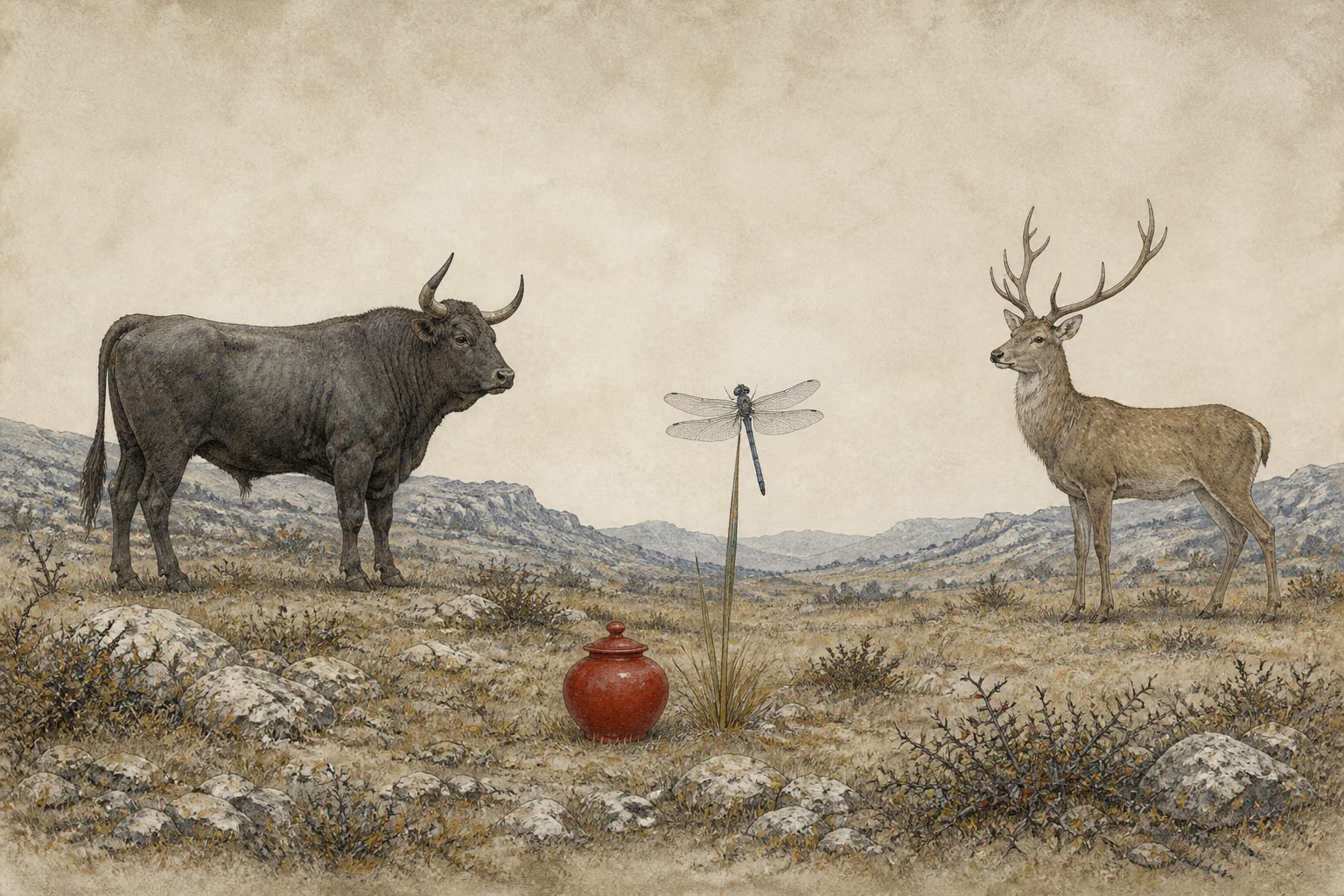
Those animals in which the blood is more abundant and of an unctuous nature, are irascible; it is darker in males than in females, and in the young than in the aged: the blood of the lower extremities is the thickest. There is great vitality, too, in the blood, and when it is discharged from the body, it carries the life with it: it is not sensible, however, of touch. Those animals in which the blood is the thickest are the most courageous, and those in which it is the thinnest the most intelligent; while those, again, which have little or no blood are the most timorous of all. The blood of the bull coagulates and hardens the most speedily of all, and hence it is so particularly deadly when drunk. On the other hand, the blood of the wild boar, the stag, the roe-buck, and oxen of all kinds, does not coagulate. Blood is of the richest quality in the ass, and the poorest in man. Those animals which have more than four feet have no blood. In animals which are very fat, the blood is less abundant than in others, being soaked up by the fat. Man is the only creature from which the blood flows at the nostrils; some persons bleed at one nostril only, some at both, while others again void blood by the lower parts. Many persons discharge blood from the mouth at stated periods, such, for instance, as Macrinus Viscus, lately, a man of prætorian dignity, and Volusius Saturninus, the Prefect of the City, who every year did the same, and yet lived to beyond ninety. The blood is the only substance in the body that is sensible of any temporary increase, for a larger quantity will come from the victims if they happen to have drunk just before they are sacrificed.
Those animals which conceal themselves at certain periods of the year, as already mentioned, have no blood at those times, with the exception, indeed, of some very small drops about the heart. A marvellous dispensation of Nature! and very similar to that witnessed in man, where the blood is sensible of various modifications from the slightest causes; for not only, similarly to the bile, does it rush upwards to the face, but it serves also to indicate the various tendencies of the mind, by depicting shame, anger, and fear, in many ways, either by the paleness of the features or their unusual redness; as, in fact, the redness of anger and the blush of modesty are quite different things. It is a well-known fact, that when a man is in fear, the blood takes to flight and disappears, and that many persons have been pierced through the body without losing one drop of blood; a thing, however, which is only the case with man. But as to those animals which we have already mentioned as changing colour, they derive that colour from the reflection of other objects; while, on the other hand, man is the only one that has the elements which cause these changes centred in himself. All diseases, as well as death, tend to absorb the blood.