LIBER XI · CAPUT 39
WHETHER THE BLOOD IS THE PRINCIPLE OF LIFE
Latine · Mayhoff 1906
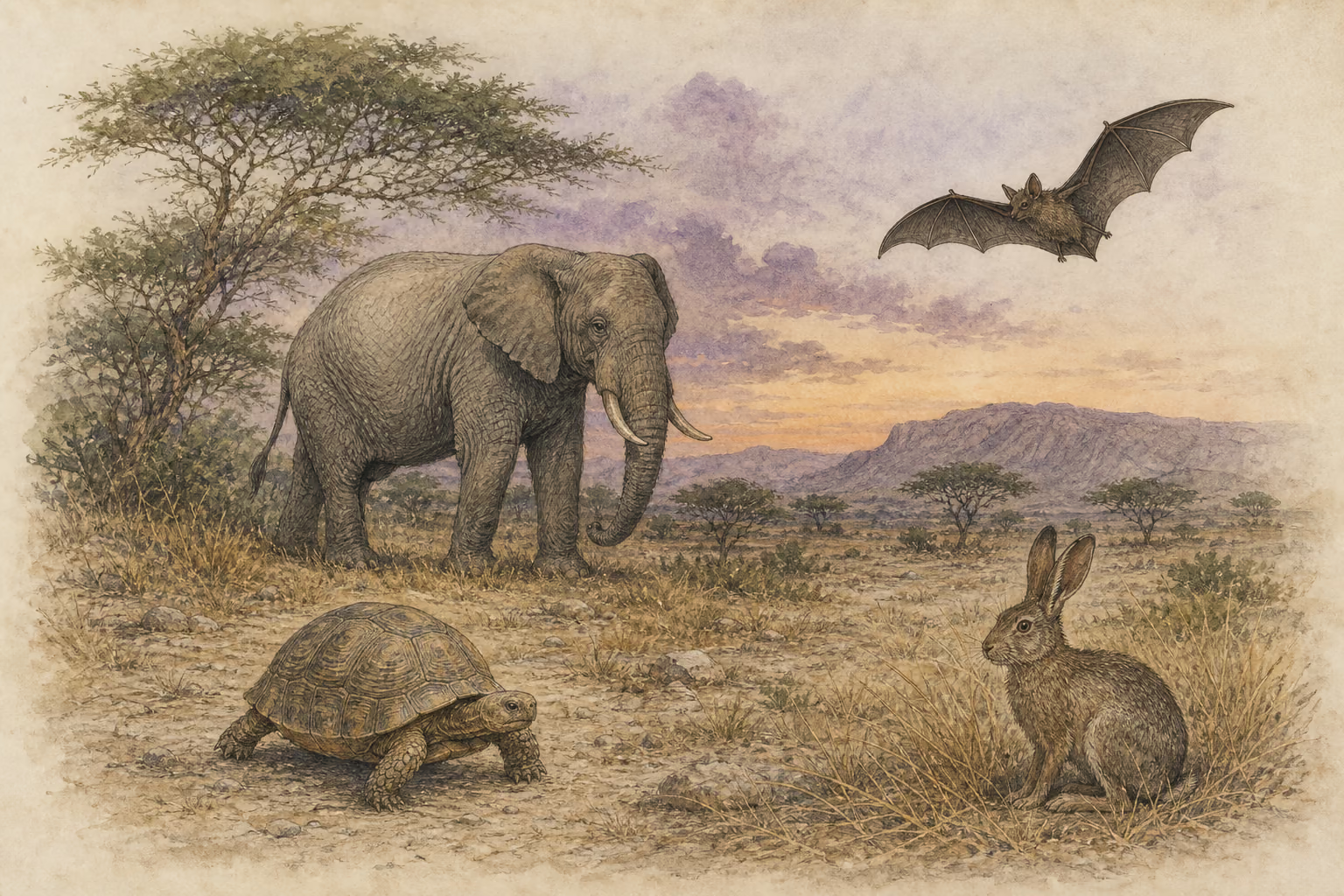
Sunt qui suptilitatem animi constare non tenuitate sanguinis putent, sed cute operimentisque corporum magis aut minus bruta esse, ut ostreas et testudines; boum ferga, saetas suum obstare tenuitati immeantis spiritus, nec purum liquidumque tramitti; sic et in homine, cum crassior callosiorve excludat cutis: ceu vero non crocodilis et duritia tergoris tribuatur et sollertia. hippopotami corio crassitudo talis, ut inde tornentur hastae, et tamen quaedam ingenio medica diligentia. elephantorum quoque tergora inpenetrabiles caetras habent, cum tamen omnium quadripedum suptilitas animi praecipua perhibetur illis. ergo cutis ipsa sensu caret, maxime in capite. ubicumque per se ac sine carne est, volnerata non coit, ut in bucca cilioque.
Quae animal pariunt, pilos habent; quae ova, pinnas aut squamas aut corticem, ut testudines, aut cutem puram, ut serpentes. pinnarum caules omnium cavi. praecisae non crescunt, evulsae renascuntur. membranis volant fragilibus insecta, umentibus hirundines in mari, siccis inter tecta. vespertilionum alae quoque articulos habent.
Pili e cute exeunt crassa hirti, feminis tenuiores; equis in iuba largi, in armis leoni, dasypodi et in buccis intus et sub pedibus, quae utraque Trogus et in lepore tradidit, hoc exemplo libidinosiores hominum quoque hirtos colligens. villosissimum animalium lepus. pubescit homo solus, quod nisi contigit, sterilis in gignendo est, seu mas seu femina. pili in homine partim simul, partim postea gignuntur. hi castratis non nascuntur, congeniti autem non desinunt, sicut nec feminis magno opere; inventae tamen quaedam defluvio capitis invalidae, ut et lanugine oris, cum menstrui cursus stetere. quibusdam post genituri sponte non gignuntur. quadripedibus pilum cadere atque subnasci annuum est. viris crescunt maxime in capillo, mox in barba. recisi non, ut herbae ac cetera, ab incisura augentur, sed ab radice exeunt. crescunt et in quibusdam morbis, maxime phthisi, et in senecta, defunctis quoque corporibus. libidinosis congeniti maturius defluunt, agnati celerius crescunt. quadripedibus senectute crassescunt lanaeque rarescunt. quadripedum dorsa pilosa, ventres glabri.— Boum coriis glutinum excoquitur, taurorumque praecipuum.—
Mammas homo solus e maribus habet, cetera animalia mammarum notas tantum. sed ne feminae quidem in pectore nisi quae possunt partus suos attollere. ova gignentium nulli; nec lact nisi animal parienti. volucrum vespertilioni tantum: fabulosum enim arbitror de strigibus, ubera eas infantium labris inmulgere. esse in maledictis iam antiquis strigem convenit, sed quae sit avium, constare non arbitror.
English · Bostock & Riley 1855–57
There are some persons who are of opinion that the fineness of the wit does not depend upon the thinness of the blood, but that animals are more or less stupid in proportion to the skin or other coverings of the body, as the oyster and the tortoise, for instance: that the hide of the ox and the bristles of the hog, in fact, offer a resistance to the fine and penetrating powers of the air, and leave no passage for its transmission in a pure and liquid state. The same, they say, is the case, too, with men, when the skin is very thick or callous, and so excludes the air. Just as if, indeed, the crocodile was not equally remarkable for the hardness of its skin and its extreme cunning.
The hide, too, of the hippopotamus is so thick, that lances, even, are turned from it, and yet this animal has the intelligence to administer certain medicaments to itself. The hide, too, of the elephant makes bucklers that are quite impenetrable, and yet to it is ascribed a degree of intelligence superior to that of any quadruped. The skin itself is entirely devoid of sensation, and more particularly that of the head; wherever it is found alone, and unaccompanied with flesh, if wounded, it will not unite, as in the cheek and on the eyelid, for instance.
Those animals which are viviparous, have hair; those which are oviparous, have feathers, scales, or a shell, like the tortoise; or else a purple skin, like the serpent. The lower part of all feathers is hollow; if cut, they will not grow again, but if pulled out, they will shoot afresh. Insects fly by the aid of a frail membrane; the wings of the fish called the “swallow” are moistened in the sea, while those of the bat which frequents our houses are dry; the wings of this last animal have certain articulations as well. The hairs that issue from a thick skin are rough, while those on females are of a finer quality. Those found on the horse’s mane are more abundant, which is the case also with the shoulders of the lion. The dasypus has hair in the inside of the mouth even and under the feet, two features which Trogus has also attributed to the hare; from which the same author concludes that hairy men are the most prone to lust. The most hairy of all animals is the hare. Man is the only creature that has hair as the mark of puberty; and a person who is devoid of this, whether male or female, is sure to be sterile. The hair of man is partly born with him, and in part produced after his birth. The last kind of hair will not grow upon eunuchs, though that which has been born with them does not fall off; which is the case also with women, in a great degree. Still however, there have been women known to be afflicted with falling off of the hair, just as some are to be seen with a fine down on the face, after the cessation of the menstrual discharge. In some men the hair that mostly shoots forth after birth will not grow spontaneously. The hair of quadrupeds comes off every year, and grows again. That of the head in man grows the fastest, and next to it the hair of the beard. When cut, the hairs shoot, not from the place where they have been cut, as is the case with grass, but at the root. The hair grows quickly in certain diseases, phthisis more particularly; it grows also with rapidity in old age, and on the body after death. In persons of a libidinous tendency the hair that is produced at birth falls off more speedily, while that which is afterwards produced grows with the greatest rapidity. In quadrupeds, the hair grows thicker in old age; but on those with wool, it becomes thinner. Those quadrupeds which have thick hair on the back, have the belly quite smooth. From the hides of oxen, and that of the bull more especially, glue is extracted by boiling.
Man is the only male among animals that has nipples, all the rest having mere marks only in place of them. Among female animals even, the only ones that have mammæ on the breast are those which can nurture their young. No oviparous animal has mammæ, and those only have milk that are viviparous; the bat being the only winged animal that has it. As for the stories that they tell, about the screech-owl ejecting milk from its teats upon the lips of infants, I look upon it as utterly fabulous: from ancient times the name “strix,” I am aware, has been employed in maledictions, but I do not think it is well ascertained what bird is really meant by that name.