LIBER XI · CAPUT 40
THE PAPS: BIRDS THAT HAVE PAPS. REMARKABLE FACTS CONNECTED WITH THE DUGS OF ANIMALS
Latine · Mayhoff 1906
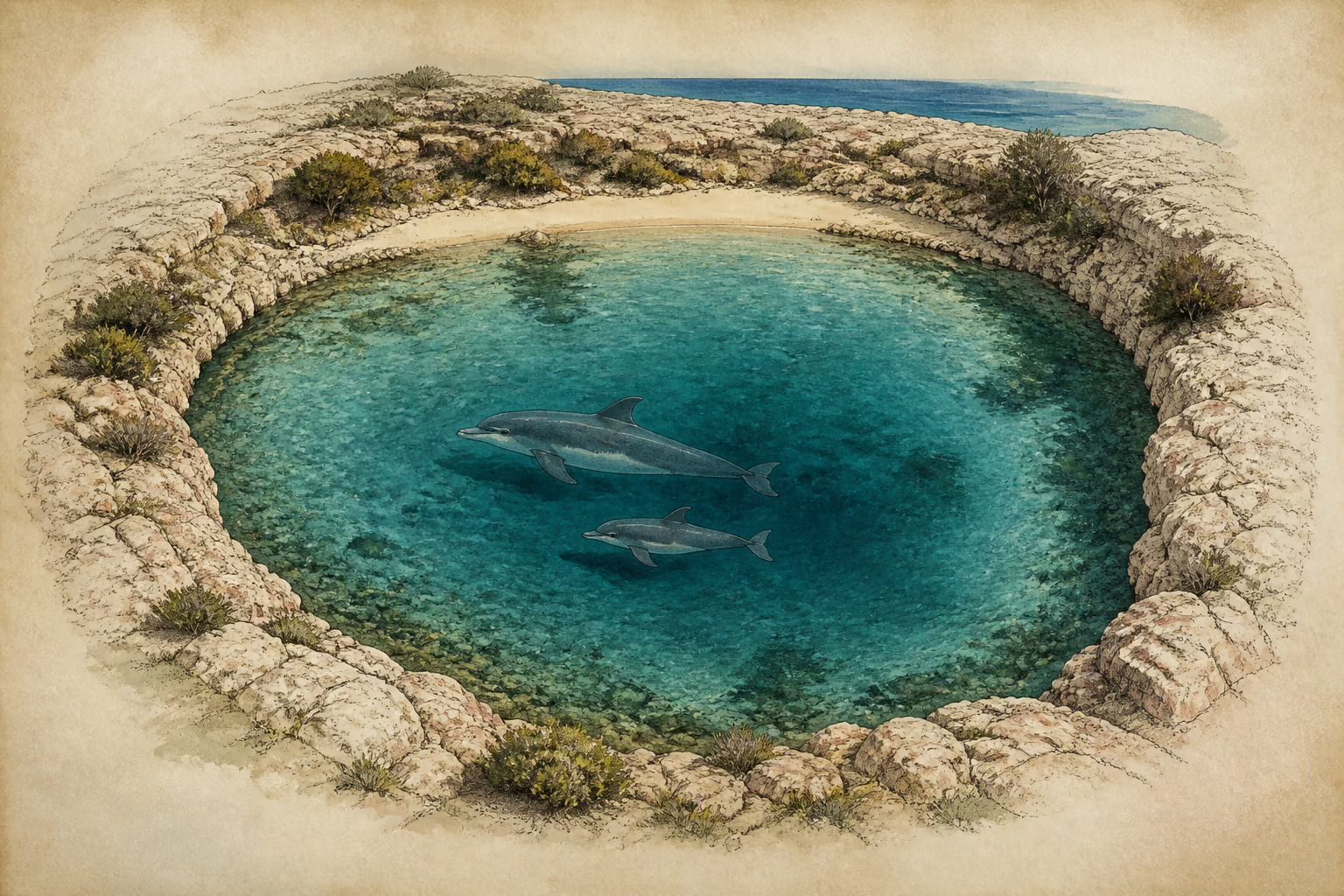
asinis a fetu dolent, ideo sexto mense arcent partus, cum equae anno prope toto praebeant. quibus solida ungula nec supra geminos fetus, haec omnia binas habent mammas, nec aliubi quam in feminibus. eodem loci bisulca et cornigera, boves quaternas, oves et caprae binas. quae numeroso fecunda partu et quibus digiti in pedibus, haec plures habent et toto ventre duplici ordine, ut sues, generosae duodenas, volgares binis minus; similiter canes. alia ventre medio quaternas, ut pantherae, alia binas, ut leaenae. elephans tantum sub armis duas nec in pectore, sed citra in alis occultas. nulli in feminibus digitos habentium. primis genitis in quoque partu sues primas praebent —eae sunt faucibus proximae—, et suam quisque novit in fetu quo genitus est ordine, eaque alitur nec alia. detracto illa alumno suo sterilescit ilico ac resilit, uno vero ex omni turba relicto sola munifex, quae genito fuerat attributa, dependet. ursae mammas quaternas gerunt, delphini binas in ima alvo papillas tantum nec evidentes et paulum in oblicum porrectas. neque aliud animal in cursu lambitur. et ballaenae autem vitulique marinimammis nutriunt fetus.
English · Bostock & Riley 1855–57
The female ass is troubled with pains in the teats after it has foaled, and it is for that reason that at the end of six months it weans its young; while the mare suckles its young for nearly the whole year. The solid-hoofed animals do not bear more than two young ones at a time: they all of them have two paps, and nowhere but between the hind legs. Animals with cloven feet and with horns, such as the cow, for instance, have four paps, similarly situate, sheep and goats two. Those which produce a more numerous progeny, and those which have toes on the feet, have a greater number of paps distributed in a double row all along the belly, such as the sow, for instance; the better sorts have twelve, the more common ones two less: the same is the case also with the female of the dog. Other animals, again, have four paps situate in the middle of the belly, as the female panther; others, again, two only, as the lioness. The female elephant has two only, situate between the shoulders, and those not in the breast, but without it, and hidden in the arm-pits: none of the animals which have toes have the paps between the hind legs. The sow presents the first teat to the first-born in each farrow, the first teat being the one that is situate nearest to the throat. Each pig, too, knows its own teat, according to the order in which it was born, and draws its nourishment from that and no other: if its own suckling, too, should happen to be withdrawn from any one of them, the pap will immediately dry up, and shrink back within the belly: if there should be only one pig left of all the farrow, that pap alone which has been assigned for its nutriment when born, will continue to hang down for the purpose of giving suck. The she-bear has four mammæ, the dolphin only two, at the bottom of the belly; they are not easily visible, and have a somewhat oblique direction: this is the only animal which gives suck while in motion. The balæna and sea-calf also suckle their young by teats.