LIBER XI · CAPUT 41
THE MILK: THE BIESTINGS. CHEESE; OF WHAT MILK CHEESE CANNOT BE MADE. RENNET; THE VARIOUS KINDS OF ALIMENT IN MILK
Latine · Mayhoff 1906
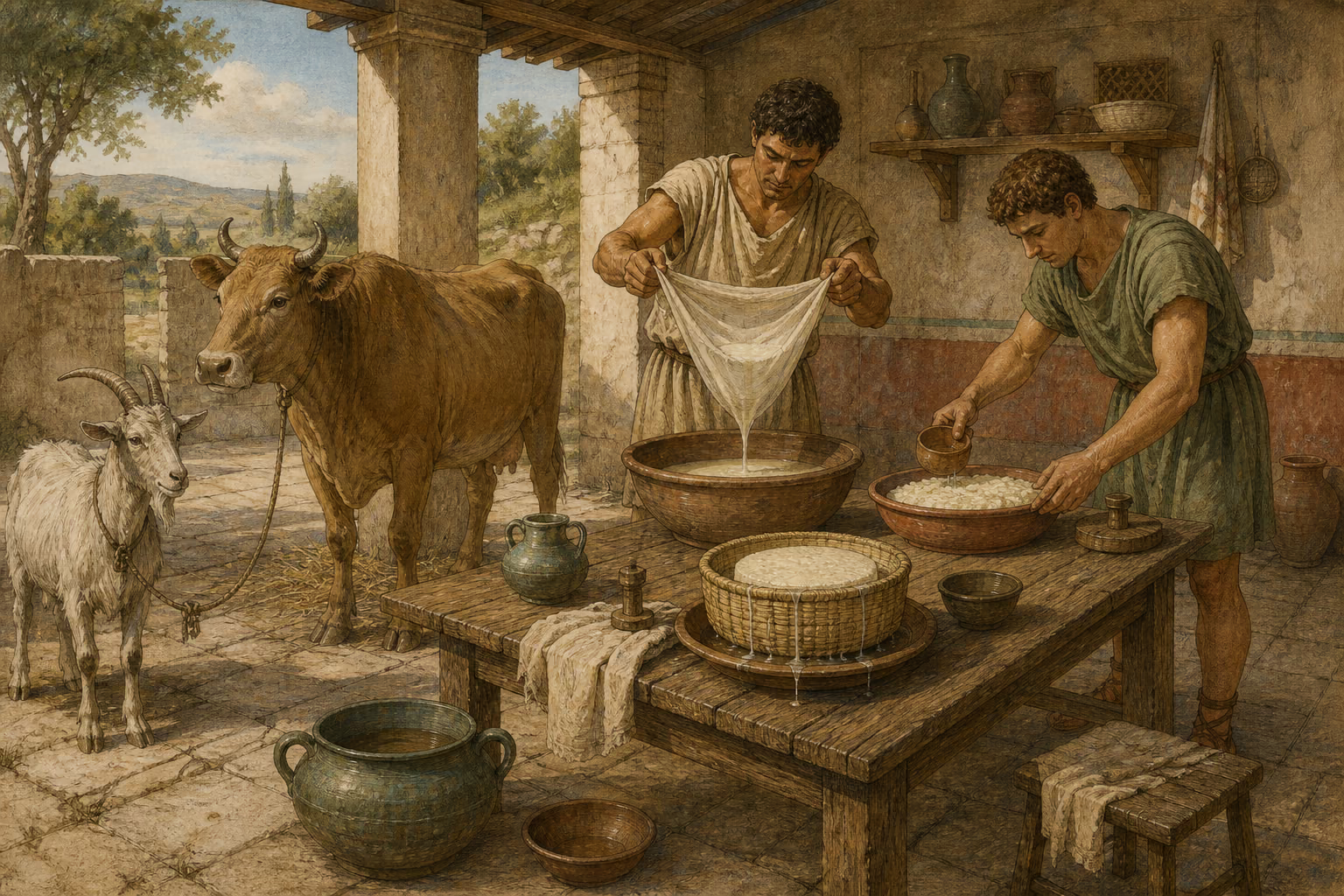
Mulieri ante septimum mensem profusum lact inutile, ab eo mense, quo vitales partus, salubre. plerisque autem totis mammis atque etiam alarum sinu fluit. cameli lact habent, donec iterum gravescant. suavissimum id existimatur ad unam mensuram tribus aquae additis. bos ante partum non habet, et primo semper a partu colostrae fiunt, ni admisceatur aqua, in pumicis modum coeunte duritia. asinae praegnates continuo lactescunt. pullos earum, ubi pingue pabulum, biduo a partu maternum lact gustasse letale est. genus mali vocatur colostratio. caseus non fit ex utrimque dentatis, quoniam eorum lact non coit. tenuissimum camelis, mox equis, crassissimum asinae, ut quo coaguli vice utantur. conferre aliquid et candori in mulierum cute existimatur. Poppaea certe, Domiti Neronis coniunx, quingentas per omnia secum fetas trahens, balnearum etiam solio totum corpus illo lacte macerabat, extendi quoque cutem credens. omne autem igne spissatur, umore fervescit. bubulum caseo fertilius quam caprinum, ex eadem mensura paene altero tanto. quae plures quaternis mammas habent, caseo inutilia, et meliora quae binas.
Coagulum hinnulei, leporis, haedi laudatum, praecipuum tamen dasypodis, quod et profluvio alvi medetur, unius utrimque dentatorum. mirum barbaras gentes, quae lacte vivant, ignorare aut spernere tot saeculis casei dotem, densantes id alioqui in acorem iucundum et pingue butyrum. spuma id est, lacte concretior lentiorque quam quod serum vocatur. non omittendum in eo olei vim esse et barbaros omnes infantesque nostros ita ungui.
English · Bostock & Riley 1855–57
The milk that is secreted in a woman before her seventh month is useless; but after that month, so long as the fœtus is healthy, the milk is wholesome: many women, indeed, are so full of milk, that it will flow not only from the mammæ, but exudes at the arm-pits even. Camels continue in milk until they are pregnant again. Their milk, mixed in the proportion of one part to three of water, is considered a very pleasant beverage. The cow has no milk before it has calved, and that which immediately follows upon its bringing forth is known as the “colostra:” if water is not mixed with it, it will coagulate, and assume the hardness of pumice. She-asses, as soon as they are pregnant, have milk in their udders; when the pasturage is rich, it is fatal to their young to taste the mother’s milk the first two days after birth; the kind of malady by which they are attacked is known by the name of “colostration.” Cheese cannot be made from the milk of animals which have teeth on either jaw, from the circumstance that their milk does not coagulate. The thinnest milk of all is that of the camel, and next to it that of the mare. The milk of the she-ass is the richest of all, so much so, indeed, that it is often used instead of rennet. Asses’ milk is also thought to be very efficacious in whitening the skin of females: at all events, Poppæa, the wife of Domitius Nero, used always to have with her five hundred asses with foal, and used to bathe the whole of her body in their milk, thinking that it also conferred additional suppleness on the skin. All milk thickens by the action of fire, and becomes serous when exposed to cold. The milk of the cow produces more cheese than that of the goat: when equal in quantity, it will produce nearly twice the weight. The milk of animals which have more than four mammæ does not produce cheese; and that is the best which is made of the milk of those that have but two. The rennet of the fawn, the hare, and the kid is the most esteemed, but the best of all is that of the dasypus: this last acts as a specific for diarrhœa, that animal being the only one with teeth in both jaws, the rennet of which has that property. It is a remarkable circumstance, that the barbarous nations which subsist on milk have been for so many ages either ignorant of the merits of cheese, or else have totally disregarded it; and yet they understand how to thicken milk and form therefrom an acrid kind of liquid with a pleasant flavour, as well as a rich butter: this last is the foam of milk, and is of a thicker consistency than the part which is known as the “serum.” We ought not to omit that butter has certain of the properties of oil, and that it is used for an ointment among all barbarous nations, and among ourselves as well, for infants.