LIBER XI · CAPUT 50
THE TAILS OF ANIMALS
Latine · Mayhoff 1906
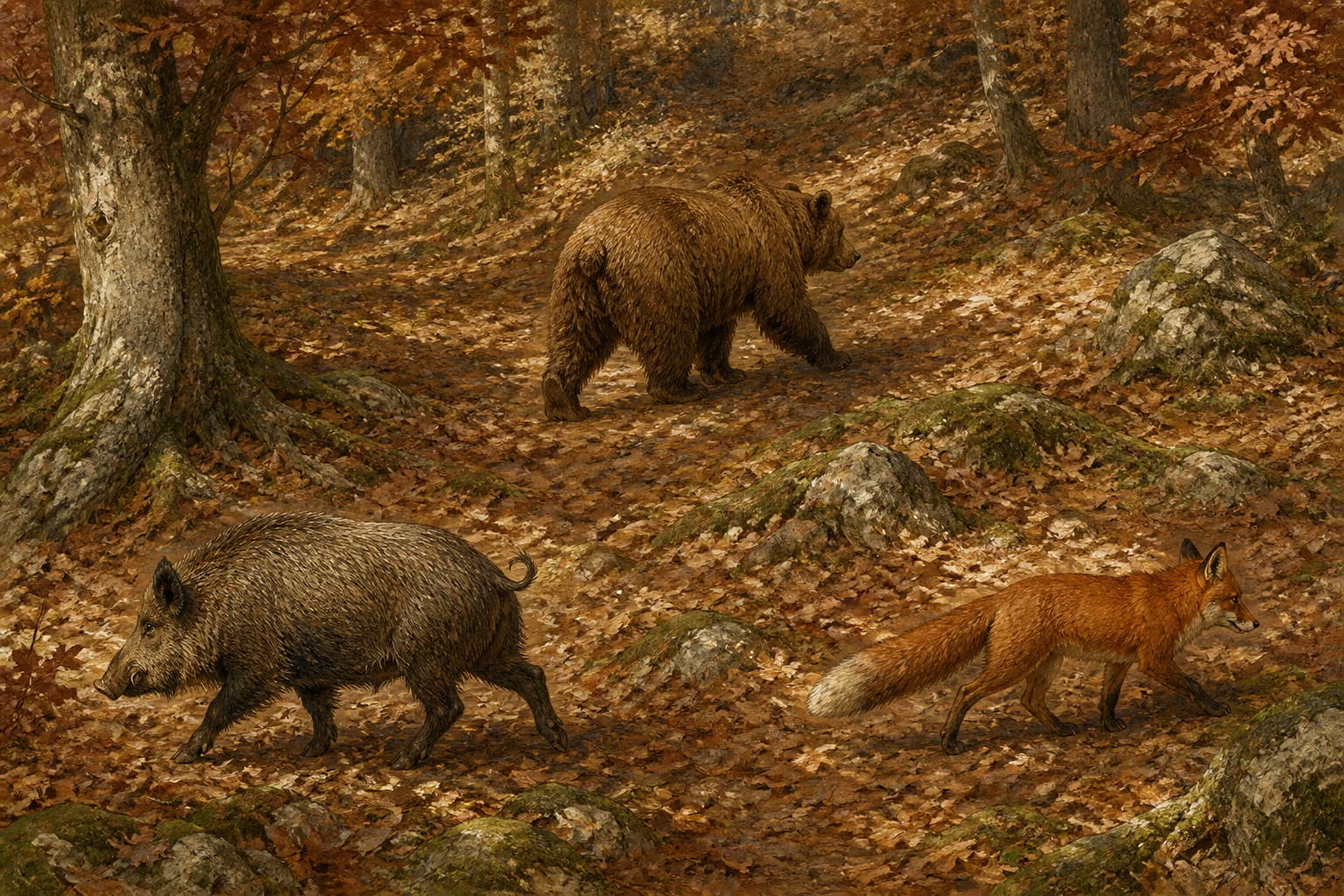
Caudae praeter hominem ac simias omnibus fere et animal et ova gignentibus, pro desiderio corporum nudae hirtis, ut apris, parvae villosis, ut ursis, praelongae saetosis, ut equis. amputatae lacertis et serpentibus renascuntur. piscium meatus gubernaculi modo regunt atque etiam in dexteram ac laevam motae ut remigio quodam inpellunt. lacertis inveniuntur et geminae. boum caudis longissimus caulis atque in ima parte hirtus; idem asinis longior quam equis, sed saetosus veterinis. leoni in prima parte ut bubus et sorici, pantheris non item; vulpibus et lupis villosus ut ovibus, quibus procerior. sues intorquent, canum degeneres sub alvum reflectunt.
English · Bostock & Riley 1855–57
Nearly all the animals, both viviparous as well as oviparous, with the exception of man and the ape, have tails in proportion to the necessities of the body. In animals with bristles the tail is bare, as in the boar, for instance. In those that are shaggy, it is small, such as the bear; while in those animals that have long hair, the tail is long also, the horse, for instance. The tail of a lizard or serpent, if cut off, will grow again. The tail governs the movements of the fish like a rudder, and turning from side to side, to the right or to the left, impels it onwards, acting in some degree like an oar. A double tail is sometimes found in lizards. In oxen, the stalk of the tail is of remarkable length, and is covered with rough hair at the extremity. In the ass, too, it is longer than in the horse, but in beasts of burden it is covered with bristly hairs. The tail of the lion, at the extremity, is like that of the ox and the field-mouse; but this is not the case with the panther. In the fox and the wolf it is covered with long hair, as in sheep, in which it is longer also. In swine, the tail is curled; among dogs, those that are mongrels carry it close beneath the belly.