LIBER XI · CAPUT 53
RESPIRATION AND NUTRIMENT
Latine · Mayhoff 1906
Animae leonis virus grave, ursi pestilens. contacta halitu eius nulla fera attingit, ociusque putrescunt adflata. e reliquis homini tantum infici natura voluit pluribus modis, et ciborum ac dentium vitiis, sed maxime senio. dolorem sentire non poterat, tactu sensuque omni carebat sine qua nihil sentitur; eadem commeabat recens assidue, exitura supremo et sola ex homine superfutura, denique haec trahebatur e caelo: huius quoque tamen reperta poena est, ut neque id ipsum, quo vivitur, in vita iuvaret. Parthorum populis haec praecipue et a iuventa propter indiscretos cibos, namque et vino faetent ora nimio; sed sibi proceres medentur grano Assyrii mali, cuius et suavitas praecipua, in esculenta addito.
Elephantorum anima serpentes extrahit, cervorum urit. diximus hominum genera qui venena serpentium suctu corporibus eximerent. quin et subus serpentes in pabulo sunt, et aliis venenum est. quae insecta appellavimus, omnia olei aspersu necantur, vultures unguenti—qui fugat alios appetunt odorem —, scarabaei rosa. quasdam serpentes scorpio occidit. Scythae sagittas tingunt viperina sanie et humano sanguine; inremediabile id scelus: mortem ilico adfert levi tactu.
Quae animalium pascerentur veneno diximus. quaedam, innocua alioqui, venenatis pasta noxia fiunt et ipsa. apros in Pamphylia et Ciliciae montuosis salamandra ab iis devorata qui edere, moriuntur: neque enim est intellectus ullus in odore vel sapore; et aqua vinumque interemit salamandra ibi inmortua vel si omnino biberit unde potetur, item rana quam rubetam vocant. tantum insidiarum est vitae! vespae serpente avide vescuntur, quo alimento mortiferos ictus faciunt. adeoque magna differentia est victus, ut in tractu pisce viventium Theophrastus prodat boves quoque pisce vesci, sed non nisi vivente.
Homini cibus utilissimus simplex, acervatio saporum pestifera et condimento perniciosior. difficulter autem perficiuntur omnia in cibis acria, aspera, inconsueta, varia, nimia et avide hausta, et aestate quam hieme difficilius et in senecta quam in iuventa. vomitiones homini ad haec in remedium excogitatae frigidiora corpora faciunt, inimicae oculis maxime ac dentibus.
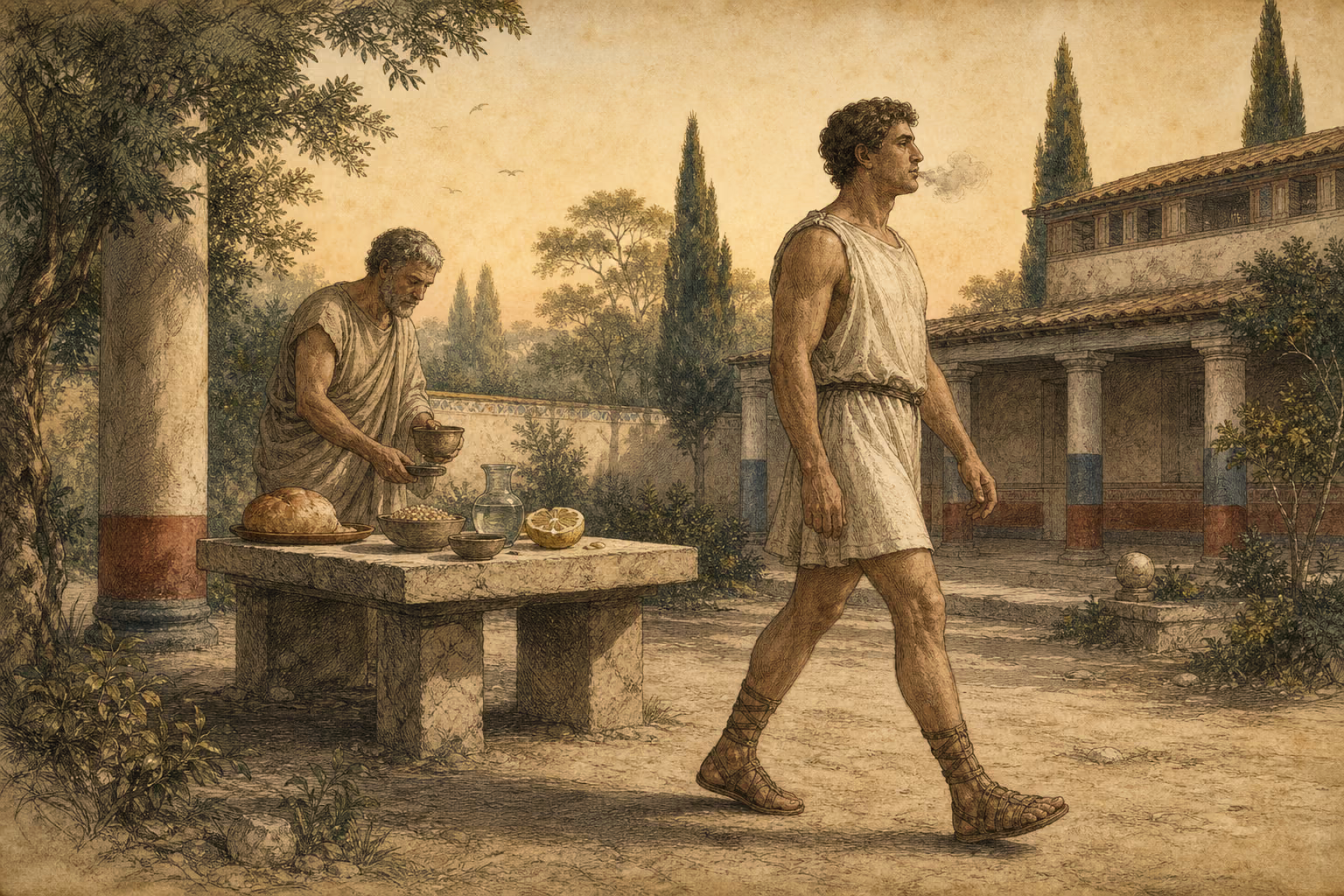
Somno concoquere corpulentiae quam firmitati utilius; ideo athletas ambulatione malunt cibos perficere. pervigilio quidem praecipue vincuntur cibi.
English · Bostock & Riley 1855–57
The breath of the lion is fetid, and that of the bear quite pestilential; indeed, no beast will touch anything with which its breath has come in contact, and substances which it has breathed upon will become putrid sooner than others. It is in man only that Nature has willed that the breath should become tainted in several ways, either through faultiness in the victuals or the teeth, or else, as is more generally the case, through extreme old age. Our breath in itself was insensible to all pain, utterly devoid as it was of all powers of touch and feeling, without which there can be no sensation; ever renewed, it was always forthcoming, destined to be the last adjunct that shall leave the body, and the only one to remain when all is gone beside; it drew, in fine, its origin from heaven. In spite of all this, however, certain penalties were discovered to be indicted upon it, so that the very substance by the aid of which we live might become a torment to us in life. This inconvenience is more particularly experienced among the Parthians, from their youth upwards, on account of the indiscriminate use of food among them; and, indeed, their very excess in wine causes their breath to be fetid. The grandees, however, of that nation have a remedy for bad breath in the pips of the Assyrian citron, which they mix with their food, and the aroma of which is particularly agreeable. The breath of the elephant will attract serpents from their holes, while that of the stag scorches them. We have already made mention of certain races of men who could by suction extract from the body the venom of serpents; and swine will even eat serpents, which to other animals are poisonous. All those creatures which we have spoken of as insects, can be killed by merely sprinkling them with oil. Vultures, which are put to flight by unguents, are attracted by other odours: the beetle, too, is attracted by the rose. The scorpion puts to death certain serpents. The Scythians dip their arrows in the poison of serpents and human blood: against this frightful composition there is no remedy, for with the slightest touch it is productive of instant death.
The animals which feed upon poison have been already mentioned. Some of them, which are harmless of themselves, become noxious if fed upon venomous substances. The wild boar of Pamphylia and the mountainous parts of Cilicia, after having devoured a salamander, will become poisonous to those who eat its flesh; and yet the danger is quite imperceptible by reason of any peculiarity in the smell and taste. The salamander, too, will poison either water or wine, in which it happens to be drowned; and what is more, if it has only drunk thereof, the liquid becomes poisonous. The same is the case, too, with the frog known to us as the bramble-frog. So numerous are the snares that are laid in wait for life! Wasps greedily devour the flesh of the serpent, a nutriment which renders their stings fatal; so vast is the difference to be found between one kind of food and another. In the country, too, of the Ichthyophagi, as we learn from Theophrastus, the oxen are fed upon fish, but only when alive.
The most wholesome nutriment for man is plain food. An accumulation of flavours is injurious, and still more so, if heightened by sauces. All acrid elements are difficult of digestion, and the same is the case if food is devoured greedily, or in too large quantities. Food is also less easily digested in summer than in winter, and in old age than in youth. The vomits which man has invented, by way of remedy for this evil, render the body more cold, and are more particularly injurious to the eyes and teeth.
Digestion during sleep is more productive of corpulence than strength. Hence it is, that it is preferable for athletes to quicken digestion by walking. Watching, at night more especially, promotes digestion of the food.