LIBER XI · CAPUT 52
SUPERFLUOUS LIMBS
Latine · Mayhoff 1906
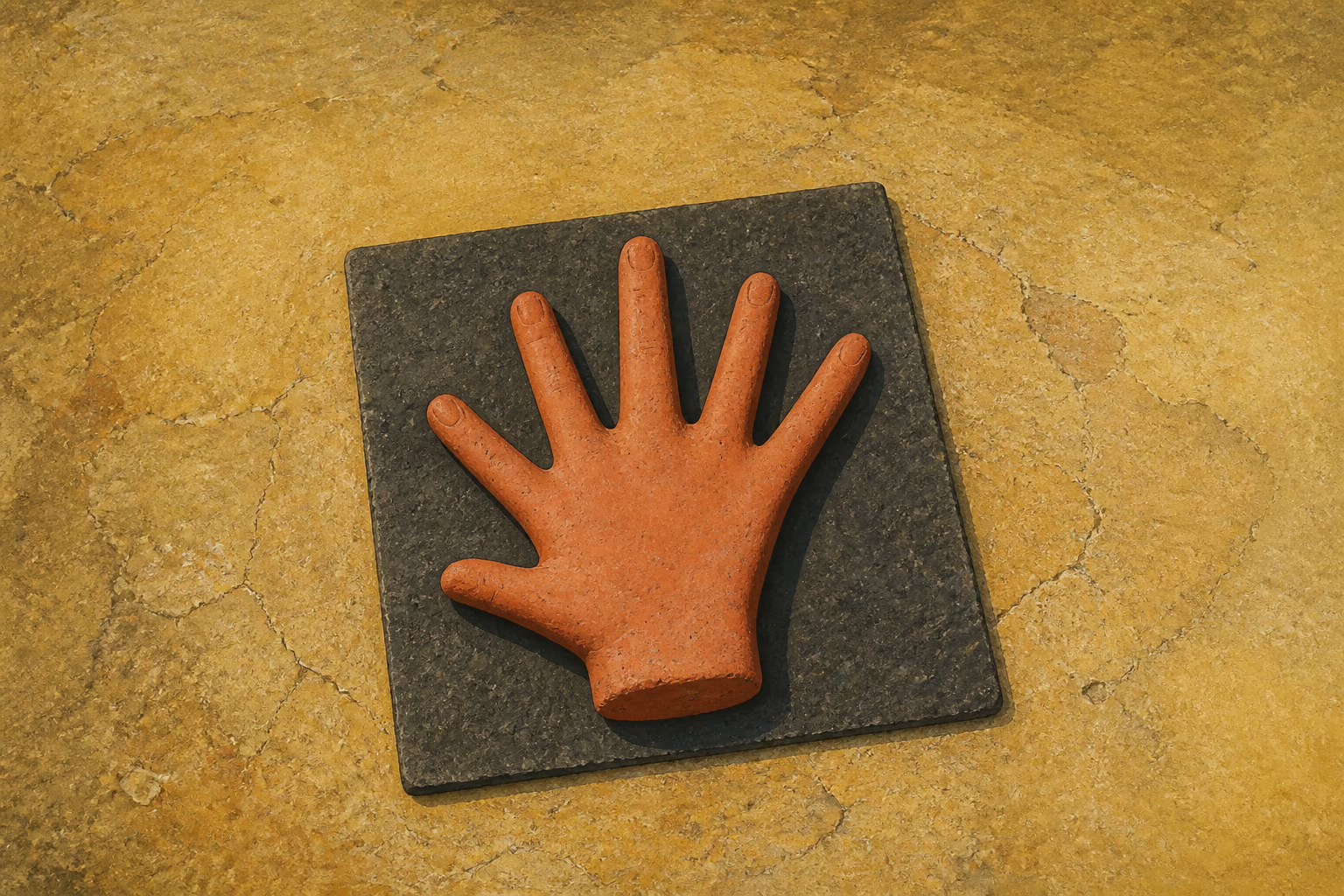
Membra animalibus adgnata inutilia sunt, sicut sextus homini semper digitus. placuit in Aegypto nutrire portentum, binis et in aversa capitis parte oculis hominem, sed iis non cernentem.
Miror equidem Aristotelem non modo credidisse praescita vitae esse aliqua in corporibus ipsis, verum etiam prodidisse. quae quamquam vana existimo nec sine cunctatione proferenda, ne in se quisque ea auguria anxie quaerat, attingam tamen, quia tantus vir in doctrinis non sprevit. igitur vitae brevis signa ponit raros dentes, praelongos digitos, plumbeum colorem pluresque in manu incisuras nec perpetuas. contra longae esse vitae incurvos umeris et in manu unam aut duas incisuras longas habentes et plures quam XXXII dentes, auribus amplis. nec universa haec, ut arbitror, sed singula observat, frivola, ut reor, et volgo tamen narrata. addidit morum quoque spectus simili modo apud nos Trogus, et ipse auctor e severissimis, quos verbis eius subiciam: Fronsquibus est magna subesse significat; quibus parva, mobilem; quibus rotunda, iracundum, velut hoc vestigio tumoris apparente. supercilia quibus porriguntur in rectum, molles significant; quibus iuxta nasum flexa sunt, austeros; quibus iuxta tempora inflexa, derisores; quibus in totum demissa, malivolos et invidos. oculi quibus utrimque sunt longi, malificos moribus esse indicant; qui carnosos a naribus angulos habent, malitiae notam praebent: candida pars extenta notam inpudentiae habet; qui identidem operiri solent, inconstantiae. oricularum magnitudo loquacitatis et stultitiae nota est. hactenus Trogus.
English · Bostock & Riley 1855–57
Supernumerary limbs, when they grow on animals, are of no use, which is the case also with the sixth finger, when it grows on man. It was thought proper in Egypt to rear a human monster, that had two additional eyes in the back part of the head; it could not see with them, however.
I am greatly surprised that Aristotle has not only believed, but has even committed it to writing, that there are in the human body certain prognostics of the duration of life. Although I am quite convinced of the utter futility of these remarks, and am of opinion that they ought not to be published without hesitation, for fear lest each person might be anxiously looking out for these prognostics in his own person, I shall still make some slight mention of the subject, seeing that so learned a man as Aristotle did not treat it with contempt. He has set down the following as indications of a short life—few teeth, very long fingers, a leaden colour, and numerous broken lines in the palm of the hand. On the other hand, he looks upon the following as prognostics of a long life—stooping in the shoulders, one or two long unbroken lines in the hand, a greater number than two-and-thirty teeth, and large ears. He does not, I imagine, require that all these symptoms should unite in one person, but looks upon them as individually significant: in my opinion, however, they are utterly frivolous, all of them, although they obtain currency among the vulgar. Our own writer, Trogus, has in a similar manner set down the physiognomy as indicative of the moral disposition; one of the very gravest of the Roman authors, whose own words I will here subjoin:—
“Where the forehead is broad, it is significant of a dull and sluggish understanding beneath; and where it is small, it indicates an unsteady disposition. A rounded forehead denotes an irascible temper, it seeming as though the swelling anger had left its traces there. Where the eye-brows are extended in one straight line, they denote effeminacy in the owner, and when they are bent downwards towards the nose, an austere disposition. On the other hand, when the eye-brows are bent towards the temples, they are indicative of a sarcastic disposition; but when they lie very low, they denote malice and envy. Long eyes are significant of a spiteful, malicious nature; and where the corners of the eyes next the nose are fleshy, it is a sign also of a wicked disposition. If the white of the eye is large, it bears tokens of impudence, while those who are incessantly closing the eyelids are inconstant. Largeness of the ears is a sign of loquacity and foolishness.” Thus much of what Trogus says.