LIBER XI · CAPUT 7
THE MEANING OF THE TERMS COMMOSIS, PISSOCEROS, AND PROPOLIS
Latine · Mayhoff 1906
Prima fundamenta commosin vocant periti, secunda pissoceron, tertia propolin, inter coria cerasque, magni ad medicamina usus. commosis crusta est prima, saporis amari. pissoceros super eam venit, picantium modo, ceu dilutior cera. e vitium populorumque mitiore cummi propolis, crassioris iam materiae additis floribus, nondum tamen cera, sed favorum stabilimentum, qua omnes frigoris aut iniuriae aditus obstruuntur, odore et ipsa etiamnum gravi, ut qua plerique pro galbano utantur.
Praeter haec convehitur erithace, quam aliqui sandaracam, alii cerinthum vocant. hic erit apium dum operantur cibus, qui saepe invenitur in favorum inanitatibus sepositus, et ipse amari saporis. gignitur autem rore verno et arborum suco cummium modo, capitur in ficis minor, austri flatu nigrior, aquilonibus melior et rubens, plurimus in Graecis nucibus. Menecrates florem esse dicit, sed nemo praeter eum.
English · Bostock & Riley 1855–57
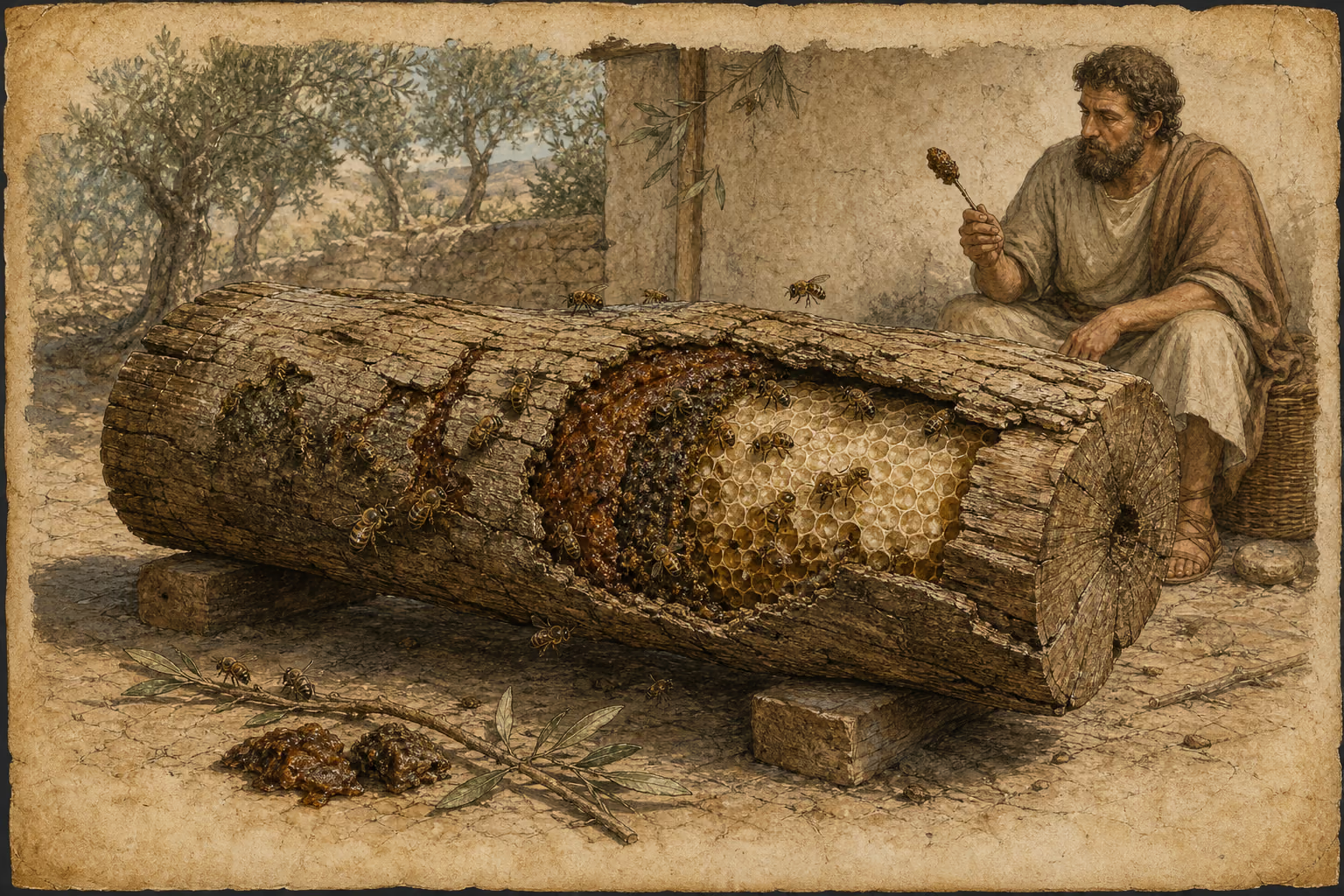
The persons who understand this subject, call the substance which forms the first foundation of their combs, commosis, the next, pissoceros, and the third propolis; which last is placed between the other layers and the wax, and is remarkable for its utility in medicine. The commosis forms the first crust or layer, and has a bitter taste; and upon it is laid the pissoceros, a kind of thin wax, which acts as a sort of varnish. The propolis is produced from the sweet gum of the vine or the poplar, and is of a denser consistency, the juices of flowers being added to it. Still, however, it cannot be properly termed wax, but rather the foundation of the honey-combs; by means of it all inlets are stopped up, which might, otherwise, serve for the admission of cold or other injurious influences; it has also a strong odour, so much so, indeed, that many people use it instead of galbanum.
In addition to this, the bees form collections of erithace or bee-bread, which some persons call “sandaraca,” and others “cerinthos.” This is to serve as the food of the bees while they are at work, and is often found stowed away in the cavities of the cells, being of a bitter flavour also. It is produced from the spring dews and the gummy juices of trees, being less abundant while the south-west wind is blowing, and blackened by the prevalence of a south wind. On the other hand, again, it is of a reddish colour and becomes improved by the north-east wind; it is found in the greatest abundance upon the nut trees in Greece. Menecrates says, that it is a flower, which gives indications of the nature of the coming harvest; but no one says so, with the exception of him.