LIBER XI · CAPUT 8
WHAT FLOWERS ARE USED BY THE BEES IN THEIR WORK
Latine · Mayhoff 1906
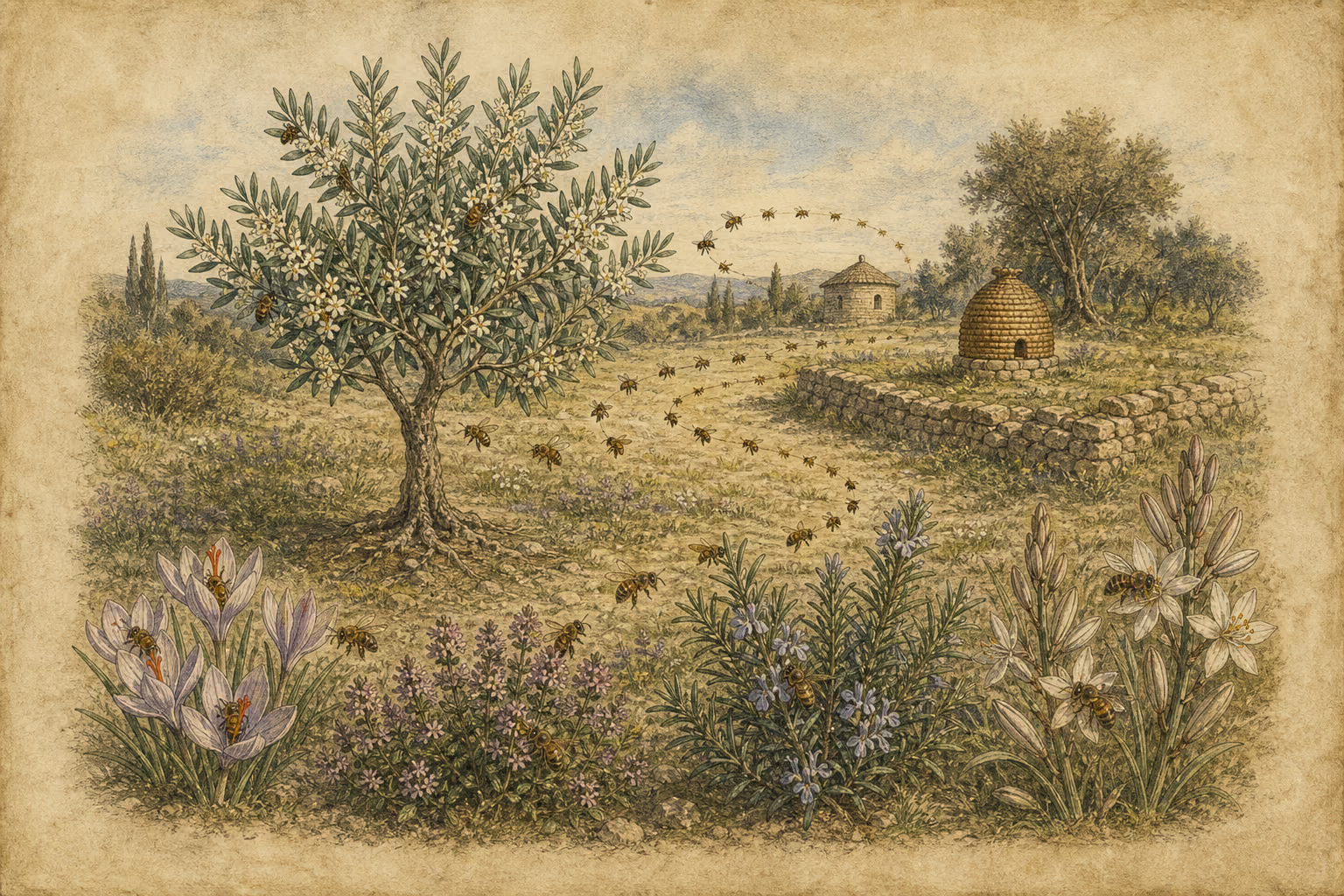
Ceras ex omnium arborum satorumque floribus confingunt excepta rumice et echinopode; herbarum haec genera. falso excipitur et spartum, quippe cum in Hispania multa in spartariis mella herbam eam sapiant. falso et oleas excipi arbitror, quippe olivae proventu plurima examina gigni certum est. fructibus nullis nocetur. mortuis ne floribus quidem, non modo corporibus, insidunt. operantur intra LX p. et subinde consumptis in proximo floribus speculatores ad pabula ulteriora mittunt, noctu deprehensae in expeditione excubant supinae, ut alas a rore protegant,
English · Bostock & Riley 1855–57
Bees form wax from the blossoms of all trees and plants, with the sole exception of the rumex and the echinopodes, both being kinds of herbs. It is by mistake, however, that spartum is excepted; for many varieties of honey that come from Spain, and have been made in the plantations of it, have a strong taste of that plant. I am of opinion, also, that it is without any sufficient reason that the olive has been excepted, seeing that it is a well-known fact, that where olives are in the greatest abundance, the swarms of bees are the most numerous. Bees are not injurious to fruit of any kind; they will never settle on a dead flower, much less a dead carcase. They pursue their labours within three-score paces of their hives; and when the flowers in their vicinity are exhausted, they send out scouts from time to time, to discover places for forage at a greater distance. When overtaken by night in their expeditions, they watch till the morning, lying on their backs, in order to protect their wings from the action of the dew.