LIBER XII · CAPUT 11
THE TREE CALLED CYNA. TREES FROM WHICH FABRICS FOR CLOTHING ARE MADE IN THE EAST
Latine · Mayhoff 1906
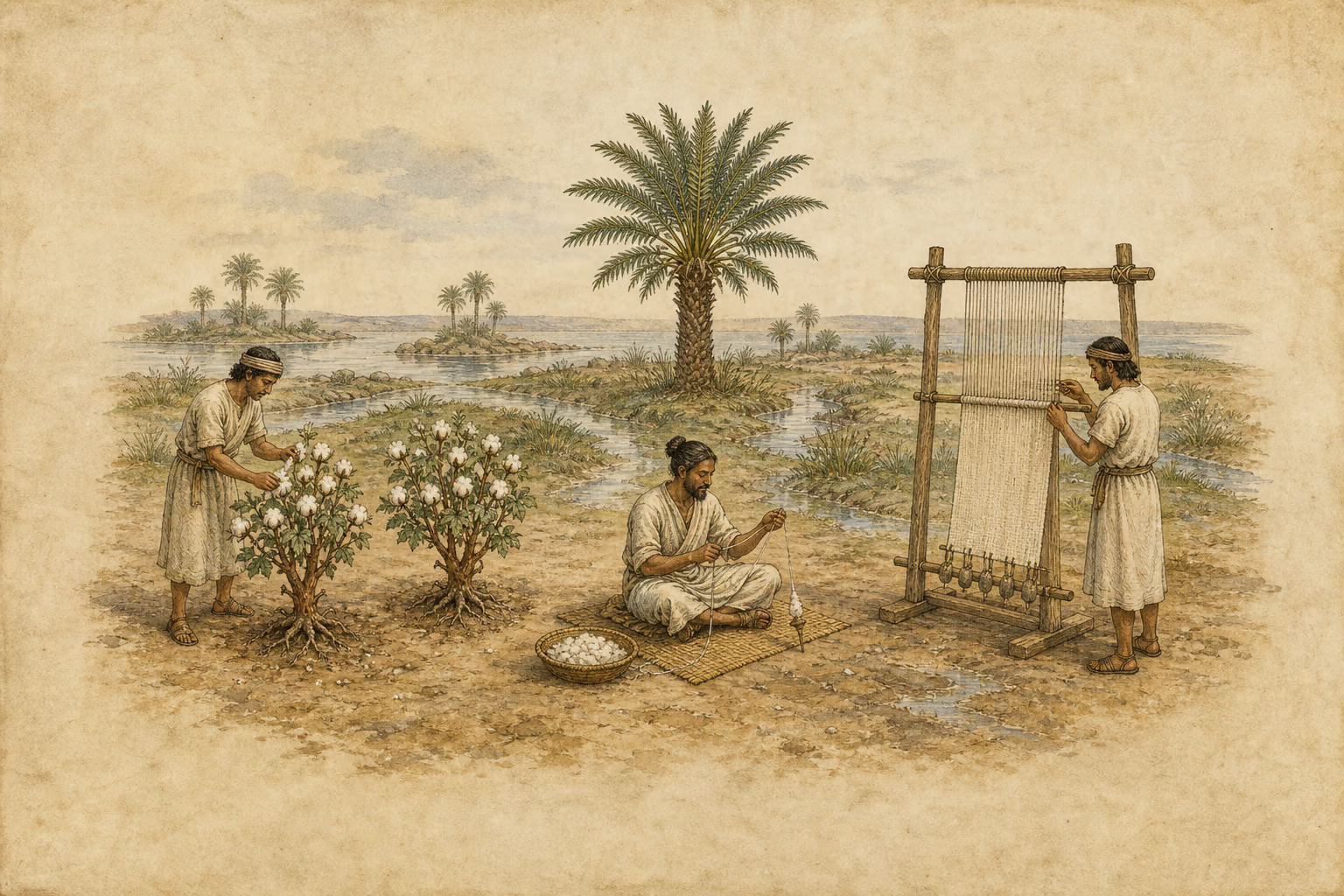
arborem vocant gossypinum, fertiliore etiam Tylo minore, quae distat X p. Iuba circa fruticem lanugines esse tradit linteaque ea Indicis praestantiora, Arabiae autem arborem, ex qua vestes faciant, cynas vocari, folio palmae simili. sic Indos suae arbores vestiunt. in Tylis autem et alia arbor floret albae violae specie, sed magnitudine quadriplici, sine odore, quod miremur in eo tractu. est et alia similis, foliosior tamen roseique floris, quem noctu conprimens aperire incipit solis exortu, meridie expandit; incolae dormire eum dicunt. fert eadem insula et palmas oleasque ac vites et cum reliquo pomorum genere ficos. nulli arborum folia ibi decidunt, rigaturque gelidis fontibus et imbres accipit.
Vicinaiis Arabia flagitat quandam generum distinctionem, quoniam fructus constant radice, frutice, cortice, suco, lacrima, ligno, surculo, flore, folio, pomo.
English · Bostock & Riley 1855–57
This tree is known by the name of gossypinus: the smaller island of Tylos, which is ten miles distant from the larger one, produces it in even greater abundance.
Juba states, that about a certain shrub there grows a woolly down, from which a fabric is manufactured, preferable even to those of India. He adds, too, that certain trees of Arabia, from which vestments are made, are called cynæ, and that they have a leaf similar to that of the palm. Thus do their very trees afford clothing for the people of India. In the islands of Tylos, there is also another tree, with a blossom like the white violet in appearance, though four times as large, but it is destitute of smell, a very remarkable fact in these climates.
There is also another tree similar to the preceding one, but with a thicker foliage, and a blossom like the rose. This flower shuts at night, and, beginning to open towards sun-rise, appears in full blow by mid-day; the natives are in the habit of saying that in this way it goes to sleep. The same island bears also the palm, the olive, the vine, and the fig, with various other kinds of fruit. None of the trees in this island lose their leaves; it is abundantly watered by cool streams, and receives the benefit of rain.
Arabia, which is in the vicinity of these islands, requires that we should make some distinction in its vegetable products, seeing that here the various parts of trees which are employed for useful purposes are the root, the branches, the bark, the juices, the gum, the wood, the shoots, the blossoms, the leaves, and the fruit.