LIBER XII · CAPUT 24
CYPROS
Latine · Mayhoff 1906
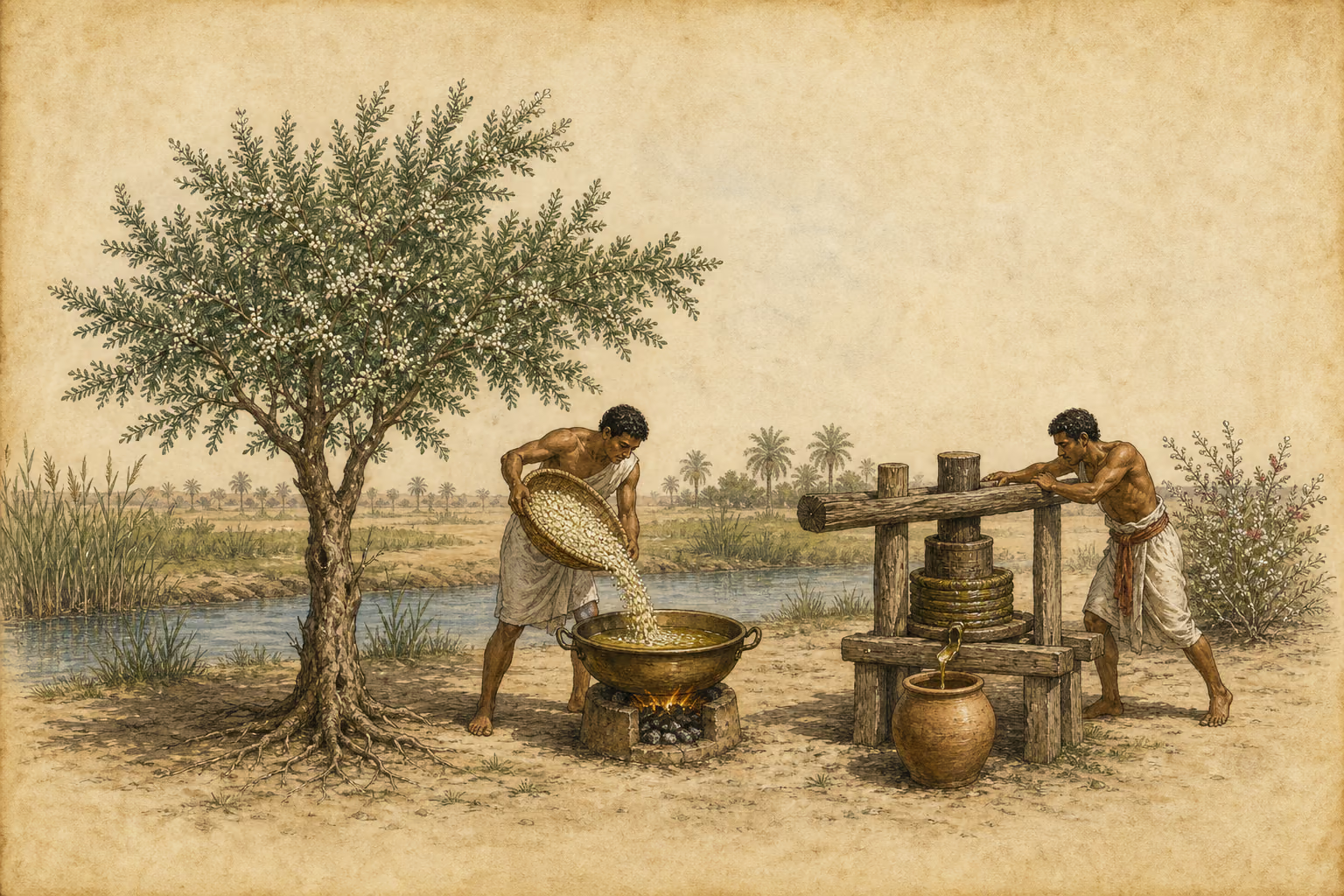
Cypros in Aegypto est arbor, ziziphi foliis, semine coriandri, candido, odorato. coquitur hoc in oleo premiturque postea, quod cypros vocatur. pretium ei in libras $X$ V. optimum e Canopica in ripis Nili nata, secundum Ascalone Iudaeae, tertium in Cypro insula. odoris suavitas quaedam. hanc esse dicunt arborem quae in Italia ligustrum vocetur. in eodem tractu aspalathos nascitur, spina candida magnitudine arboris modicae, flore rosae. radix unguentis expetitur. tradunt in quocumque frutice curvetur arcus caelestis, eandem quae sit aspalathi suavitatem odoris exsistere; sed si in aspalatho, inenarrabilem quandam. quam quidam erysisceptrum vocant, alii sceptrum. probatio eius in colore rufo vel igneo tactuque spisso et odore castorei. permutatur in libras $X$ V. in Aegypto nascitur et maron, peius quam Lydium, maioribus foliis ac variis; illa brevia ac minuta et odorata.
English · Bostock & Riley 1855–57
The cyprus is a tree of Egypt, with the leaves of the ziziphus, and seeds like coriander, white and odoriferous. These seeds are boiled in olive oil, and then subjected to pressure; the product is known to us as cypros. The price of it is five denarii per pound. The best is that produced on the banks of the Nile, near Canopus, that of second quality coming from Ascalon in Judæa, and the third in estimation for the sweetness of its odour, from the island of Cyprus. Some people will have it that this is the same as the tree which in Italy we call ligustrum.
In the same country, too, grows aspalathos, a white, thorny shrub, the size of a moderate tree, and with flowers like the rose, the root of which is in great request for unguents. It is said that every shrub over which the rainbow is extended is possessed of the sweet odour that belongs to the aspalathos, but that if the aspalathos is one of them, its scent is something quite indescribable. Some persons call this plant erysisceptrum, and others, again, sceptrum. The proof of its genuineness is its red or fiery colour; it is also compact to the touch, and has the smell of castoreum: it is sold at the rate of five denarii per pound.
In Egypt, too, grows marum, though of inferior quality to that of Lydia, which last has larger leaves, covered with spots. Those of the other are shorter and smaller, and give out a powerful scent.