LIBER XII · CAPUT 28
BRYON, ŒNANTHE, AND MASSARIS
Latine · Mayhoff 1906
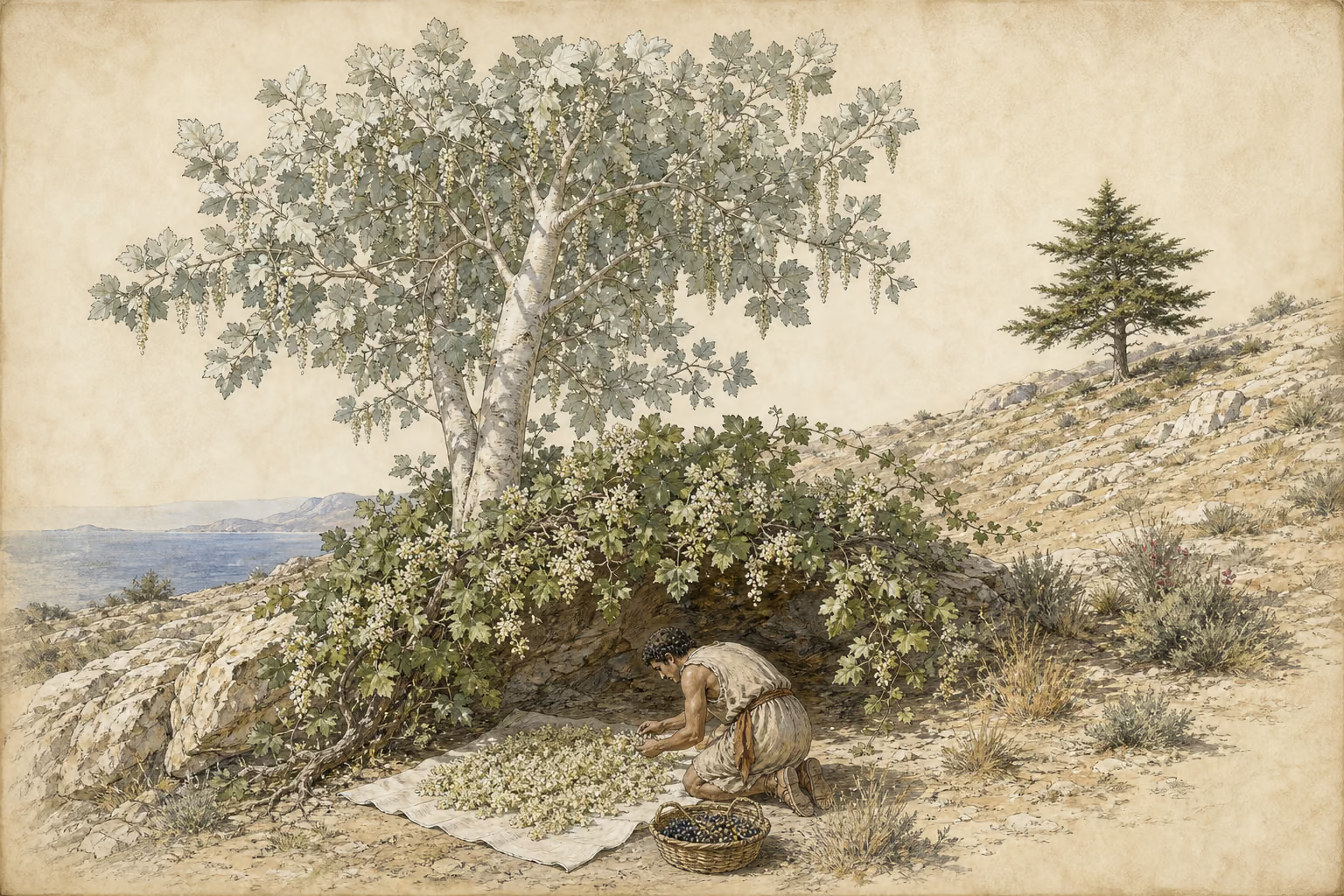
Eodem et bryon pertinet, uva populi albae. optima circa Cnidum aut Cariam in sitientibus aut siccis asperisque, secunda in Lyciae cedro. eodem et oenanthe pertinet; est autem vitis labruscae uva; colligitur, cum floret, id est cum optime olet, siccatur in umbra substrate linteo atque ita in cados conditur. praecipua ex Parapotamia, secunda ab Antiochia atque Laudicea Syriae, tertia ex montibus Medicis; haec utilior medicinae. quidam omnibus his praeferunt eam quae in Cypro insula nascitur. nam quae in Africa fit, ad medics tantum pertinet vocaturque massaris. omnis autem ex alba labrusca praestantior quam e nigra.
Est praeterea arbor ad eadem unguenta pertinens, quam alii elaten vocant — quod nos abietem — alii palmam, alii spatham. laudatur Hammoniaca maxime, mox Aegyptia, dein Syriaca, dumtaxat in locis sitientibus odorata, pingui lacrima, quae in unguenta additur ad domandum oleum.
In Syria gignitur et cinnamum quod comacum appellant. id est sucus nuci expressus, multum a suco illo veri cinnami differens, vicina tamen gratia. pretium in libras asses XXXX.
English · Bostock & Riley 1855–57
Bryon also bears an affinity to these substances, being the clusters of berries produced by the white poplar. The best kinds grow in the vicinity of Cnidos, or in Caria, in spots that are destitute of water, or else in dry and rugged localities. A bryon of second-rate quality is produced from the cedar of Lycia. Œnanthe, too, bears an affinity to these substances, being the clusters of the wild vine: it is gathered when it is in flower, or, in other words, when it has the finest smell: after which it is dried in the shade upon a linen sheet spread beneath it, and then stored away in casks. The best sort is that which comes from Parapotamia; the next best kinds are those made at Antiochia and Laodicea in Syria; and that of third-rate quality, comes from the mountainous parts of Media; this last, however, is preferable for medicinal purposes. Some persons give the preference over all to that grown in the island of Cyprus. As to that which comes from Africa, it is solely used for medicinal purposes, being known by the name of massaris. Whatever country it may happen to be, the white wild vine produces an œnanthe of superior quality to the black.
There is another tree also, that contributes to the manufacture of unguents, by some persons known under the name of elate, but which we call abies; others again call it a palm, and others give it the name of spathe. That of Hammonium is the most esteemed, and that of Egypt next, after which comes the Syrian tree. It is only odoriferous, however, in places that are destitute of water. The tears of it are of an unctuous nature, and are employed as an ingredient in unguents, to modify the harshness of the oil.
In Syria, too, is produced that kind of cinnamon which is also known as comacum. This is a juice which is extracted from a nut, and very different from the extract of the real cinnamomum, though it somewhat resembles it in its agreeable smell. The price at which it sells is forty asses per pound.