LIBER XII · CAPUT 3
HOW THE CITRON IS PLANTED
Latine · Mayhoff 1906
Peregrinae et cerasi Persicaeque et omnes quarum Graeca nomina aut aliena, sed quae ex iis incolarum numero esse coepere, dicentur inter frugiferas. in praesentia externas persequemur a salutari maxime orsi.
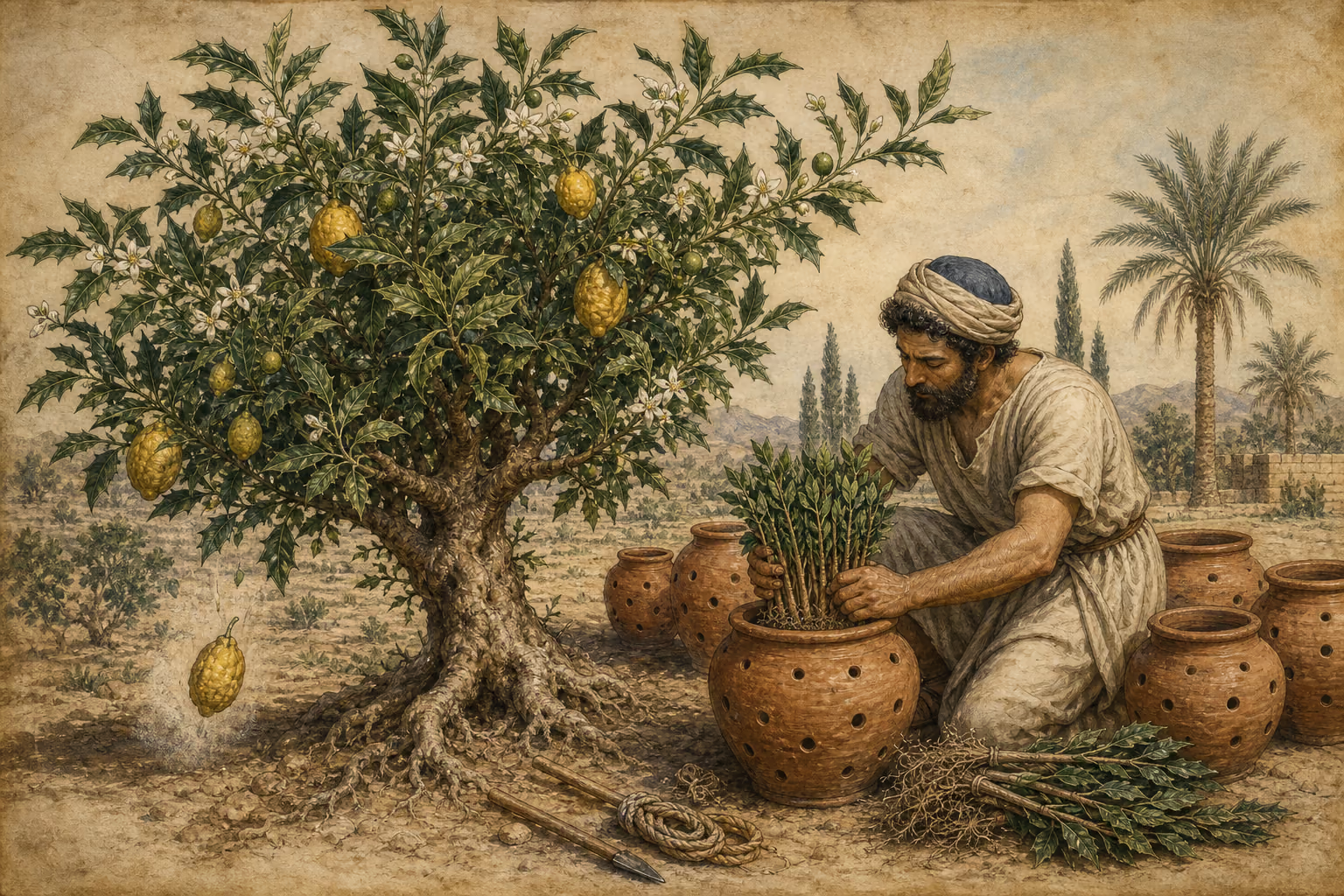
Malus Assyria, quam alii Medicam vocant, venenis medetur. folium eius est unedonis intercurrentibus spinis. pomum ipsum alias non manditur, odore praecellit foliorum quoque, qui transit in vestes una conditus arcetque animalium noxia. arbor ipsa omnibus horis pomifera est, aliis cadentibus, aliis maturescentibus, aliis vero subnascentibus. temptavere gentes transferre ad sese propter remedii praestantiam fictilibus in vasis, dato per cavernas radicibus spiramento, qualiter omnia transitura longius seri aptissime transferrique meminisse conveniet, ut semel quaeque dicantur. sed nisi apud Medos et in Perside nasci noluit. haec est cuius grana Parthorum proceres incoquere diximus esculentis commendandi halitus gratia. nec alia arbor laudatur in Medis.
English · Bostock & Riley 1855–57
The cherry and the peach, and all those trees which have either Greek or foreign names, are exotics: those, however, of this number, which have begun to be naturalized among us, will be treated of when I come to speak of the fruit-trees in general. For the present, I shall only make mention of the really exotic trees, beginning with the one that is applied to the most salutary uses. The citron tree, called the Assyrian, and by some the Median apple, is an antidote against poisons. The leaf is similar to that of the arbute, except that it has small prickles running across it. As to the fruit, it is never eaten, but it is remarkable for its extremely powerful smell, which is the case, also, with the leaves; indeed, the odour is so strong, that it will penetrate clothes, when they are once impregnated with it, and hence it is very useful in repelling the attacks of noxious insects. The tree bears fruit at all seasons of the year; while some is falling off, other fruit is ripening, and other, again, just bursting into birth. Various nations have attempted to naturalize this tree among them, for the sake of its medical properties, by planting it in pots of clay, with holes drilled in them, for the purpose of introducing the air to the roots; and I would here remark, once for all, that it is as well to remember that the best plan is to pack all slips of trees that have to be carried to any distance, as close together as they can possibly be placed. It has been found, however, that this tree will grow nowhere except in Media or Persia. It is this fruit, the pips of which, as we have already mentioned, the Parthian grandees employ in seasoning their ragouts, as being peculiarly conducive to the sweetening of the breath. We find no other tree very highly commended that is produced in Media.