LIBER XII · CAPUT 4
THE TREES OF INDIA
Latine · Mayhoff 1906
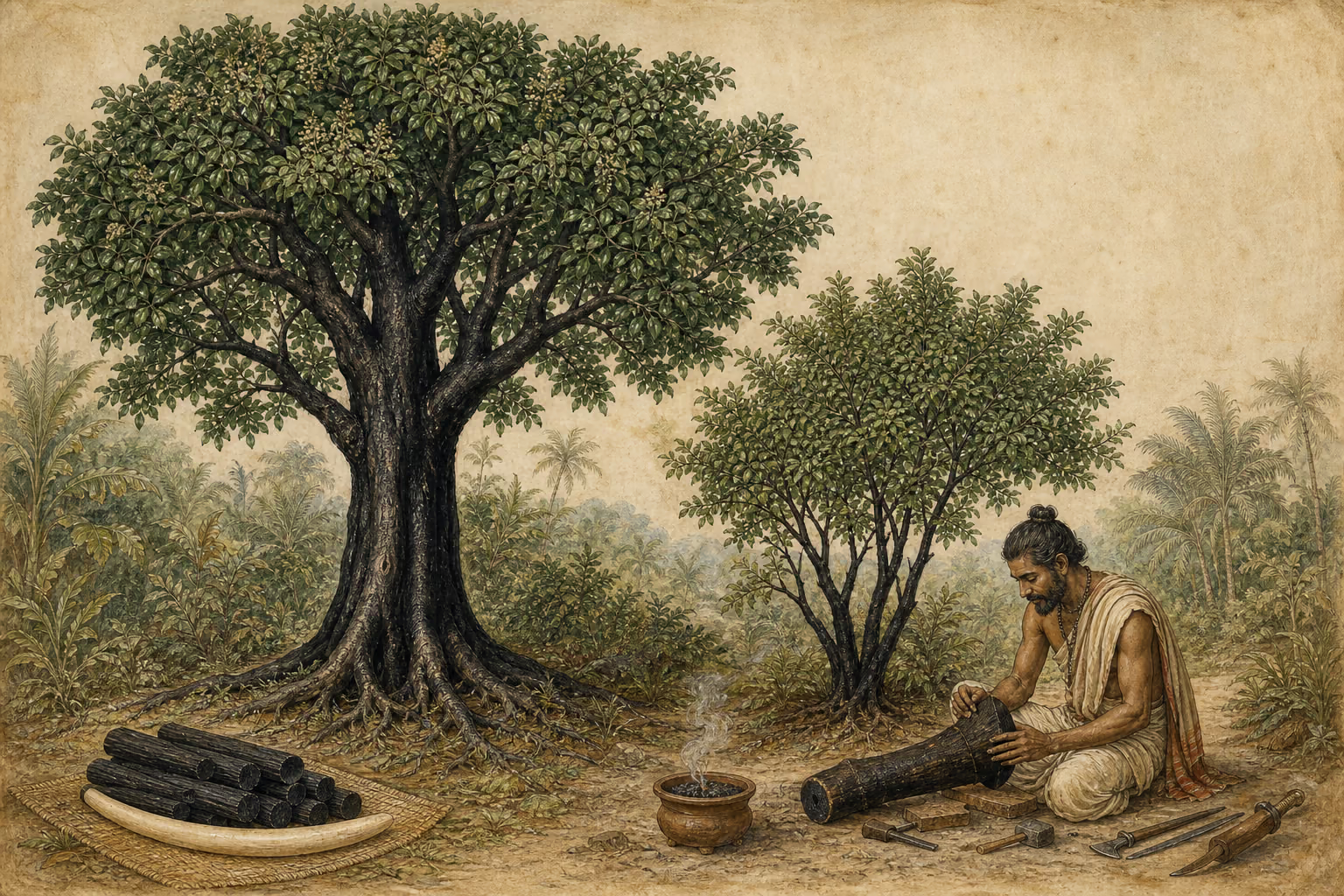
Lanigeras Serum in mentione gentis eius narravimus, item Indiae arborum magnitudinem. unam e peculiaribus Indiae Vergilius celebravit hebenum, nusquam alibi nasci professus. Herodotus eam Aethiopiae intellegi maluit in tributi vicem regibus Persidis e materia eius centenas phalangas tertio quoque anno pensitasse Aethiopas cum auro et ebore prodendo. non omittendum id quoque, vicenos dentes elephantorum grandes, quoniam ita significavit, Aethiopas ea de causa pendere solitos. tanta ebori auctoritas erat urbis nostrae CCCX anno; tune enim auctor ille historiarum condidit Thuriis in Italia, quo magis mirum est quod eidem credimus, qui Padum amnem vidisset neminem ad id tempus Asiae Graeciaeque visum. cognita Aethiopiae forma — ut diximus, nuper allata Neroni principi —raram arborem Meroen usque a Syene fine imperii perDCCCCLXXXXVI p. nullamque nisi palmarum generis esse docuit. ideo fortassis in tributi auctoritate tertia res fuerit hebenus.
Romae eam Magnus Pompeius triumpho Mithridatico ostendit. accendi Fabianus negat, uritur tamen odore iucundo. duo genera eius: rarum id quod melius, arboreum, purae et enodis materiae nigri splendoris ac vel sine arte protinus iucundi, alterum fruticosum cytisi modo et tota India dispersum.
English · Bostock & Riley 1855–57
In describing the country of the Seres, we have already made mention of the wool-bearing trees which it produces; and we have, likewise, touched upon the extraordinary magnitude of the trees of India. Virgil has spoken in glowing terms of the ebony-tree, one of those which are peculiar to India, and he further informs us, that it will grow in no other country. Herodotus, however, has preferred to ascribe it to Æthiopia; and states that the people of that country were in the habit of paying to the kings of Persia, every third year, by way of tribute, one hundred billets of ebony-wood, together with a certain quantity of gold and ivory. Nor ought we here to omit the fact, inasmuch as the same author has stated to that effect, that the Æthiopians were also in the habit of paying, by way of tribute, twenty large elephants’ teeth. So high was the esteem in which ivory was held in the year from the building of our city, 310: for it was at that period that this author was compiling his History at Thurii, in Italy; which is all the more remarkable, from the implicit confidence we place in him, when he says that up to that time, no native of Asia or Greece, to his knowledge at least, had ever beheld the river Padus. The plan of Æthiopia, which, as we have already mentioned, was recently laid before the Emperor Nero, informs us, that this tree is very uncommon in the country that lies between Syene, the extreme boundary of the empire, and Meroë, a distance of eight hundred and ninety-six miles; and that, in fact, the only kind of tree that is to be found there, is the palm. It was, probably, for this reason, that ebony held the third place in the tribute that was thus imposed.
Pompeius Magnus displayed ebony on the occasion of his triumph over Mithridates. Fabianus declares, that this wood will give out no flame; it burns, however, with a very agreeable smell. There are two kinds of ebony; the rarest kind is the best, and is produced from a tree that is singularly free from knots. The wood is black and shining, and pleasing to the eye, without any adventitious aid from art. The other kind of ebony is the produce of a shrub which resembles the cytisus, and is to be found scattered over the whole of India.